Friends are like the spark that lights up the darkest nights, the warm blanket on a chilly day, or the laughter that echoes long after a joke ends.
Writing about friendship becomes more vivid and memorable when you use similes—figures of speech that compare one thing to another using “like” or “as.” Similes make your words pop, letting readers feel your emotions rather than just read them.
Whether you’re writing stories, essays, or personal reflections, using similes about friends adds color, humor, and depth.
This guide is packed with over 37 similes for friends, grouped by tone and meaning, with plenty of fresh, creative examples you won’t find anywhere else. By the end, you’ll have not only ready-to-use similes but also strategies to craft your own.
What Is a Simile? (Quick Clear Definition)
A simile is a figure of speech that compares two different things using “like” or “as” to highlight a shared quality. It’s a simple way to make writing more expressive and relatable.
Example: A friend is like sunshine on a cloudy day.
Quick List – Most Popular Similes for Friends
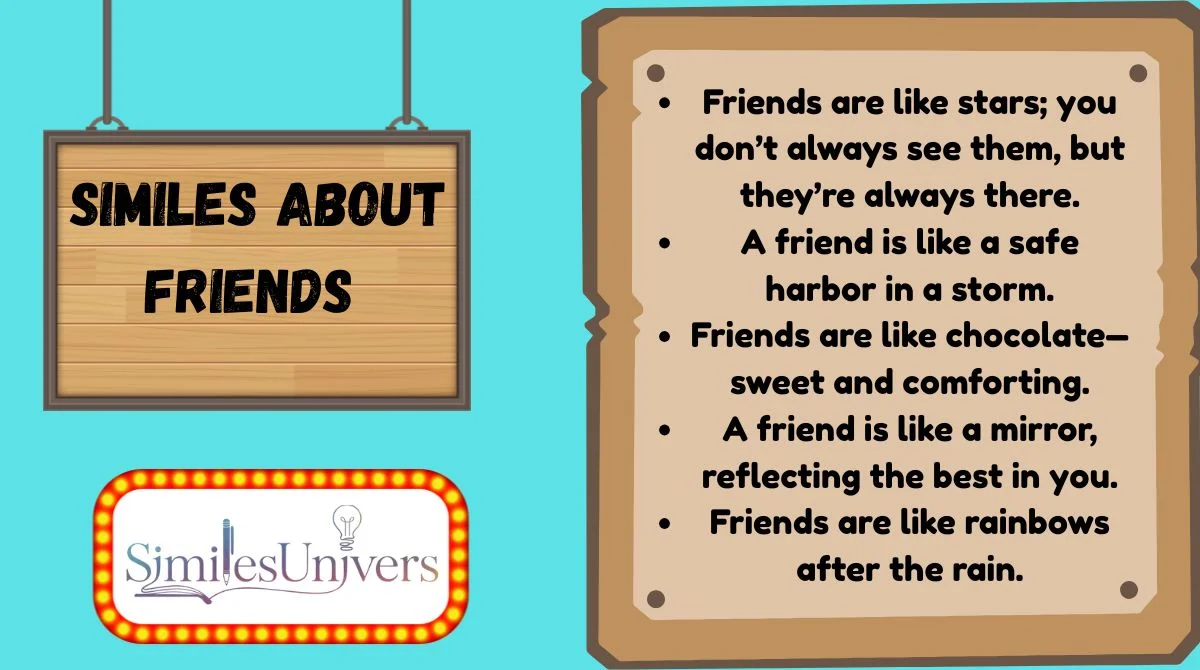
- Friends are like stars; you don’t always see them, but they’re always there.
- A friend is like a safe harbor in a storm.
- Friends are like chocolate—sweet and comforting.
- A friend is like a mirror, reflecting the best in you.
- Friends are like rainbows after the rain.
- A friend is like a book you can’t put down.
- Friends are like puzzle pieces that fit perfectly.
- A friend is like a candle in the dark.
- Friends are like coffee—warm, strong, and energizing.
- A friend is like a compass, guiding you when lost.
Complete List of Similes for Friends (Grouped by Meaning)
Funny & Lighthearted
Friends are like socks in the dryer
Meaning: Hard to keep track of, but essential when found.
Explanation: Friends sometimes disappear, but they always return when you least expect them.
Examples:
- “Losing track of him is like losing socks in the dryer, but I know he’ll pop up eventually.”
- “We’re like socks in the dryer—always missing, yet oddly matched when we meet.”
Tone: Funny
Friends are like bubblegum stuck on your shoe
Meaning: Clingy but lovable.
Explanation: True friends stick with you, sometimes in annoying ways, yet you can’t imagine life without them.
Examples:
- “She’s like bubblegum on my shoe—always there when I need a laugh.”
- “He’s like bubblegum stuck on your shoe, impossible to shake off but sweet in the end.”
Tone: Funny
Friends are like ice cream on a hot day
Meaning: Bring instant joy.
Explanation: They make life sweeter and instantly better.
Examples:
- “Hanging out with her is like ice cream on a hot day; everything feels right.”
- “A phone call from him is like ice cream melting in the sun—quick, delightful, and messy.”
Tone: Funny
Emotional & Deep
Friends are like anchors in a stormy sea
Meaning: Offer stability in chaos.
Explanation: True friends keep you grounded when life feels overwhelming.
Examples:
- “During my tough days, she’s like an anchor in a stormy sea, holding me steady.”
- “He was my anchor in a stormy sea, never letting me drift too far.”
Tone: Serious
Friends are like warm blankets
Meaning: Provide comfort and safety.
Explanation: They wrap you in emotional warmth and make you feel secure.
Examples:
- “After a long day, chatting with her feels like a warm blanket.”
- “He’s like a warm blanket on a winter night—comforting and constant.”
Tone: Poetic
Friends are like a lighthouse
Meaning: Offer guidance in darkness.
Explanation: They help you navigate difficult times and show you the right path.
Examples:
- “She’s my lighthouse, always guiding me through life’s fog.”
- “A friend is like a lighthouse, helping you find safe shores when lost.”
Tone: Serious
Dramatic & Intense
Friends are like fire and brimstone
Meaning: Passionate and sometimes overwhelming.
Explanation: Some friends ignite strong emotions, both thrilling and intense.
Examples:
- “He’s like fire and brimstone—he challenges everything but makes life exciting.”
- “Her loyalty is like fire and brimstone, fierce and unstoppable.”
Tone: Dramatic
Friends are like wild rivers
Meaning: Full of energy and unpredictable.
Explanation: Their presence can be thrilling, challenging, and deeply moving.
Examples:
- “Being with her is like riding wild rivers—unpredictable and exhilarating.”
- “He’s like a wild river, full of energy that sweeps you off your feet.”
Tone: Dramatic
Friends are like lightning
Meaning: Sudden, illuminating, and unforgettable.
Explanation: Their impact is powerful, leaving a lasting impression.
Examples:
- “She struck my life like lightning, instantly changing everything.”
- “A true friend is like lightning, rare and unforgettable.”
Tone: Dramatic
Slow & Monotonous
Friends are like slow rivers
Meaning: Calm and steady presence.
Explanation: Some friends may not excite, but they provide consistent comfort.
Examples:
- “He’s like a slow river, always there, quietly supporting me.”
- “Our friendship flows like a slow river, steady and reassuring.”
Tone: Calm
Friends are like old clocks
Meaning: Dependable but unchanging.
Explanation: Their predictability brings reassurance, even if they’re not flashy.
Examples:
- “She’s like an old clock, never missing a moment to be there.”
- “A friend like him is like an old clock, dependable and constant.”
Tone: Calm
Creative & Unique
Friends are like hidden gems in the attic
Meaning: Unexpected treasures.
Explanation: Some friends are rare, and discovering their value feels magical.
Examples:
- “Meeting her was like finding a hidden gem in the attic.”
- “He’s like a hidden gem in the attic, precious and rare.”
Tone: Creative
Friends are like origami cranes
Meaning: Delicate and meaningful.
Explanation: Their gestures and presence are artful, requiring care and attention.
Examples:
- “She’s like an origami crane, folding kindness into every action.”
- “A friend like him is like an origami crane, delicate but full of purpose.”
Tone: Poetic
Friends are like secret gardens
Meaning: Places of wonder and growth.
Explanation: They nurture your heart and let your personality bloom.
Examples:
- “She’s like a secret garden, full of surprises and life.”
- “Friends like him are secret gardens, quietly nurturing your soul.”
Tone: Creative
Poetic & Literary
Friends are like the moon in a starry sky
Meaning: A gentle, guiding presence.
Explanation: They illuminate your life subtly but profoundly.
Examples:
- “He’s like the moon in a starry sky, quietly lighting my path.”
- “A friend like her is the moon in a starry sky, serene and constant.”
Tone: Poetic
Friends are like autumn leaves
Meaning: Beautiful and transient.
Explanation: Their presence is fleeting yet memorable, leaving lasting impressions.
Examples:
- “She’s like autumn leaves, bright and unforgettable even as time passes.”
- “Friends are like autumn leaves, each moment with them a vivid memory.”
Tone: Poetic
Fresh and Unique Similes You Won’t Hear Every Day
- Friends are like fireflies in a jar — small, fleeting, yet magical.
- Friends are like the first sip of lemonade on a summer day — refreshing and unexpected.
- Friends are like sandcastles — temporary, delicate, but worth the effort.
- Friends are like forgotten keys — easy to overlook but essential when found.
- Friends are like whispered secrets in a library — subtle, intimate, and treasured.
Explanation: These similes paint unconventional imagery, blending sensory experiences and emotions to create a unique mental picture of friendship.
How to Use These Similes in Writing
- Essays: Use similes to illustrate your point about friendship, making your writing relatable and vivid.
- Stories: Let similes reveal character relationships, emotions, or moods naturally.
Example: Instead of saying “He’s a loyal friend,” you might say, “He’s like a lighthouse, always guiding me safely through life’s storms.”
How to Create Your Own Similes (Mini Writing Guide)
Step-by-step method:
- Identify the quality you want to describe.
- Think of unrelated objects, animals, or experiences that share that quality.
- Use “like” or “as” to connect them.
- Ensure clarity and imagery.
- Refine for tone and readability.
Practical tips:
- Focus on senses (sight, touch, taste).
- Avoid clichés.
- Use humor when appropriate.
- Match tone to context.
- Keep it short and punchy.
Transformation examples:
- Basic: “She’s funny.” → Simile: “She’s like a cat chasing a laser pointer—playful and unpredictable.”
- Basic: “He’s brave.” → Simile: “He’s like a knight facing a dragon in the dark.”
- Basic: “Friendship is strong.” → Simile: “Friendship is like braided steel—intertwined and unbreakable.”
Common Mistakes When Using Similes
- Overuse: Too many similes can clutter your writing.
- Clichés: Avoid overused phrases like “as busy as a bee” for originality.
- Tone mismatch: Ensure the simile fits the mood of your piece.
Practice Exercise
Fill in the blanks with the right simile for friends:
- My friend is like __________, always brightening my day.
- Hanging out with him is like __________.
- A friend in need is like __________.
- She sticks to me like __________.
- Friendship is like __________, strong and lasting.
- Friends are like __________, small but magical.
- He vanished like __________, then came back unexpectedly.
- Talking to her is like __________, refreshing and delightful.
- Our bond is like __________, unbreakable.
- He’s as helpful as __________.
- Friendship blooms like __________ in spring.
- She comforts me like __________ on a cold night.
Answers:
- Sunshine on a cloudy day
- Riding a wild river
- A safe harbor in a storm
- Bubblegum on a shoe
- Braided steel
- Fireflies in a jar
- Socks in the dryer
- First sip of lemonade
- Origami cranes
- A compass
- Autumn leaves
- Warm blankets
FAQs
Q1: What is a simile about friends?
A simile about friends is a comparison using “like” or “as” to describe friendship qualities.
Q2: How many similes about friends exist?
There are countless similes, but this guide covers over 37 unique examples.
Q3: Can similes make writing more emotional?
Yes! Similes help readers visualize and feel your words, making emotions more vivid.
Q4: Are similes the same as metaphors?
No. Similes use “like” or “as,” while metaphors state a direct comparison.
Q5: Can similes be funny?
Absolutely. Funny similes add humor and lightness to your writing.
Q6: How do I create my own similes?
Focus on the quality you want to describe, find relatable comparisons, and connect them with “like” or “as.”
Final Thoughts
Similes are the secret ingredient that makes writing about friendship shine. From funny and lighthearted to poetic and deep, they help you capture the essence of friends in ways ordinary words cannot. Use the 37+ similes in this guide to elevate your essays, stories, or personal reflections. Even better, use the techniques shared here to craft your own unique comparisons, making your writing stand out for its originality, warmth, and creativity.

Daniel Harper
I am simplifies complex literary concepts into clear, practical lessons for students and learners worldwide.
Through SimilesUnivers, he aims to make mastering similes engaging, structured, and academically enriching.