Adventure feels big. It feels wild. It feels alive.
But sometimes, the word adventure alone is not enough. You want your reader to feel the rush of wind, the thrill of risk, the pull of the unknown.
That’s where similes help. A strong simile paints a picture fast. It makes simple writing bright and bold.
If you write stories, essays, captions, or speeches, this guide will give you powerful similes for adventure that make your words jump off the page.
In this article, you’ll find more than 24 creative similes, grouped by meaning and mood.
You’ll also learn how to use them, how to create your own, and how to avoid common mistakes. Let’s dive in.
What Is a Simile? (Quick Clear Definition)
A simile compares two different things using “like” or “as.”
It helps readers understand one thing by comparing it to something familiar.
Example:
Adventure is like a roller coaster.
Quick List – Most Popular Similes for “Adventure”
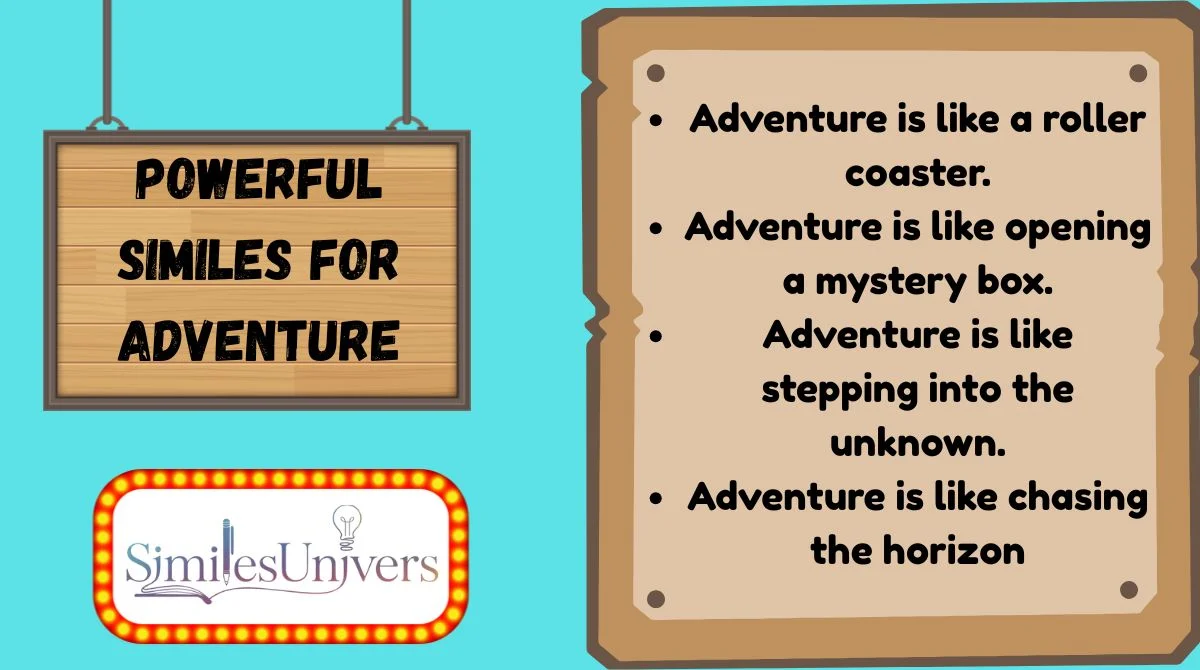
- Adventure is like a roller coaster.
- Adventure is like opening a mystery box.
- Adventure is like stepping into the unknown.
- Adventure is like chasing the horizon.
- Adventure is like diving into deep water.
- Adventure is like turning the first page of a new book.
- Adventure is like lighting a spark in the dark.
- Adventure is like walking a hidden path.
- Adventure is like riding a wild horse.
- Adventure is like a storm full of promise.
Complete List of Similes for “Adventure” (Grouped by Meaning)
Funny & Lighthearted
Adventure is like a roller coaster with no seatbelt.
Meaning: It is thrilling and a little scary.
It shows fun mixed with risk.
Example 1: Our road trip felt like a roller coaster with no seatbelt.
Example 2: Starting my own business was like a roller coaster with no seatbelt.
Tone: Funny
Adventure is like a puppy chasing its tail.
Meaning: It is playful and full of energy.
This simile shows joyful chaos.
Example 1: The kids ran through the park like a puppy chasing its tail.
Example 2: Our camping trip was like a puppy chasing its tail.
Tone: Casual
Adventure is like opening a surprise gift.
Meaning: You don’t know what will happen next.
It highlights excitement and curiosity.
Example 1: Moving to a new city felt like opening a surprise gift.
Example 2: Every travel day was like opening a surprise gift.
Tone: Lighthearted
Adventure is like jumping into a pool without checking the water.
Meaning: Bold and risky.
It shows courage without full planning.
Example 1: He accepted the job like jumping into a pool without checking the water.
Example 2: We booked the tickets like jumping into a pool without checking the water.
Tone: Funny
Emotional & Deep
Adventure is like chasing the horizon.
Meaning: It never truly ends.
It shows endless dreams and goals.
Example 1: Her journey felt like chasing the horizon.
Example 2: His life was like chasing the horizon.
Tone: Poetic
Adventure is like breaking free from invisible chains.
Meaning: It brings freedom.
This shows escape from limits.
Example 1: Traveling alone felt like breaking free from invisible chains.
Example 2: Quitting the old routine was like breaking free from invisible chains.
Tone: Serious
Adventure is like a heartbeat in the quiet.
Meaning: It brings life to stillness.
This highlights sudden excitement.
Example 1: The mountain climb was like a heartbeat in the quiet.
Example 2: That new idea felt like a heartbeat in the quiet.
Tone: Poetic
Adventure is like stepping into sunlight after a long winter.
Meaning: It brings hope and warmth.
It shows renewal and joy.
Example 1: The trip felt like stepping into sunlight after a long winter.
Example 2: Her decision was like stepping into sunlight after a long winter.
Tone: Serious
Dramatic & Intense
Adventure is like riding a wild horse.
Meaning: Hard to control but thrilling.
It shows power and unpredictability.
Example 1: The expedition was like riding a wild horse.
Example 2: His journey through the desert felt like riding a wild horse.
Tone: Dramatic
Adventure is like walking through a thunderstorm.
Meaning: Dangerous yet powerful.
It shows courage in chaos.
Example 1: The rescue mission was like walking through a thunderstorm.
Example 2: Life abroad felt like walking through a thunderstorm.
Tone: Serious
Adventure is like diving into deep water.
Meaning: Risky and bold.
You must trust yourself.
Example 1: She moved overseas like diving into deep water.
Example 2: Starting college felt like diving into deep water.
Tone: Dramatic
Adventure is like standing on the edge of a cliff.
Meaning: A mix of fear and thrill.
It shows tension and excitement.
Example 1: The big decision felt like standing on the edge of a cliff.
Example 2: The race was like standing on the edge of a cliff.
Tone: Intense
Creative & Unique
Adventure is like a map drawn in disappearing ink.
Meaning: The path keeps changing.
It shows uncertainty and surprise.
Example 1: Backpacking alone felt like a map drawn in disappearing ink.
Example 2: His career path was like a map drawn in disappearing ink.
Tone: Creative
Adventure is like a door that appears only when you dare to knock.
Meaning: Opportunity comes with courage.
It highlights bravery.
Example 1: The journey was like a door that appears only when you dare to knock.
Example 2: Success felt like a door that appears only when you dare to knock.
Tone: Poetic
Adventure is like a spark in dry grass.
Meaning: It spreads fast.
This shows sudden excitement.
Example 1: The idea spread like a spark in dry grass.
Example 2: The travel plan caught on like a spark in dry grass.
Tone: Dramatic
Adventure is like a compass spinning in your hand.
Meaning: Direction is unclear.
It shows confusion mixed with motion.
Example 1: The trip felt like a compass spinning in my hand.
Example 2: His new life was like a compass spinning in his hand.
Tone: Creative
Poetic & Literary
Adventure is like ink spilling across a blank page.
Meaning: It creates a new story.
It highlights creativity and growth.
Example 1: The journey was like ink spilling across a blank page.
Example 2: Her travels felt like ink spilling across a blank page.
Tone: Poetic
Adventure is like wind filling a sail.
Meaning: It moves you forward.
It shows progress and hope.
Example 1: The opportunity was like wind filling a sail.
Example 2: That decision felt like wind filling a sail.
Tone: Poetic
Adventure is like a fire that refuses to die.
Meaning: Strong inner desire.
It shows passion.
Example 1: His dream was like a fire that refuses to die.
Example 2: The explorer’s spirit was like a fire that refuses to die.
Tone: Serious
Adventure is like stars hidden behind clouds.
Meaning: Beauty waiting to appear.
It shows promise and mystery.
Example 1: The journey felt like stars hidden behind clouds.
Example 2: The trip was like stars hidden behind clouds.
Tone: Poetic
Fresh and Unique Similes You Won’t Hear Every Day
Here are five original similes with vivid imagery:
- Adventure is like a key made of courage.
It unlocks doors only bravery can open. - Adventure is like footsteps echoing in an empty canyon.
Every action feels bigger and more alive. - Adventure is like planting seeds in wild soil.
You don’t know what will grow. - Adventure is like a lantern swinging in the dark.
It lights the way, but not too far ahead. - Adventure is like a drumbeat under your ribs.
It feels alive inside you.
How to Use These Similes in Writing
In Essays
- Use one strong simile in your introduction.
- Add one in the conclusion to create impact.
- Avoid adding too many in one paragraph.
Example:
Traveling alone is like riding a wild horse. It scares you, but it makes you stronger.
In Stories
- Use similes during action scenes.
- Use poetic similes during emotional moments.
- Match tone with mood.
How to Create Your Own Similes (Mini Writing Guide)
Step-by-Step Method
- Pick your topic (adventure).
- Ask: What does it feel like?
- Think of an image with the same feeling.
- Connect them using “like” or “as.”
- Keep it short and clear.
5 Practical Tips
- Use simple words.
- Focus on feelings.
- Avoid clichés.
- Be specific.
- Read it aloud.
3 Transformation Examples
Plain: The trip was exciting.
Simile: The trip was like fireworks in the night sky.
Plain: I felt nervous.
Simile: I felt like a leaf shaking in the wind.
Plain: The journey changed me.
Simile: The journey changed me like fire shapes iron.
Common Mistakes When Using Similes
Overuse
Too many similes make writing messy. Use them wisely.
Clichés
Avoid overused lines like “brave as a lion.”
Tone Mismatch
Do not use funny similes in serious scenes.
Practice Exercise
Fill in the blanks:
- Adventure is like __________.
- The trip felt like __________.
- Starting college was like __________.
- The hike was like __________.
- His dream was like __________.
- The stormy journey was like __________.
- Moving abroad felt like __________.
- The challenge was like __________.
- The mission was like __________.
- The discovery was like __________.
- The expedition was like __________.
- The new beginning was like __________.
Answers (Sample)
- a roller coaster
- chasing the horizon
- diving into deep water
- riding a wild horse
- a fire that refuses to die
- walking through a thunderstorm
- stepping into sunlight after winter
- standing on the edge of a cliff
- a spark in dry grass
- opening a surprise gift
- a map drawn in disappearing ink
- wind filling a sail
FAQs
What are similes for adventure?
Similes for adventure compare adventure to something exciting, risky, or new using “like” or “as.”
Why use similes in writing?
They make writing vivid and easy to imagine.
Are similes good for essays?
Yes. One or two strong similes can improve clarity and engagement.
What makes a good adventure simile?
It should be clear, emotional, and original.
Can similes be funny?
Yes. Funny similes add personality.
How many similes should I use?
Use them sparingly. Quality matters more than quantity.
Final Thoughts
Adventure is not just a word. It is a feeling. It is motion. It is risk. It is growth.
Strong similes turn that feeling into images your reader can see and feel. Whether you want funny, deep, dramatic, or poetic lines, you now have more than 24 powerful similes ready to use.
Try creating your own today. Adventure in writing begins with imagination.
Daniel Harper
I am simplifies complex literary concepts into clear, practical lessons for students and learners worldwide.
Through SimilesUnivers, he aims to make mastering similes engaging, structured, and academically enriching.