Cold weather is more than just low temperatures. It bites. It whispers. It creeps under doors and wraps around bones. When you describe it well, readers don’t just see winter — they feel it.
That’s where similes help.
A strong simile paints a quick, bright picture. It turns “very cold” into something sharp, funny, poetic, or dramatic. It makes writing simple yet powerful.
In this guide, you’ll discover 22+ high-quality similes for cold weather — from classic lines to fresh, creative ones you won’t hear every day.
You’ll also learn how to use them in essays and stories, how to create your own, and how to avoid common mistakes.
Let’s warm up your writing — even if the weather isn’t.
What Is a Simile? (Quick Clear Definition)
A simile compares two different things using the words “like” or “as.”
It helps readers picture or feel something clearly.
Example:
The wind was as sharp as a knife.
Quick List – Most Popular Similes for “Cold Weather”
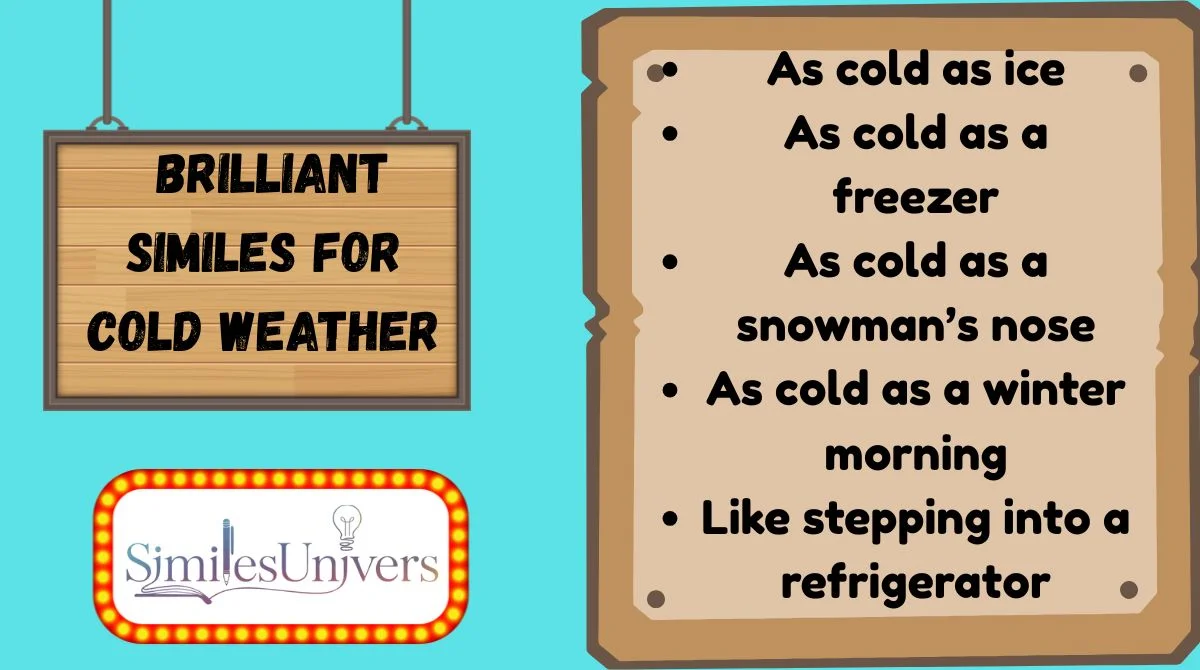
- As cold as ice
- As cold as a freezer
- As cold as a snowman’s nose
- As cold as a winter morning
- Like stepping into a refrigerator
- As cold as the Arctic wind
- Like frost on a windowpane
- As cold as stone
- Like an icy handshake
- As cold as frozen steel
Complete List of Similes for “Cold Weather” (Grouped by Meaning)
Funny & Lighthearted
As cold as a snowman’s nose
Meaning: Extremely cold but playful.
This simile adds humor while still describing freezing weather.
Example 1: The playground was as cold as a snowman’s nose.
Example 2: My fingers felt as cold as a snowman’s nose after the snowball fight.
Tone: Funny
Like hugging a penguin
Meaning: Very chilly but cute.
This works well in children’s stories.
Example 1: The wind felt like hugging a penguin.
Example 2: My jacket wasn’t enough — it was like hugging a penguin out there.
Tone: Casual
As cold as leftover pizza from the fridge
Meaning: Sharp, sudden cold.
A relatable and modern image.
Example 1: The air hit me like leftover pizza from the fridge.
Example 2: The hallway was as cold as leftover pizza at midnight.
Tone: Funny
Like sitting on a block of ice
Meaning: Uncomfortably cold.
Great for describing shock.
Example 1: That bench felt like sitting on a block of ice.
Example 2: The metal chair was like sitting on a block of ice.
Tone: Casual
Emotional & Deep
As cold as a lonely night
Meaning: Cold with emotional weight.
Adds sadness to your description.
Example 1: The empty street was as cold as a lonely night.
Example 2: Her goodbye felt as cold as a lonely night in winter.
Tone: Serious
Like a heart turned to frost
Meaning: Cold both physically and emotionally.
Good for dramatic storytelling.
Example 1: His voice was like a heart turned to frost.
Example 2: The silence felt like a heart turned to frost.
Tone: Poetic
As cold as forgotten memories
Meaning: Cold in a distant, quiet way.
Suggests emotional distance.
Example 1: The old house stood as cold as forgotten memories.
Example 2: The wind felt as cold as forgotten memories.
Tone: Poetic
Like winter inside your bones
Meaning: Deep, lasting cold.
Shows cold that goes beyond the skin.
Example 1: The storm was like winter inside your bones.
Example 2: After hours outside, I felt winter inside my bones.
Tone: Serious
Dramatic & Intense
As cold as the Arctic wind
Meaning: Extremely freezing.
Evokes powerful natural imagery.
Example 1: The gusts were as cold as the Arctic wind.
Example 2: Her stare was as cold as the Arctic wind.
Tone: Dramatic
Like knives made of ice
Meaning: Painfully sharp cold.
Perfect for storm scenes.
Example 1: The wind cut like knives made of ice.
Example 2: The rain felt like knives made of ice on my skin.
Tone: Intense
As cold as frozen steel
Meaning: Hard and bitter cold.
Strong and bold imagery.
Example 1: The bridge rail was as cold as frozen steel.
Example 2: His handshake was as cold as frozen steel.
Tone: Serious
Like breath turning to glass
Meaning: Air so cold it feels fragile.
Visually striking and unique.
Example 1: The morning air was like breath turning to glass.
Example 2: Each word felt like breath turning to glass.
Tone: Poetic
Slow & Monotonous
As cold as a gray Monday
Meaning: Dull and heavy cold.
Adds mood to the weather.
Example 1: The afternoon was as cold as a gray Monday.
Example 2: The sky hung as cold as a gray Monday above us.
Tone: Casual
Like waiting at an empty bus stop in January
Meaning: Long, dragging cold.
Shows boredom and chill together.
Example 1: The wind felt like waiting at an empty bus stop in January.
Example 2: Time moved like waiting at an empty bus stop in January.
Tone: Casual
As cold as an unfinished sentence
Meaning: Cold and uncomfortable.
Suggests tension.
Example 1: The silence was as cold as an unfinished sentence.
Example 2: The room felt as cold as an unfinished sentence.
Tone: Poetic
Creative & Unique
Like moonlight trapped in ice
Meaning: Quiet, glowing cold.
A soft but vivid image.
Example 1: The field shimmered like moonlight trapped in ice.
Example 2: Her voice felt like moonlight trapped in ice.
Tone: Poetic
As cold as a mirror at dawn
Meaning: Clean, still cold.
Creates a visual effect.
Example 1: The lake lay as cold as a mirror at dawn.
Example 2: The tiles felt as cold as a mirror at dawn.
Tone: Poetic
Like a silver coin left in snow
Meaning: Small but biting cold.
Fresh and uncommon.
Example 1: The wind touched my cheek like a silver coin left in snow.
Example 2: The railing felt like a silver coin left in snow.
Tone: Creative
As cold as starlight in December
Meaning: Distant and sharp cold.
Adds a cosmic feel.
Example 1: The night air was as cold as starlight in December.
Example 2: Her smile felt as cold as starlight in December.
Tone: Poetic
Poetic & Literary
Like frost writing secrets on glass
Meaning: Gentle but chilly cold.
Great for descriptive scenes.
Example 1: The morning felt like frost writing secrets on glass.
Example 2: The air moved like frost writing secrets on glass.
Tone: Poetic
As cold as a cathedral in winter
Meaning: Large, echoing cold.
Adds atmosphere.
Example 1: The hall was as cold as a cathedral in winter.
Example 2: The castle stood as cold as a cathedral in winter.
Tone: Serious
Like shadows frozen in place
Meaning: Still and icy cold.
Creates tension.
Example 1: The forest was like shadows frozen in place.
Example 2: The moment hung like shadows frozen in place.
Tone: Dramatic
As cold as silence after snowfall
Meaning: Peaceful but deep cold.
Soft and powerful.
Example 1: The world felt as cold as silence after snowfall.
Example 2: The park stood as cold as silence after snowfall.
Tone: Poetic
Fresh and Unique Similes You Won’t Hear Every Day
Here are five original similes with rich imagery:
- As cold as a clock that forgot to tick
Suggests stillness and lifeless chill. - Like a whisper made of ice dust
Feels soft yet cutting. - As cold as pages in an abandoned diary
Quiet, forgotten cold. - Like a window left open to the stars
Wide, open, and freezing. - As cold as footsteps on a frozen lake at midnight
Echoing and tense cold.
These images work because they mix physical cold with emotion or setting.
How to Use These Similes in Writing
In Essays
Use similes to make descriptions stronger but keep them simple.
Example: The morning was as cold as frozen steel, making it hard to step outside.
Avoid overusing them. One or two per paragraph is enough.
In Stories
Similes add mood fast.
If you write horror, choose dramatic ones.
If you write children’s stories, choose funny ones.
Match tone to genre.
How to Create Your Own Similes (Mini Writing Guide)
Step-by-Step Method
- Think about the type of cold (sharp, dull, deep).
- Pick an object that feels similar.
- Use “like” or “as.”
- Keep it short.
- Read it out loud.
5 Practical Tips
- Use everyday objects for clarity.
- Avoid clichés unless needed.
- Think about senses (touch, sound, sight).
- Match tone to your story.
- Keep Grade 3–5 simplicity.
3 Transformation Examples
Plain: It was very cold.
Better: It was as cold as frozen steel.
Plain: The wind hurt my face.
Better: The wind cut like knives made of ice.
Plain: The night felt quiet and cold.
Better: The night was as cold as silence after snowfall.
Common Mistakes When Using Similes
Overuse
Too many similes slow your writing.
Clichés
“As cold as ice” is common. Use fresher images when possible.
Tone Mismatch
Funny similes don’t fit tragic scenes.
Practice Exercise
Fill in the blanks:
- The wind was as cold as _______.
- Her hands felt like _______.
- The lake looked as cold as _______.
- The air cut like _______.
- The bench was as cold as _______.
- The night felt like _______.
- His voice was as cold as _______.
- The forest stood like _______.
- The silence was as cold as _______.
- The rain felt like _______.
- The sky looked as cold as _______.
- My cheeks felt like _______.
Answers (Sample)
- frozen steel
- a silver coin left in snow
- a mirror at dawn
- knives made of ice
- a block of ice
- winter inside your bones
- the Arctic wind
- shadows frozen in place
- forgotten memories
- icy needles
- starlight in December
- leftover pizza from the fridge
FAQs
What is the best simile for cold weather?
“As cold as frozen steel” is strong and vivid. It feels sharp and real.
What is a funny simile for cold?
“As cold as a snowman’s nose” adds humor without losing meaning.
How do you describe extreme cold in writing?
Use intense images like “like knives made of ice” to show pain and sharpness.
Can similes improve creative writing?
Yes. They make simple ideas vivid and memorable.
Are similes good for essays?
Yes, if used carefully. They add clarity and imagery.
What is the difference between simile and metaphor?
A simile uses “like” or “as.” A metaphor compares directly without them.
Final Thoughts
Cold weather can feel sharp, soft, lonely, funny, or dramatic. The right simile captures that feeling in seconds.
Now you have more than 22 strong similes for cold weather — from classic lines to creative images few writers use. Try them. Mix them. Build your own.
Great writing doesn’t just describe temperature.
It makes readers shiver.

Daniel Harper
I am simplifies complex literary concepts into clear, practical lessons for students and learners worldwide.
Through SimilesUnivers, he aims to make mastering similes engaging, structured, and academically enriching.