Dance is more than steps and rhythm. It is motion, emotion, and story all in one. When you try to describe it in writing, plain words often fall flat. That’s where similes shine.
Similes make your writing vivid. They help readers see movement. They let them feel the beat.
A simple comparison can turn an ordinary sentence into something magical.
Whether you are writing a poem, a story, an essay, or even song lyrics, the right simile can bring dance to life on the page.
In this guide, you’ll discover over 27 powerful similes for dance. You’ll also learn how to use them, create your own, and avoid common mistakes. Let’s step onto the stage.
What Is a Simile? (Quick Clear Definition)
A simile compares two things using “like” or “as.”
It helps readers understand something by linking it to a familiar image.
Example:
She danced like a butterfly in the wind.
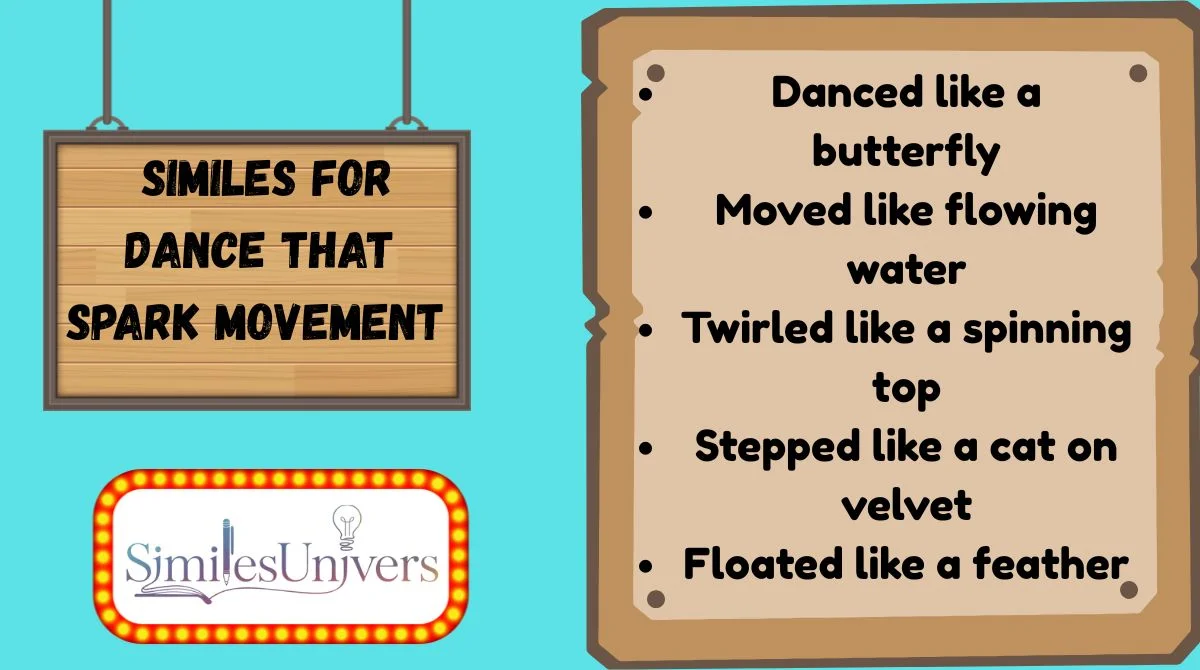
Quick List – Most Popular Similes for “Dance”
- Danced like a butterfly
- Moved like flowing water
- Twirled like a spinning top
- Stepped like a cat on velvet
- Floated like a feather
- Jumped like popcorn in a pan
- Glided like ice on glass
- Shook like leaves in a storm
- Swayed like tall grass
- Sparkled like fireworks in the sky
Complete List of Similes for “Dance” (Grouped by Meaning)
Funny & Lighthearted
Danced like popcorn popping in a pan
Meaning: Quick, bouncy, full of energy
Explanation: The movement is sudden and joyful.
Examples:
- The kids danced like popcorn popping in a pan at the party.
- He danced like popcorn popping in a pan when his song came on.
Tone: Funny
Twirled like a dog chasing its tail
Meaning: Playful and silly spinning
Explanation: The dancer spins in a carefree, goofy way.
Examples:
- She twirled like a dog chasing its tail in the living room.
- He laughed and twirled like a dog chasing its tail.
Tone: Casual
Moved like jelly on a plate
Meaning: Wiggly and loose
Explanation: The body shakes and wiggles freely.
Examples:
- He moved like jelly on a plate during the freestyle round.
- The toddler danced like jelly on a plate.
Tone: Funny
Jumped like a frog in spring
Meaning: Bouncy and lively
Explanation: The dance is full of cheerful hops.
Examples:
- She jumped like a frog in spring across the stage.
- The boys danced like frogs in spring.
Tone: Casual
Emotional & Deep
Danced like a heart beating out loud
Meaning: Full of emotion
Explanation: The movement feels honest and powerful.
Examples:
- She danced like a heart beating out loud after hearing the news.
- His body moved like a heart beating out loud.
Tone: Serious
Moved like tears falling in slow motion
Meaning: Sad and graceful
Explanation: The dance carries quiet sorrow.
Examples:
- She moved like tears falling in slow motion.
- The solo dancer swayed like tears falling in slow motion.
Tone: Poetic
Floated like a memory you can’t forget
Meaning: Soft and meaningful
Explanation: The dance feels gentle and lasting.
Examples:
- She floated like a memory you can’t forget.
- His final step lingered like a memory you can’t forget.
Tone: Poetic
Swayed like a candle in the dark
Meaning: Fragile yet strong
Explanation: The dancer moves softly but with purpose.
Examples:
- She swayed like a candle in the dark.
- The group swayed like candles in the dark.
Tone: Serious
Dramatic & Intense
Moved like lightning striking the ground
Meaning: Fast and powerful
Explanation: The dance bursts with sharp force.
Examples:
- He moved like lightning striking the ground.
- The crew hit the beat like lightning striking earth.
Tone: Dramatic
Danced like a storm breaking the sky
Meaning: Wild and fierce
Explanation: The performance feels unstoppable.
Examples:
- She danced like a storm breaking the sky.
- The stage shook as they danced like a storm.
Tone: Intense
Twisted like flames in a fire
Meaning: Fierce and alive
Explanation: The body moves with heat and passion.
Examples:
- He twisted like flames in a fire.
- Her red dress swirled like flames in a fire.
Tone: Dramatic
Struck the floor like thunder rolling
Meaning: Loud and commanding
Explanation: The dancer makes a strong impact.
Examples:
- He struck the floor like thunder rolling.
- Their feet landed like thunder rolling.
Tone: Intense
Slow & Monotonous
Moved like a clock ticking at midnight
Meaning: Steady and slow
Explanation: The dance feels controlled and measured.
Examples:
- She moved like a clock ticking at midnight.
- His steps fell like a clock ticking.
Tone: Serious
Glided like fog over a lake
Meaning: Soft and smooth
Explanation: The movement is quiet and seamless.
Examples:
- She glided like fog over a lake.
- The dancers drifted like fog at dawn.
Tone: Poetic
Swayed like tall grass in summer
Meaning: Gentle and natural
Explanation: The dance flows easily.
Examples:
- They swayed like tall grass in summer.
- Her skirt moved like grass in warm wind.
Tone: Calm
Creative & Unique
Danced like ink swirling in water
Meaning: Fluid and artistic
Explanation: The motion spreads and blends beautifully.
Examples:
- She danced like ink swirling in water.
- His arms moved like ink in clear water.
Tone: Poetic
Twirled like pages in a sudden breeze
Meaning: Light and quick
Explanation: The spins feel airy and fast.
Examples:
- She twirled like pages in a sudden breeze.
- The group spun like book pages caught by wind.
Tone: Creative
Moved like shadows chasing sunset
Meaning: Mysterious and smooth
Explanation: The dance feels quiet and haunting.
Examples:
- He moved like shadows chasing sunset.
- They drifted like shadows at dusk.
Tone: Poetic
Danced like marbles rolling across glass
Meaning: Sharp and playful
Explanation: The steps feel quick and sliding.
Examples:
- The children danced like marbles on glass.
- Her feet clicked like marbles rolling.
Tone: Casual
Poetic & Literary
Floated like a swan on still water
Meaning: Graceful and elegant
Explanation: The dancer moves smoothly and beautifully.
Examples:
- She floated like a swan on still water.
- The ballerina glided like a swan at dawn.
Tone: Poetic
Danced like the moon pulling the tide
Meaning: Powerful but gentle
Explanation: The movement feels natural and strong.
Examples:
- She danced like the moon pulling the tide.
- His rhythm moved like ocean tides.
Tone: Literary
Moved like wind through open windows
Meaning: Free and soft
Explanation: The dance feels effortless.
Examples:
- She moved like wind through open windows.
- They drifted like summer air indoors.
Tone: Poetic
Sparkled like stars waking at night
Meaning: Bright and joyful
Explanation: The dance shines with happiness.
Examples:
- She sparkled like stars waking at night.
- The stage lights made them glow like stars.
Tone: Joyful
Fresh and Unique Similes You Won’t Hear Every Day
Here are five original similes created for this guide:
- Danced like a secret finally set free
Imagery: Movement bursting out after being hidden. - Moved like music slipping through cracked doors
Imagery: Smooth and quiet but impossible to ignore. - Twirled like silver coins tossed into a fountain
Imagery: Bright, spinning flashes of motion. - Stepped like raindrops solving a puzzle
Imagery: Each footfall fits perfectly into rhythm. - Floated like a dream refusing to fade
Imagery: Gentle but lasting presence.
These fresh comparisons help your writing stand out.
How to Use These Similes in Writing
In Essays
Use similes to describe:
- A performance
- Cultural dance traditions
- Emotional expression through movement
Example:
The performer moved like lightning striking the ground, showing raw power and control.
In Stories
Similes add emotion and detail.
Example:
She danced like a secret finally set free, no longer afraid of being seen.
How to Create Your Own Similes (Mini Writing Guide)
Step-by-Step Method
- Think about the feeling of the dance.
- Choose something that has the same feeling.
- Connect them using “like” or “as.”
- Keep it simple and clear.
5 Practical Tips
- Focus on one strong image.
- Avoid overused clichés.
- Match the tone of your story.
- Use senses (sound, sight, touch).
- Read it aloud to test flow.
3 Transformation Examples
Plain: She danced beautifully.
Better: She danced like a swan on still water.
Plain: He danced with energy.
Better: He danced like lightning striking earth.
Plain: They danced softly.
Better: They moved like fog over a lake.
Common Mistakes When Using Similes
Overuse
Too many similes can overwhelm readers. Use them wisely.
Clichés
Avoid tired lines like “light as a feather” unless you give them a twist.
Tone Mismatch
A funny simile won’t work in a serious scene.
Practice Exercise
Fill in the blanks:
- She danced like ______ in the wind.
- He moved like ______ striking the ground.
- They swayed like ______ in summer.
- She twirled like ______ in a breeze.
- He floated like ______ on water.
- The kids jumped like ______ in spring.
- She sparkled like ______ at night.
- He struck the floor like ______ rolling.
- She moved like ______ over a lake.
- They twisted like ______ in a fire.
- She drifted like ______ through open windows.
- He danced like ______ finally set free.
Answers
- a butterfly
- lightning
- tall grass
- pages
- a swan
- frogs
- stars
- thunder
- fog
- flames
- wind
- a secret
FAQs
What are some good similes for dance?
Good similes include “danced like lightning,” “floated like a swan,” and “moved like ink in water.”
How do you describe dance in creative writing?
Use strong verbs and similes. Compare movement to nature, weather, or emotions.
Are similes good for essays?
Yes. They add clarity and emotion when used carefully.
What makes a simile powerful?
Clear imagery, strong emotion, and simple wording.
Can similes be funny?
Yes. For example, “danced like popcorn in a pan.”
How many similes should I use in one paragraph?
Usually one or two is enough.
Final Thoughts
Dance is motion turned into art. Similes help you capture that motion with words. When you compare dance to storms, swans, lightning, or secrets, your writing becomes alive.
Use these 27+ similes to add energy, grace, and emotion to your work. Then try creating your own. The best writing moves like dance itself—free, bold, and unforgettable.
Daniel Harper
I am simplifies complex literary concepts into clear, practical lessons for students and learners worldwide.
Through SimilesUnivers, he aims to make mastering similes engaging, structured, and academically enriching.