Running is more than moving fast. It can feel wild, free, scary, joyful, or exhausting. Sometimes you fly. Sometimes you drag your feet. And sometimes your heart pounds like a drum.
That’s why similes for running matter.
A strong simile paints a clear picture in the reader’s mind. It helps them see the speed, feel the effort, and sense the emotion. Instead of saying “He ran fast,” you can say, “He ran like a rocket tearing through the sky.” Now the image sticks.
In this guide, you’ll discover over 21 powerful similes for running—funny ones, dramatic ones, poetic ones, and even fresh ideas you won’t hear every day.
You’ll also learn how to use them in essays and stories—and how to create your own.
Let’s get moving.
What Is a Simile? (Quick Clear Definition)
A simile is a comparison that uses the words “like” or “as.”
It helps describe something by comparing it to something else.
Example:
“She runs like the wind.”
Quick List – Most Popular Similes for “Running”
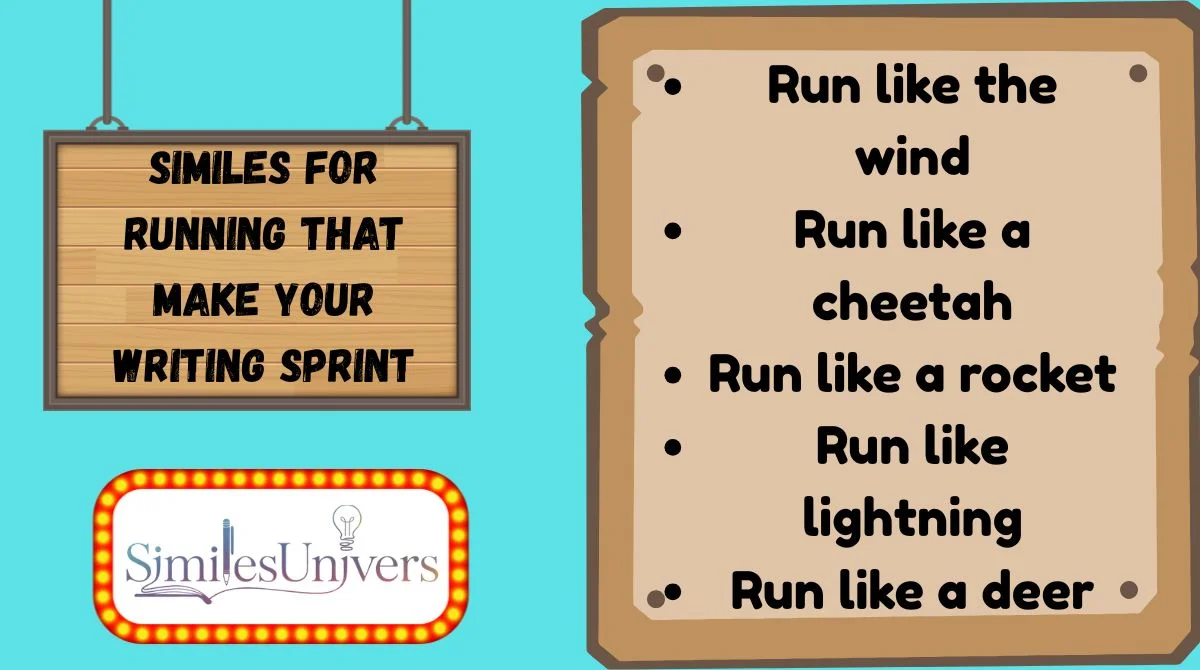
- Run like the wind
- Run like a cheetah
- Run like a rocket
- Run like lightning
- Run like a deer
- Run like a scared rabbit
- Run like a racehorse
- Run like a bullet
- Run like a child chasing ice cream
- Run like time is running out
Complete List of Similes for “Running” (Grouped by Meaning)
Funny & Lighthearted
Run like a chicken with its head cut off
Meaning: Running in a wild, messy way.
Explanation: Suggests panic and no clear direction.
Examples:
- He ran like a chicken with its head cut off when he saw the bee.
- The kids ran around like chickens with their heads cut off after the bell rang.
Tone: Funny
Run like a kid chasing an ice cream truck
Meaning: Running with excitement and joy.
Explanation: Shows eager, happy speed.
Examples:
- She ran like a kid chasing an ice cream truck when she saw her dog.
- He ran like a kid chasing an ice cream truck to grab the last slice of pizza.
Tone: Casual
Run like your shoelaces are on fire
Meaning: Running very fast in panic.
Explanation: Adds humor to urgency.
Examples:
- You’d run like your shoelaces were on fire too if you saw that spider.
- He ran like his shoelaces were on fire when the coach yelled.
Tone: Funny
Run like a dog chasing its own tail
Meaning: Running in circles without purpose.
Explanation: Suggests wasted effort.
Examples:
- I ran like a dog chasing its own tail trying to finish my homework.
- They ran like dogs chasing their tails during the chaotic drill.
Tone: Casual
Emotional & Deep
Run like your heart is breaking
Meaning: Running with pain or sadness.
Explanation: Suggests emotional escape.
Examples:
- She ran like her heart was breaking after the argument.
- He ran like his heart was breaking, not looking back.
Tone: Serious
Run like you’re chasing a dream
Meaning: Running with hope and purpose.
Explanation: Shows ambition and belief.
Examples:
- She ran like she was chasing a dream across that finish line.
- He ran like he was chasing a dream only he could see.
Tone: Poetic
Run like freedom is waiting ahead
Meaning: Running toward something better.
Explanation: Suggests hope and relief.
Examples:
- The prisoner ran like freedom was waiting ahead.
- She ran like freedom was waiting just beyond the hill.
Tone: Poetic
Dramatic & Intense
Run like lightning splitting the sky
Meaning: Extremely fast and powerful.
Explanation: Shows sudden speed.
Examples:
- He ran like lightning splitting the sky.
- She burst forward like lightning splitting the sky.
Tone: Dramatic
Run like a bullet leaving the barrel
Meaning: Sharp, explosive speed.
Explanation: Focuses on power and force.
Examples:
- He ran like a bullet leaving the barrel.
- The athlete shot forward like a bullet leaving the barrel.
Tone: Intense
Run like a wildfire in dry grass
Meaning: Fast and unstoppable.
Explanation: Suggests speed spreading quickly.
Examples:
- The team ran like wildfire in dry grass down the field.
- He ran through the defense like wildfire in dry grass.
Tone: Dramatic
Run like thunder rolling across the hills
Meaning: Heavy and powerful movement.
Explanation: Suggests strength and presence.
Examples:
- The runners came like thunder rolling across the hills.
- He ran like thunder rolling across the track.
Tone: Poetic
Slow & Monotonous
Run like you’re stuck in mud
Meaning: Running very slowly.
Explanation: Suggests resistance and effort.
Examples:
- After the marathon, I ran like I was stuck in mud.
- He moved like he was stuck in mud during practice.
Tone: Casual
Run like a clock ticking too slowly
Meaning: Feels endless and boring.
Explanation: Shows time dragging.
Examples:
- The last lap felt like running like a clock ticking too slowly.
- I ran like a clock ticking too slowly on that hot day.
Tone: Serious
Run like a tired old engine
Meaning: Weak and worn out.
Explanation: Shows low energy.
Examples:
- He ran like a tired old engine after the first mile.
- She pushed forward like a tired old engine.
Tone: Serious
Creative & Unique
Run like shadows fleeing the sunrise
Meaning: Fast and silent.
Explanation: Suggests quick disappearance.
Examples:
- They ran like shadows fleeing the sunrise.
- The deer ran like shadows fleeing the sunrise.
Tone: Poetic
Run like ink spilling across paper
Meaning: Smooth and spreading movement.
Explanation: Suggests flow and grace.
Examples:
- She ran like ink spilling across paper.
- The team moved like ink spilling across paper.
Tone: Poetic
Run like wind slipping through open windows
Meaning: Light and effortless speed.
Explanation: Suggests smooth motion.
Examples:
- He ran like wind slipping through open windows.
- She darted ahead like wind slipping through open windows.
Tone: Poetic
Run like a secret escaping whispered lips
Meaning: Fast and sudden release.
Explanation: Suggests urgency and quiet speed.
Examples:
- He ran like a secret escaping whispered lips.
- The message spread like a secret escaping whispered lips.
Tone: Creative
Poetic & Literary
Run like leaves racing in autumn wind
Meaning: Light, playful motion.
Explanation: Suggests nature and freedom.
Examples:
- The children ran like leaves racing in autumn wind.
- She moved like leaves racing in autumn wind.
Tone: Poetic
Run like waves chasing the shore
Meaning: Steady and rhythmic speed.
Explanation: Suggests repeated motion.
Examples:
- He ran like waves chasing the shore.
- The runners came like waves chasing the shore.
Tone: Poetic
Run like stars falling from the sky
Meaning: Swift and dazzling.
Explanation: Suggests beauty and speed.
Examples:
- She ran like stars falling from the sky.
- He shot forward like stars falling from the sky.
Tone: Dramatic
Fresh and Unique Similes You Won’t Hear Every Day
Here are five original similes for running:
- Run like a zipper closing a jacket in winter
Fast, smooth, and straight to the top. - Run like a thought you can’t catch
Quick and just out of reach. - Run like rain sliding down glass
Effortless and steady. - Run like a page turning in a gripping book
Quick because you can’t wait. - Run like dawn chasing away the dark
Gentle but unstoppable.
These similes work because they connect speed to everyday images.
How to Use These Similes in Writing
In Essays
Use similes to:
- Add strong descriptions
- Show emotion
- Make personal stories vivid
Example:
“During the final lap, I ran like lightning splitting the sky.”
In Stories
Similes help:
- Build tension
- Show character feelings
- Paint action scenes
Example:
“He ran like a secret escaping whispered lips, afraid of what would happen if he stopped.”
How to Create Your Own Similes (Mini Writing Guide)
Step-by-Step Method
- Think about the type of running (fast, slow, scared, happy).
- Think of something that moves the same way.
- Connect them using “like” or “as.”
- Check if the image feels clear.
- Keep it short and strong.
5 Practical Tips
- Use nature (wind, storms, animals).
- Use daily life (cars, clocks, zippers).
- Match the tone to the scene.
- Avoid clichés unless needed.
- Read it out loud.
3 Transformation Examples
Plain: “He ran fast.”
Better: “He ran like lightning.”
Plain: “She ran slowly.”
Better: “She ran like she was stuck in mud.”
Plain: “They ran happily.”
Better: “They ran like kids chasing an ice cream truck.”
Common Mistakes When Using Similes
Overuse
Too many similes can make writing messy. Use them wisely.
Clichés
“Run like the wind” is common. Try fresh images.
Tone Mismatch
Don’t use a funny simile in a serious moment unless it fits.
Practice Exercise
Fill in the blanks:
- He ran like ________.
- She ran like ________ chasing her dream.
- They ran like ________ in dry grass.
- I ran like ________ stuck in mud.
- He ran like ________ splitting the sky.
- She ran like ________ slipping through windows.
- They ran like ________ racing in autumn wind.
- He ran like ________ leaving the barrel.
- She ran like ________ chasing the shore.
- I ran like ________ old engine.
- He ran like ________ escaping whispered lips.
- She ran like ________ falling from the sky.
Answers
- lightning
- she was chasing
- wildfire
- I was
- lightning
- wind
- leaves
- a bullet
- waves
- a tired
- a secret
- stars
FAQs
What is the best simile for running fast?
“Run like lightning splitting the sky” is strong and vivid.
What is a funny simile for running?
“Run like your shoelaces are on fire” adds humor and speed.
Can I use similes in essays?
Yes. They make writing more engaging and descriptive.
Are similes good for kids’ writing?
Yes. They help children think creatively and describe clearly.
What’s the difference between a simile and a metaphor?
A simile uses “like” or “as.” A metaphor does not.
How many similes should I use in one paragraph?
Usually one or two is enough.
Final Thoughts
Running can mean many things—speed, fear, joy, escape, or hope. A good simile turns plain action into a clear picture. It helps readers feel the wind, hear the pounding feet, and sense the heartbeat behind the motion.
Use these similes wisely. Mix common ones with fresh ideas. And most of all, create your own.
Now your writing won’t just walk.
It will run.

Daniel Harper
I am simplifies complex literary concepts into clear, practical lessons for students and learners worldwide.
Through SimilesUnivers, he aims to make mastering similes engaging, structured, and academically enriching.