Technology is everywhere. It wakes us up, guides our cars, runs our schools, and even talks back to us. Yet when we write about it, our words can feel flat and dull.
That’s where similes come in.
A good simile turns a plain sentence into something bright and alive. It helps readers see what you mean. It makes ideas easier to understand. And it keeps your writing from sounding robotic.
In this guide, you’ll discover 26+ powerful similes for technology—funny, deep, dramatic, poetic, and fresh. You’ll also learn how to use them, create your own, and avoid common mistakes. By the end, you’ll have a complete toolbox to make your writing about technology clear, vivid, and unforgettable.
What Is a Simile? (Quick Clear Definition)
A simile is a comparison between two different things using “like” or “as.”
It helps explain something by comparing it to something familiar.
Example:
Technology spreads like wildfire.
Quick List – Most Popular Similes for “Technology”
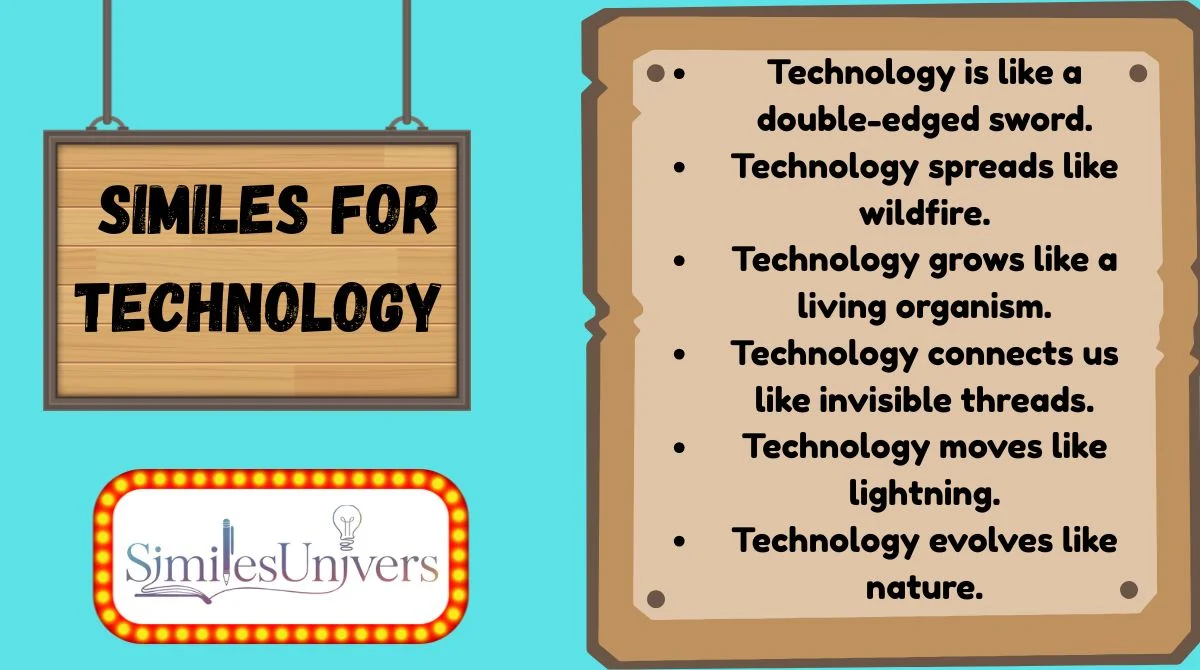
- Technology is like a double-edged sword.
- Technology spreads like wildfire.
- Technology grows like a living organism.
- Technology connects us like invisible threads.
- Technology moves like lightning.
- Technology evolves like nature.
- Technology is like a helpful assistant.
- Technology spreads like a virus.
- Technology changes lives like magic.
- Technology runs like a well-oiled machine.
Complete List of Similes for “Technology” (Grouped by Meaning)
Funny & Lighthearted
Technology is like a nosy neighbor.
Meaning: Always watching and listening.
Technology collects data and tracks behavior quietly.
Example 1: My phone is like a nosy neighbor—it knows where I go.
Example 2: Social media feels like a nosy neighbor peeking into my life.
Tone: Funny
Technology is like a hyper puppy.
Meaning: Full of energy and never still.
New devices and apps pop up constantly.
Example 1: The tech world is like a hyper puppy, always jumping around.
Example 2: Updates roll out like a hyper puppy chasing new tricks.
Tone: Casual
Technology is like a magic wand.
Meaning: Makes things happen instantly.
It solves problems quickly.
Example 1: Smartphones are like magic wands in our pockets.
Example 2: One click worked like a magic wand.
Tone: Light
Technology is like fast food.
Meaning: Quick and easy but not always healthy.
Some tools are helpful, but too much can harm us.
Example 1: Social media is like fast food—easy but addictive.
Example 2: Screen time can feel like fast food for the brain.
Tone: Funny
Emotional & Deep
Technology is like a bridge over a wide river.
Meaning: Connects distant people.
It closes gaps between countries and cultures.
Example 1: Video calls are like bridges over wide rivers.
Example 2: The internet works like a bridge between hearts.
Tone: Serious
Technology is like a mirror.
Meaning: Reflects human behavior.
It shows our values and habits.
Example 1: Social media is like a mirror of society.
Example 2: AI acts like a mirror of human data.
Tone: Thoughtful
Technology is like a growing child.
Meaning: Always learning and changing.
It improves with time and guidance.
Example 1: AI is like a growing child, learning new skills daily.
Example 2: The app improved like a growing child gaining wisdom.
Tone: Serious
Technology is like a shadow.
Meaning: Always with us.
It follows us everywhere.
Example 1: My phone is like a shadow I can’t escape.
Example 2: Technology stays like a shadow in modern life.
Tone: Reflective
Dramatic & Intense
Technology spreads like wildfire.
Meaning: Moves very fast.
New trends grow quickly.
Example 1: The app spread like wildfire across schools.
Example 2: AI tools grew like wildfire online.
Tone: Dramatic
Technology moves like lightning.
Meaning: Extremely fast.
Innovation happens quickly.
Example 1: Software updates move like lightning.
Example 2: Data travels like lightning across networks.
Tone: Intense
Technology is like a double-edged sword.
Meaning: Has good and bad sides.
It can help or harm.
Example 1: AI is like a double-edged sword.
Example 2: Social media acts like a double-edged sword in teens’ lives.
Tone: Serious
Technology spreads like a silent storm.
Meaning: Powerful but quiet.
Change happens before we notice it.
Example 1: Automation spread like a silent storm.
Example 2: Digital change arrived like a silent storm.
Tone: Dramatic
Slow & Monotonous
Technology updates are like waiting for paint to dry.
Meaning: Slow and boring.
Some processes feel endless.
Example 1: The system update was like waiting for paint to dry.
Example 2: Installing software felt like watching paint dry.
Tone: Casual
Technology is like an endless loop.
Meaning: Repeating over and over.
Notifications never stop.
Example 1: My phone feels like an endless loop of alerts.
Example 2: Emails come like an endless loop.
Tone: Casual
Technology is like a ticking clock.
Meaning: Always moving forward.
Innovation never stops.
Example 1: The tech world moves like a ticking clock.
Example 2: Deadlines feel like ticking clocks in IT projects.
Tone: Serious
Creative & Unique
Technology is like a digital jungle.
Meaning: Wild and full of unknown paths.
The online world can be confusing.
Example 1: The internet feels like a digital jungle.
Example 2: New users wander like explorers in a digital jungle.
Tone: Creative
Technology is like an invisible orchestra.
Meaning: Many systems working together quietly.
Behind the screen, many processes run.
Example 1: Cloud systems act like an invisible orchestra.
Example 2: Apps run like an invisible orchestra backstage.
Tone: Poetic
Technology is like a river of light.
Meaning: Data flowing nonstop.
Information moves continuously.
Example 1: Fiber cables glow like rivers of light.
Example 2: Data streamed like a river of light.
Tone: Poetic
Technology is like a puzzle with moving pieces.
Meaning: Complex and always changing.
Systems shift constantly.
Example 1: Cybersecurity is like a puzzle with moving pieces.
Example 2: Managing servers feels like solving moving puzzles.
Tone: Serious
Poetic & Literary
Technology is like a second brain.
Meaning: Stores and processes information.
Helps memory and thinking.
Example 1: My laptop works like a second brain.
Example 2: Cloud storage acts like a second brain.
Tone: Thoughtful
Technology is like a rising sun.
Meaning: Brings new beginnings.
Innovation creates fresh chances.
Example 1: Renewable tech feels like a rising sun.
Example 2: AI rose like a new sun in 2026.
Tone: Poetic
Technology is like a spider’s web.
Meaning: Interconnected network.
Everything links together.
Example 1: The internet spreads like a spider’s web.
Example 2: Devices connect like threads in a web.
Tone: Visual
Technology is like a compass in the dark.
Meaning: Guides us.
GPS and search engines help direction.
Example 1: Maps act like a compass in the dark.
Example 2: Search engines guide like compasses at night.
Tone: Poetic
Fresh and Unique Similes You Won’t Hear Every Day
- Technology is like a whispering forest of wires.
Imagery: Hidden messages moving through cables. - Technology is like a toolbox that builds itself.
Imagery: Systems updating and improving automatically. - Technology is like a snowball rolling downhill.
Imagery: Growing bigger and faster with time. - Technology is like a glass window into tomorrow.
Imagery: Showing us the future early. - Technology is like a heartbeat of light.
Imagery: Pulsing signals powering devices.
How to Use These Similes in Writing
In Essays
Use similes to explain hard ideas.
Example: Artificial intelligence spreads like wildfire, changing schools and jobs.
In Stories
Use similes to create emotion.
Example: Her phone glowed like a rising sun in the dark room.
How to Create Your Own Similes (Mini Writing Guide)
Step-by-Step Method
- Pick the topic (technology).
- Choose a clear feature (speed, growth, risk).
- Think of something similar in daily life.
- Connect using “like” or “as.”
- Test if it feels clear and fresh.
5 Practical Tips
- Keep it simple.
- Avoid old clichés.
- Match the tone.
- Use real-life images.
- Don’t overuse them.
3 Transformation Examples
Plain: Technology grows fast.
Better: Technology grows like a snowball rolling downhill.
Plain: Technology connects people.
Better: Technology connects us like invisible threads.
Plain: Technology can be risky.
Better: Technology is like a double-edged sword.
Common Mistakes When Using Similes
Overuse
Too many similes make writing messy.
Clichés
Old comparisons lose power.
Tone Mismatch
A funny simile in a serious essay may feel wrong.
Practice Exercise
Fill in the blanks:
- Technology spreads like ________.
- AI learns like a ________.
- The internet connects like ________.
- Updates move like ________.
- Data flows like ________.
- Social media feels like ________.
- Innovation rises like ________.
- Apps work like ________.
- Notifications repeat like ________.
- Devices link like ________.
- Coding is like solving ________.
- Technology shines like ________.
Answers
- wildfire
- growing child
- invisible threads
- lightning
- river
- fast food
- rising sun
- invisible orchestra
- endless loop
- spider’s web
- a puzzle
- a heartbeat of light
FAQs
What are similes for technology?
Similes for technology are comparisons using “like” or “as” to explain tech ideas clearly and creatively.
Why use similes when writing about technology?
They make complex ideas easier to understand and more engaging.
Are similes good for essays?
Yes. They help explain difficult topics in simple words.
Can similes be funny?
Yes. Funny similes make writing lively and relatable.
What is the best simile for technology?
“Technology is like a double-edged sword” is one of the most powerful.
How many similes should I use in one paragraph?
Usually one or two is enough.
Final Thoughts
Technology shapes our world every day. But strong writing shapes how we understand it.
Using powerful similes for technology helps your ideas shine. They make your writing clearer, brighter, and more human. Whether you’re writing essays, stories, or blog posts, the right comparison can turn plain text into something unforgettable.
Now it’s your turn—start creating similes that spark like lightning.

Daniel Harper
I am simplifies complex literary concepts into clear, practical lessons for students and learners worldwide.
Through SimilesUnivers, he aims to make mastering similes engaging, structured, and academically enriching.