Thunder is loud. Thunder is wild. Thunder makes the sky feel alive.
When thunder rolls across the sky, it can sound scary, funny, angry, or even magical. That is why writers love to compare it to other things.
good simile helps readers hear the storm in their minds. It turns plain writing into something bold and exciting.
If you want your stories, essays, or poems to stand out, similes can help. They paint clear pictures. They create strong feelings. They make your words stick.
In this guide, you’ll find 24+ powerful similes for thunder.
Some are classic. Many are fresh and unique. Each one includes meaning, examples, and tone so you can use them the right way.
Let’s make your writing roar.
What Is a Simile? (Quick Clear Definition)
A simile is a comparison that uses the words “like” or “as.”
It helps describe something by comparing it to something else.
Example:
The thunder was like a giant drum in the sky.
Quick List – Most Popular Similes for “Thunder”
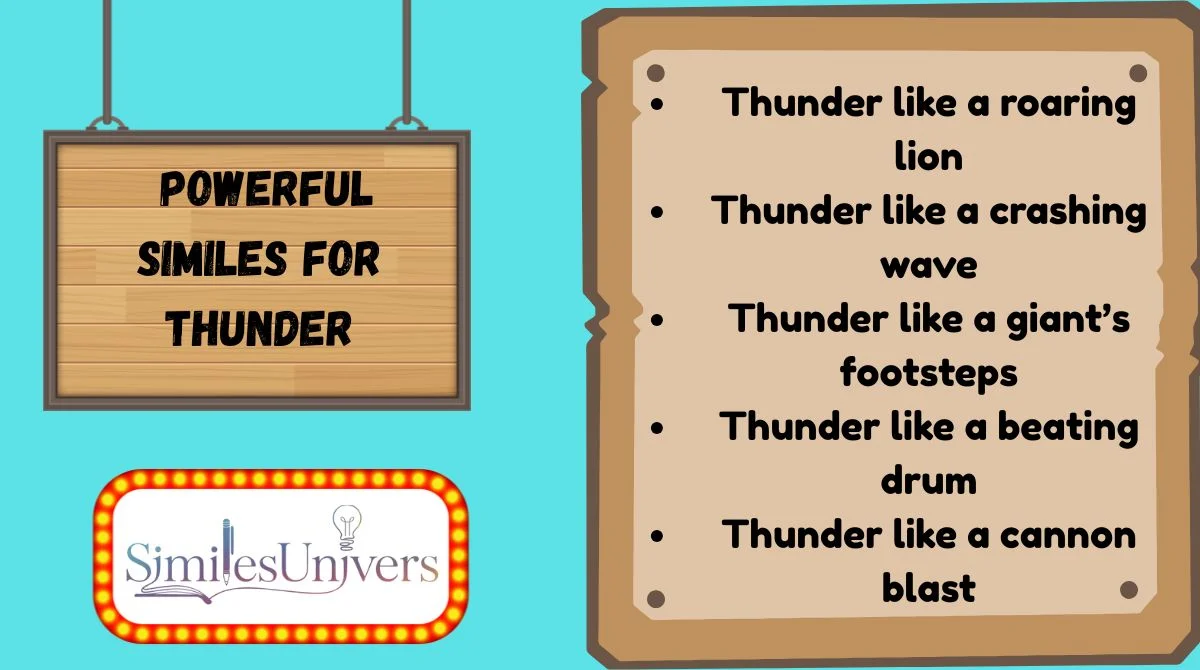
- Thunder like a roaring lion
- Thunder like a crashing wave
- Thunder like a giant’s footsteps
- Thunder like a beating drum
- Thunder like a cannon blast
- Thunder like a growling beast
- Thunder like a sky splitting in two
- Thunder like a rolling train
- Thunder like a drumroll before battle
- Thunder like a falling mountain
Complete List of Similes for “Thunder” (Grouped by Meaning)
Funny & Lighthearted
Thunder like a grumpy giant clearing his throat
Meaning: Loud but slightly silly.
Explanation: Sounds big and rough, but not too scary.
Examples:
- The thunder boomed like a grumpy giant clearing his throat.
- It sounded like a grumpy giant clearing his throat before speaking.
Tone: Funny
Thunder like a bowling ball rolling across the sky
Meaning: Deep rolling sound.
Explanation: The rumble feels long and heavy.
Examples:
- The thunder rolled like a bowling ball across the sky.
- It echoed like a bowling ball knocking down cloud pins.
Tone: Casual
Thunder like an angry stomach
Meaning: Low rumbling sound.
Explanation: Sounds like a loud growl from inside.
Examples:
- The thunder growled like an angry stomach before dinner.
- It rumbled like an upset belly in the clouds.
Tone: Funny
Thunder like a drum solo gone wild
Meaning: Fast and loud bursts.
Explanation: Sudden booms like quick drum hits.
Examples:
- The thunder cracked like a drum solo gone wild.
- It pounded like a rock concert in the sky.
Tone: Playful
Emotional & Deep
Thunder like a heart breaking in the sky
Meaning: Sad and heavy sound.
Explanation: Feels full of sorrow and pain.
Examples:
- The thunder sounded like a heart breaking in the sky.
- It echoed like grief rolling through the clouds.
Tone: Serious
Thunder like buried anger rising
Meaning: Strong hidden emotion.
Explanation: The sound builds like anger coming out.
Examples:
- The thunder roared like buried anger rising at last.
- It cracked like feelings no longer held back.
Tone: Serious
Thunder like a warning from the heavens
Meaning: Powerful and serious.
Explanation: Feels like a message from above.
Examples:
- The thunder boomed like a warning from the heavens.
- It rolled like a voice telling us to listen.
Tone: Dramatic
Thunder like a door slamming on the world
Meaning: Sudden and harsh.
Explanation: Feels like something has ended.
Examples:
- The thunder struck like a door slamming on the world.
- It echoed like a loud goodbye.
Tone: Serious
Dramatic & Intense
Thunder like a lion’s roar
Meaning: Strong and fierce.
Explanation: Loud and powerful like a wild animal.
Examples:
- The thunder roared like a lion in the dark.
- It shook the windows like a lion claiming its land.
Tone: Dramatic
Thunder like cannon fire
Meaning: Explosive sound.
Explanation: Sharp and sudden like a blast.
Examples:
- The thunder exploded like cannon fire.
- It cracked like a battlefield in the sky.
Tone: Intense
Thunder like a mountain collapsing
Meaning: Heavy crashing sound.
Explanation: Feels huge and unstoppable.
Examples:
- The thunder crashed like a mountain collapsing.
- It roared like rocks falling from the clouds.
Tone: Dramatic
Thunder like a train charging through the clouds
Meaning: Fast and loud rumble.
Explanation: Sounds like something rushing past.
Examples:
- The thunder rolled like a train charging through the clouds.
- It echoed like wheels on a sky-high track.
Tone: Intense
Thunder like the sky tearing open
Meaning: Sharp cracking sound.
Explanation: Feels like the air is splitting apart.
Examples:
- The thunder cracked like the sky tearing open.
- It split the silence like cloth ripping in two.
Tone: Dramatic
Creative & Unique
Thunder like a giant book slamming shut
Meaning: Sudden loud boom.
Explanation: Feels final and heavy.
Examples:
- The thunder sounded like a giant book slamming shut.
- It boomed like a story ending all at once.
Tone: Creative
Thunder like iron doors crashing in a castle
Meaning: Echoing metallic boom.
Explanation: Strong and grand sound.
Examples:
- The thunder rang like iron doors crashing in a castle.
- It echoed like a royal hall shaking.
Tone: Dramatic
Thunder like a drum in a deep cave
Meaning: Echoing rumble.
Explanation: Feels hollow and wide.
Examples:
- The thunder rolled like a drum in a deep cave.
- It echoed like sound bouncing off stone walls.
Tone: Poetic
Thunder like the earth clapping back
Meaning: Loud response.
Explanation: Feels like nature is answering.
Examples:
- The thunder boomed like the earth clapping back at the storm.
- It sounded like the sky arguing loudly.
Tone: Casual
Thunder like a stack of clouds crashing together
Meaning: Big heavy impact.
Explanation: Sounds like massive things colliding.
Examples:
- The thunder crashed like clouds smashing together.
- It roared like giants fighting overhead.
Tone: Dramatic
Poetic & Literary
Thunder like drums before a king arrives
Meaning: Grand and royal.
Explanation: Feels like an announcement.
Examples:
- The thunder rolled like drums before a king arrives.
- It echoed like a royal entrance in the sky.
Tone: Poetic
Thunder like a storm singing in a deep voice
Meaning: Low musical rumble.
Explanation: Sounds like a heavy song.
Examples:
- The thunder hummed like a storm singing in a deep voice.
- It rolled like a choir hidden in the clouds.
Tone: Poetic
Thunder like a hammer striking the sky
Meaning: Sharp and powerful.
Explanation: Feels forceful and direct.
Examples:
- The thunder cracked like a hammer striking the sky.
- It hit like metal against metal.
Tone: Intense
Thunder like waves smashing against cliffs
Meaning: Repeating crashing sound.
Explanation: Sounds strong and steady.
Examples:
- The thunder roared like waves smashing against cliffs.
- It pounded like water hitting stone.
Tone: Serious
Thunder like the sky beating its chest
Meaning: Proud, bold sound.
Explanation: Feels strong and alive.
Examples:
- The thunder boomed like the sky beating its chest.
- It roared like a giant showing its power.
Tone: Dramatic
Fresh and Unique Similes You Won’t Hear Every Day
Here are five rare and original ones:
- Thunder like coins spilling from a giant’s pocket – Quick bursts of sharp clinks and clatters.
- Thunder like a sleeping dragon turning over – Deep, heavy, and slow.
- Thunder like old wooden stairs breaking under the sky’s weight – Cracking and uneven.
- Thunder like a curtain ripping across the clouds – Sharp and tearing.
- Thunder like a thousand doors knocking at once – Sudden and overwhelming.
These work because they create clear images. They mix sound with action. That makes readers feel the storm.
How to Use These Similes in Writing
In Essays
- Use one strong simile in the introduction.
- Add another in the body for detail.
- Do not overuse them. One or two is enough.
Example:
The thunder roared like a lion, warning us to run inside.
In Stories
- Use similes to build mood.
- Scary story? Choose dramatic ones.
- Funny story? Pick lighthearted ones.
Similes help readers hear, feel, and imagine.
How to Create Your Own Similes (Mini Writing Guide)
Step-by-Step Method
- Listen to the sound. Is it loud? Sharp? Rolling?
- Think of something that makes the same sound.
- Use “like” or “as” to compare them.
- Keep it simple.
- Read it out loud to test it.
5 Practical Tips
- Use clear images.
- Avoid overused clichés.
- Match the tone to your story.
- Keep it short.
- Make it visual.
3 Transformation Examples
Plain: The thunder was loud.
Better: The thunder was like a cannon blast.
Plain: The thunder was scary.
Better: The thunder roared like a wild beast.
Plain: The thunder was deep.
Better: The thunder rolled like a drum in a cave.
Common Mistakes When Using Similes
Overuse
Too many similes make writing messy. Use them wisely.
Clichés
Avoid tired ones unless they fit perfectly.
Tone Mismatch
Funny similes don’t work in serious scenes. Always match the mood.
Practice Exercise
Fill in the blanks:
- The thunder roared like a ______.
- The sky cracked like a ______.
- The storm rolled like a ______.
- The thunder boomed like ______.
- It sounded like a ______ in the clouds.
- The noise hit like a ______.
- The rumble was like ______.
- The thunder echoed like ______.
- The sky split like ______.
- It roared like ______.
- The boom felt like ______.
- The storm sounded like ______.
Answers (Sample)
- lion
- hammer
- train
- cannon fire
- drum
- mountain collapsing
- a giant’s footsteps
- iron doors crashing
- a curtain ripping
- a wild beast
- a falling mountain
- drums before a king
FAQs
What is the best simile for thunder?
It depends on the mood. For drama, “like a lion’s roar” works well. For humor, try “like a grumpy giant clearing his throat.”
Why are similes useful in writing?
Similes make descriptions clearer and more vivid. They help readers imagine sounds and feelings.
Can I use more than one simile in a paragraph?
Yes, but keep it balanced. Too many can distract the reader.
Are similes good for kids’ writing?
Yes. They make writing fun and easy to understand.
What is the difference between a simile and a metaphor?
A simile uses “like” or “as.” A metaphor does not.
How do I avoid cliché similes?
Create your own by thinking about fresh images and real sounds.
Final Thoughts
Thunder is one of nature’s most powerful sounds. With the right simile, you can turn that sound into a strong image in your reader’s mind.
Use bold ones for drama. Soft ones for poetry. Funny ones for light scenes.
Now it’s your turn. Let your writing roll like thunder.

Daniel Harper
I am simplifies complex literary concepts into clear, practical lessons for students and learners worldwide.
Through SimilesUnivers, he aims to make mastering similes engaging, structured, and academically enriching.