War is loud. War is heavy. War changes everything.
When writers try to describe it, simple words often fall short. That’s where similes help. A strong simile paints a clear picture. It helps readers see the smoke, feel the fear, and hear the chaos.
Whether you’re writing a story, essay, poem, or speech, using the right simile can turn flat writing into something powerful and alive.
In this guide, you’ll find 35+ high-quality similes for war — from dramatic and emotional to creative and poetic. You’ll also learn how to use them properly, how to create your own, and how to avoid common mistakes.
Let’s begin.
What Is a Simile? (Quick Clear Definition)
A simile compares two things using “like” or “as.”
It helps readers understand something by linking it to something familiar.
Example:
The battlefield was like a storm.
Quick List – Most Popular Similes for “War”
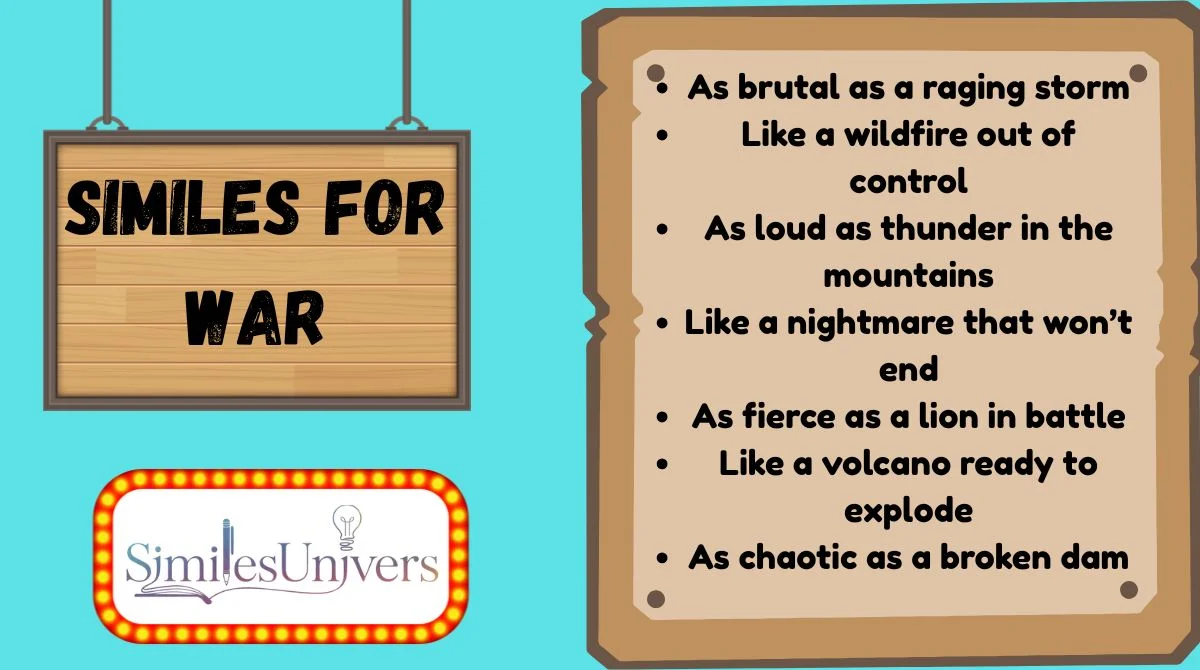
- As brutal as a raging storm
- Like a wildfire out of control
- As loud as thunder in the mountains
- Like a nightmare that won’t end
- As fierce as a lion in battle
- Like a volcano ready to explode
- As chaotic as a broken dam
- Like a pack of wolves hunting
- As dark as a moonless night
- Like fire spreading through dry grass
Complete List of Similes for “War” (Grouped by Meaning)
Dramatic & Intense Similes
Like a wildfire tearing through a forest
Meaning: War spreads fast and destroys everything.
War moves quickly and leaves damage behind.
- The invasion was like a wildfire tearing through a forest.
- Rumors of conflict spread like a wildfire through the region.
Tone: Serious
As loud as thunder crashing overhead
Meaning: War is noisy and shocking.
The sounds of battle feel overwhelming.
- The bombs were as loud as thunder crashing overhead.
- Gunfire echoed as loud as thunder in the valley.
Tone: Dramatic
Like a volcano erupting without warning
Meaning: War explodes suddenly.
It can begin with little notice and massive force.
- The conflict began like a volcano erupting without warning.
- Anger rose like a volcano ready to explode.
Tone: Intense
As fierce as a cornered tiger
Meaning: War is savage and unstoppable.
When pushed, forces fight hard and fast.
- The soldiers fought as fierce as a cornered tiger.
- The army struck back as fierce as a trapped beast.
Tone: Serious
Like a storm swallowing the sea
Meaning: War overwhelms everything.
It consumes peace and calm.
- The battle came like a storm swallowing the sea.
- Fear spread like waves under a storm.
Tone: Poetic
As relentless as crashing waves
Meaning: War does not stop easily.
It continues again and again.
- The attacks were as relentless as crashing waves.
- The conflict dragged on like waves hitting rock.
Tone: Serious
Emotional & Deep Similes
Like a wound that never heals
Meaning: War leaves lasting pain.
Its effects stay long after it ends.
- The civil war felt like a wound that never heals.
- The memories stayed like scars that never fade.
Tone: Emotional
As heavy as iron chains
Meaning: War feels burdensome.
It weighs down hearts and nations.
- The fear hung as heavy as iron chains.
- The cost of war felt as heavy as steel.
Tone: Serious
Like a shadow that follows forever
Meaning: War’s impact lasts long.
It lingers in memory.
- The trauma stayed like a shadow that follows forever.
- The loss clung like a dark shadow.
Tone: Poetic
As bitter as burnt ash
Meaning: War leaves bitterness behind.
It destroys hope and sweetness.
- Defeat tasted as bitter as burnt ash.
- The ceasefire felt as bitter as smoke.
Tone: Emotional
Like a broken mirror
Meaning: War shatters unity.
It divides people and lands.
- The country was like a broken mirror after the war.
- Trust lay scattered like shattered glass.
Tone: Serious
Funny & Lighthearted Similes
Like siblings fighting over the last slice of cake
Meaning: Small conflicts can resemble mini wars.
It’s playful exaggeration.
- The debate was like siblings fighting over cake.
- The meeting turned into a mini war like kids arguing.
Tone: Funny
As dramatic as a soap opera finale
Meaning: Over-the-top conflict.
Used humorously.
- Their argument was as dramatic as a soap opera finale.
- The classroom dispute felt like TV drama.
Tone: Casual
Like cats and dogs in a thunderstorm
Meaning: Loud and chaotic fight.
- The rivals clashed like cats and dogs in a thunderstorm.
- The protest turned messy like pets in panic.
Tone: Funny
Creative & Unique Similes
Like a chessboard set on fire
Meaning: Strategy destroyed by chaos.
War ruins careful planning.
- The battlefield was like a chessboard set on fire.
- Politics collapsed like burning chess pieces.
Tone: Creative
As tangled as roots beneath a battlefield
Meaning: War has deep, hidden causes.
It grows from complex problems.
- The conflict was as tangled as roots beneath a battlefield.
- History lay twisted like underground vines.
Tone: Literary
Like ink spilled across a map
Meaning: War spreads across nations.
Borders blur under conflict.
- The invasion spread like ink spilled across a map.
- Control faded like ink in water.
Tone: Poetic
As sharp as shattered ice
Meaning: War is cutting and painful.
It wounds quickly.
- The words were as sharp as shattered ice.
- The attack felt as sharp as winter glass.
Tone: Serious
Like a clock ticking toward midnight
Meaning: War builds tension slowly.
Time feels urgent.
- The tension rose like a clock ticking toward midnight.
- The deadline loomed like midnight bells.
Tone: Dramatic
Poetic & Literary Similes
Like winter swallowing the harvest
Meaning: War destroys prosperity.
It ends growth.
- The invasion came like winter swallowing the harvest.
- Hope faded like crops in frost.
Tone: Poetic
As silent as snowfall before battle
Meaning: Calm before chaos.
Peace before attack.
- The field was as silent as snowfall before battle.
- The town waited in quiet stillness.
Tone: Poetic
Like a drumbeat under the earth
Meaning: War builds beneath the surface.
It signals coming trouble.
- Tension felt like a drumbeat under the earth.
- Anger rumbled like hidden drums.
Tone: Literary
As dark as smoke over ruins
Meaning: War leaves destruction.
The mood becomes bleak.
- The sky turned as dark as smoke over ruins.
- The future seemed as dark as ash.
Tone: Serious
Fresh and Unique Similes You Won’t Hear Every Day
- Like glass cracking under frozen silence
War breaks fragile peace suddenly. - As wild as a compass spinning without north
War destroys direction and order. - Like a library burning in slow motion
War erases history and knowledge. - As restless as drums in an empty stadium
War builds tension before action. - Like stars falling into the sea at once
War causes sudden, massive loss.
How to Use These Similes in Writing
In Essays
Use them to describe the impact of war.
Example: The civil unrest spread like ink spilled across a map.
In Stories
Add emotion and imagery.
Example: The bombs fell as loud as thunder crashing overhead.
Keep it natural. One strong simile is better than five weak ones.
How to Create Your Own Similes (Mini Writing Guide)
Step-by-Step Method
- Think about war’s feeling (loud, heavy, chaotic).
- Find something similar in nature or life.
- Connect using “like” or “as.”
- Keep it clear and simple.
- Test if it creates a picture.
5 Practical Tips
- Use sensory images (sound, sight, touch).
- Avoid clichés.
- Match tone with topic.
- Keep it short.
- Read it out loud.
Transformation Examples
Plain: The battle was intense.
Simile: The battle was like a storm breaking the sky.
Plain: The tension grew.
Simile: The tension grew like a drumbeat under the earth.
Plain: The war spread fast.
Simile: The war spread like wildfire through dry fields.
Common Mistakes When Using Similes
Overuse
Too many similes make writing messy.
Clichés
Avoid tired lines readers have seen many times.
Tone Mismatch
Don’t use funny similes in serious war essays.
Practice Exercise
Fill in the blanks:
- The attack was as loud as _______.
- Fear spread like _______.
- The silence felt as heavy as _______.
- The battle raged like _______.
- The country shattered like _______.
- The tension grew like _______.
- The loss felt as bitter as _______.
- The army moved like _______.
- The sky darkened like _______.
- The conflict burned like _______.
- The aftermath felt like _______.
- Hope faded like _______.
Answers
- thunder crashing overhead
- wildfire in dry grass
- iron chains
- a storm swallowing the sea
- a broken mirror
- a clock ticking toward midnight
- burnt ash
- a cornered tiger
- smoke over ruins
- a volcano erupting
- a wound that never heals
- winter swallowing the harvest
FAQs
What are similes for war?
Similes for war compare war to something else using “like” or “as” to make writing more vivid.
Why use similes when writing about war?
They help readers picture the scene and feel emotion.
Can similes be used in essays?
Yes. Use them carefully to add clarity and impact.
What is a powerful simile for war?
War is like a wildfire tearing through a forest.
How many similes should I use?
Use only what improves clarity. One strong simile is enough in short writing.
Are funny similes okay for war?
Only in light or creative writing. Avoid them in serious topics.
Final Thoughts
War is complex. It is loud, painful, and life-changing. Simple words often fail to show its true weight.
Strong similes make your writing vivid and emotional. They help readers see the smoke, hear the thunder, and feel the tension.
Use them wisely. Create your own. Keep them fresh.
And let your words carry power — like a storm that readers will never forget.

Daniel Harper
I am simplifies complex literary concepts into clear, practical lessons for students and learners worldwide.
Through SimilesUnivers, he aims to make mastering similes engaging, structured, and academically enriching.