Waves are never still. They crash, whisper, roar, curl, and fade. That’s why writers love them. Waves can show power, peace, anger, fear, or even joy.
But saying “the waves were big” is boring.
That’s where similes help.
Similes make your writing shine. They compare one thing to another using “like” or “as.” A good simile paints a picture in the reader’s mind. It makes them see, hear, and feel the sea.
In this guide, you’ll find 24+ powerful similes for waves. Some are classic. Many are fresh and new. Each one comes with meaning and examples you can use right away.
Let’s dive in.
What Is a Simile? (Quick Clear Definition)
A simile is a comparison using the words “like” or “as.”
It helps describe something in a simple, clear way.
Example:
The waves rolled in like giant blankets.
Quick List – Most Popular Similes for “Waves”
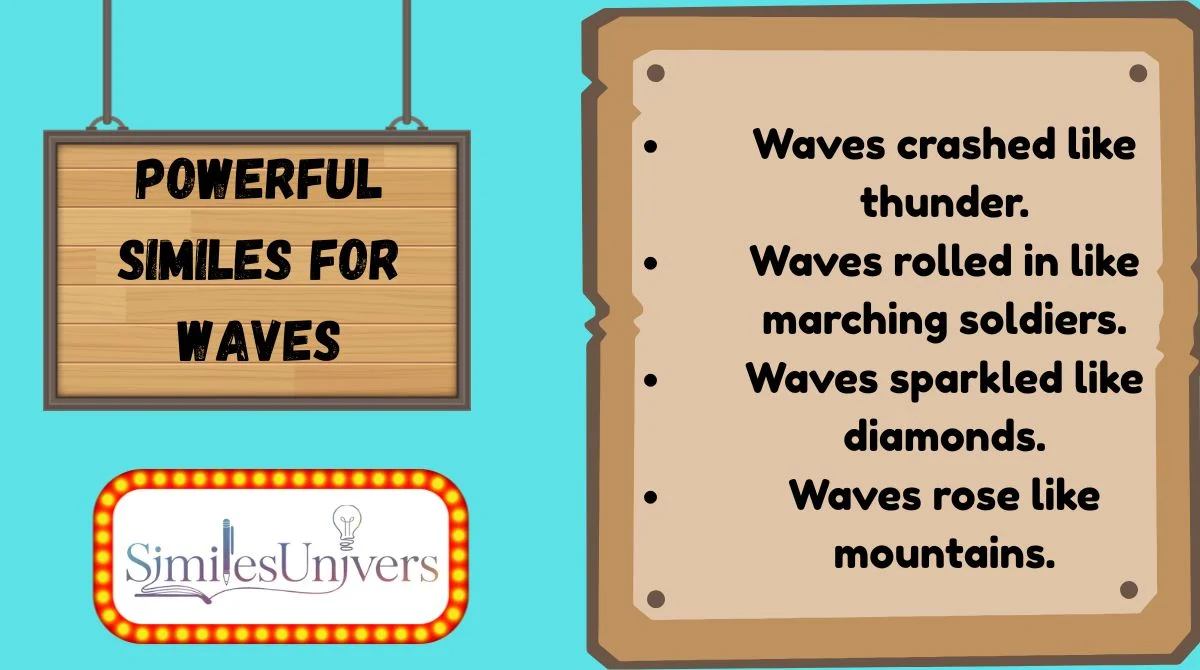
- Waves crashed like thunder.
- Waves rolled in like marching soldiers.
- Waves sparkled like diamonds.
- Waves rose like mountains.
- Waves danced like happy children.
- Waves roared like lions.
- Waves spread like spilled paint.
- Waves curled like sleeping cats.
- Waves shimmered like glass.
- Waves rushed forward like a stampede.
Complete List of Similes for “Waves” (Grouped by Meaning)
Funny & Lighthearted
Waves danced like happy children
Meaning: The waves move in a playful way.
They bounce and skip as if full of joy.
Examples:
The waves danced like happy children in the summer sun.
Small waves danced like happy children near the shore.
Tone: Casual
Waves wobbled like jelly on a plate
Meaning: The waves look soft and shaky.
They move in a loose, silly way.
Examples:
The tiny waves wobbled like jelly on a plate.
In the shallow water, waves wobbled like jelly.
Tone: Funny
Waves clapped like an excited audience
Meaning: The waves hit the shore in steady beats.
They sound like applause.
Examples:
The waves clapped like an excited audience at sunset.
Each wave clapped like an audience cheering the sea.
Tone: Playful
Waves skipped like stones across water
Meaning: The waves move quickly and lightly.
They seem to jump forward.
Examples:
The breeze made the waves skip like stones across water.
Tiny ripples skipped like stones in the pond.
Tone: Casual
Emotional & Deep
Waves sighed like a tired traveler
Meaning: The waves sound soft and weary.
They come and go slowly.
Examples:
The waves sighed like a tired traveler at dusk.
Each wave sighed like it had a long journey.
Tone: Serious
Waves wept like a grieving heart
Meaning: The sea feels sad and heavy.
The sound is slow and deep.
Examples:
Under the gray sky, waves wept like a grieving heart.
The storm passed, but the waves wept like sorrow.
Tone: Poetic
Waves embraced the shore like a long-lost friend
Meaning: The waves come gently and warmly.
They seem loving.
Examples:
Soft waves embraced the shore like a long-lost friend.
At dawn, waves embraced the sand tenderly.
Tone: Poetic
Waves trembled like nervous hands
Meaning: The surface shakes slightly.
The sea feels unsure.
Examples:
The cold wind made the waves tremble like nervous hands.
The lake’s waves trembled like nervous hands in the dark.
Tone: Serious
Dramatic & Intense
Waves crashed like thunder
Meaning: The waves are loud and powerful.
They strike hard.
Examples:
Waves crashed like thunder against the cliffs.
During the storm, waves crashed like thunder.
Tone: Dramatic
Waves rose like towering giants
Meaning: The waves are very tall.
They look huge and strong.
Examples:
Waves rose like towering giants in the storm.
Dark waves rose like giants over the boat.
Tone: Dramatic
Waves roared like hungry lions
Meaning: The sea sounds fierce.
It feels wild and dangerous.
Examples:
The waves roared like hungry lions in the night.
From far away, the waves roared like lions.
Tone: Intense
Waves struck like falling walls
Meaning: The waves hit hard and sudden.
They feel unstoppable.
Examples:
Waves struck like falling walls during the storm.
Each wave struck like a wall of water.
Tone: Serious
Slow & Monotonous
Waves rolled in like a slow drumbeat
Meaning: The waves move in a steady rhythm.
They repeat again and again.
Examples:
Waves rolled in like a slow drumbeat.
All night, waves rolled in like steady drums.
Tone: Calm
Waves drifted like floating clouds
Meaning: The waves move gently.
They feel soft and lazy.
Examples:
On the quiet day, waves drifted like floating clouds.
Gentle waves drifted like clouds at sea.
Tone: Peaceful
Waves stretched like yawning cats
Meaning: The waves move slowly and lazily.
They seem relaxed.
Examples:
Morning waves stretched like yawning cats.
The sea stretched like a lazy cat at dawn.
Tone: Light
Waves repeated like a ticking clock
Meaning: The motion is steady and never stops.
It feels endless.
Examples:
The waves repeated like a ticking clock.
Hour after hour, waves repeated like time itself.
Tone: Serious
Creative & Unique
Waves folded like pages in a giant book
Meaning: The waves curl and flip.
They look like turning pages.
Examples:
Waves folded like pages in a giant book of water.
The sea folded like a book in the wind.
Tone: Creative
Waves shimmered like shattered mirrors
Meaning: Light sparkles across the water.
The surface looks broken and bright.
Examples:
At noon, waves shimmered like shattered mirrors.
The bright sea shimmered like glass.
Tone: Poetic
Waves coiled like silver snakes
Meaning: The waves twist and curl.
They look sleek and smooth.
Examples:
Waves coiled like silver snakes near the reef.
Long waves coiled like snakes in the sun.
Tone: Dramatic
Waves spilled like silk across the sand
Meaning: The water spreads softly.
It feels smooth and flowing.
Examples:
Waves spilled like silk across the sand.
The tide spilled like silk at sunset.
Tone: Poetic
Poetic & Literary
Waves shimmered like a field of stars
Meaning: The sea sparkles in the light.
It looks magical.
Examples:
At night, waves shimmered like a field of stars.
The moon made the waves shimmer like stars.
Tone: Poetic
Waves curled like sleeping dragons
Meaning: The waves look powerful but calm.
They seem ready to rise.
Examples:
Dark waves curled like sleeping dragons.
The sea rested, curled like dragons at peace.
Tone: Dramatic
Waves drifted like whispered secrets
Meaning: The sound is soft and gentle.
It feels private and quiet.
Examples:
The waves drifted like whispered secrets at dusk.
In the fog, waves drifted like secrets.
Tone: Poetic
Waves surged like racing hearts
Meaning: The sea moves fast and strong.
It feels full of emotion.
Examples:
Before the storm, waves surged like racing hearts.
The tide surged like a heartbeat in panic.
Tone: Intense
Fresh and Unique Similes You Won’t Hear Every Day
Here are five original ideas:
- Waves bent like ribbons in a storm.
- Waves breathed like a giant sleeping beneath the sea.
- Waves flickered like blue fire under the sun.
- Waves gathered like secrets before a shout.
- Waves scattered like torn letters in the wind.
These work because they mix motion with emotion. They show shape, sound, and feeling all at once.
How to Use These Similes in Writing
In Essays
Use wave similes in:
- Nature essays
- Descriptive writing
- Travel pieces
Example:
The waves rolled in like a slow drumbeat, marking time against the shore.
In Stories
Wave similes can:
- Show mood
- Add tension
- Reveal emotion
Storm = danger
Calm sea = peace
Wild surf = fear
How to Create Your Own Similes (Mini Writing Guide)
Step-by-Step Method
- Watch how waves move.
- Think of something that moves the same way.
- Use “like” or “as.”
- Keep it simple.
- Test if it paints a picture.
5 Practical Tips
- Use strong verbs.
- Avoid overused ideas.
- Match tone to mood.
- Keep it short.
- Read it out loud.
3 Transformation Examples
Plain: The waves were strong.
Better: The waves were strong like charging bulls.
Plain: The waves were calm.
Better: The waves drifted like floating feathers.
Plain: The waves were loud.
Better: The waves roared like wild beasts.
Common Mistakes When Using Similes
Overuse
Too many similes make writing messy.
Clichés
Avoid worn-out phrases unless you refresh them.
Tone Mismatch
Funny similes don’t fit tragic scenes.
Practice Exercise
Fill in the blanks:
- Waves crashed like _______.
- Waves shimmered like _______.
- Waves rolled in like _______.
- Waves roared like _______.
- Waves drifted like _______.
- Waves curled like _______.
- Waves trembled like _______.
- Waves surged like _______.
- Waves folded like _______.
- Waves scattered like _______.
- Waves sighed like _______.
- Waves stretched like _______.
Answers
(Your answers may vary.)
- thunder
- diamonds
- a slow drumbeat
- lions
- floating clouds
- sleeping dragons
- nervous hands
- racing hearts
- pages in a book
- torn letters
- a tired traveler
- yawning cats
FAQs
What are good similes for waves?
Good similes compare waves to strong, moving things like thunder, lions, giants, or drumbeats.
How do you describe waves in creative writing?
Focus on sound, motion, and mood. Use similes that match emotion.
Are similes better than metaphors for beginners?
Yes. Similes are easier because they use “like” or “as.”
Can I use wave similes in essays?
Yes. They improve descriptive and narrative essays.
What makes a simile powerful?
Clear imagery, strong comparison, and emotional fit.
How many similes should I use in one paragraph?
Usually one or two is enough.
Final Thoughts
Waves are full of life. They can be soft as silk or fierce as lions. The right simile turns plain writing into vivid storytelling.
Now you have 24+ powerful similes for waves — from funny to fierce, calm to dramatic.
Use them wisely. Create your own. Let your words move like the sea.
Daniel Harper
I am simplifies complex literary concepts into clear, practical lessons for students and learners worldwide.
Through SimilesUnivers, he aims to make mastering similes engaging, structured, and academically enriching.