Spring feels like a fresh start. Flowers bloom, the air turns soft, and the world seems full of new energy. Writers often try to capture this feeling on the page—but sometimes plain words are not enough.
That’s where similes help.
A good simile paints a picture in the reader’s mind. It compares one thing to another using “like” or “as.” With the right simile, you can make spring feel colorful, joyful, calm, or magical.
Think about phrases like “bright as a spring morning” or “fresh like the first bloom.” Instantly, readers can see and feel the scene.
In this guide, you’ll discover 27+ powerful similes for spring that can improve stories, essays, poems, and creative writing. Some are classic.
Others are new and creative. By the end, you’ll have a full toolbox of similes to make your writing bloom.
What Is a Simile? (Quick Clear Definition)
A simile compares two different things using “like” or “as” to make an idea easier to imagine.
Example:
“The garden was bright like a rainbow after rain.”
This simple comparison helps readers picture the beauty more clearly.
Quick List – Most Popular Similes for “Spring”
- Fresh like morning dew
- Bright like a field of tulips
- Warm like sunshine after winter
- Soft as a spring breeze
- Colorful like a painter’s palette
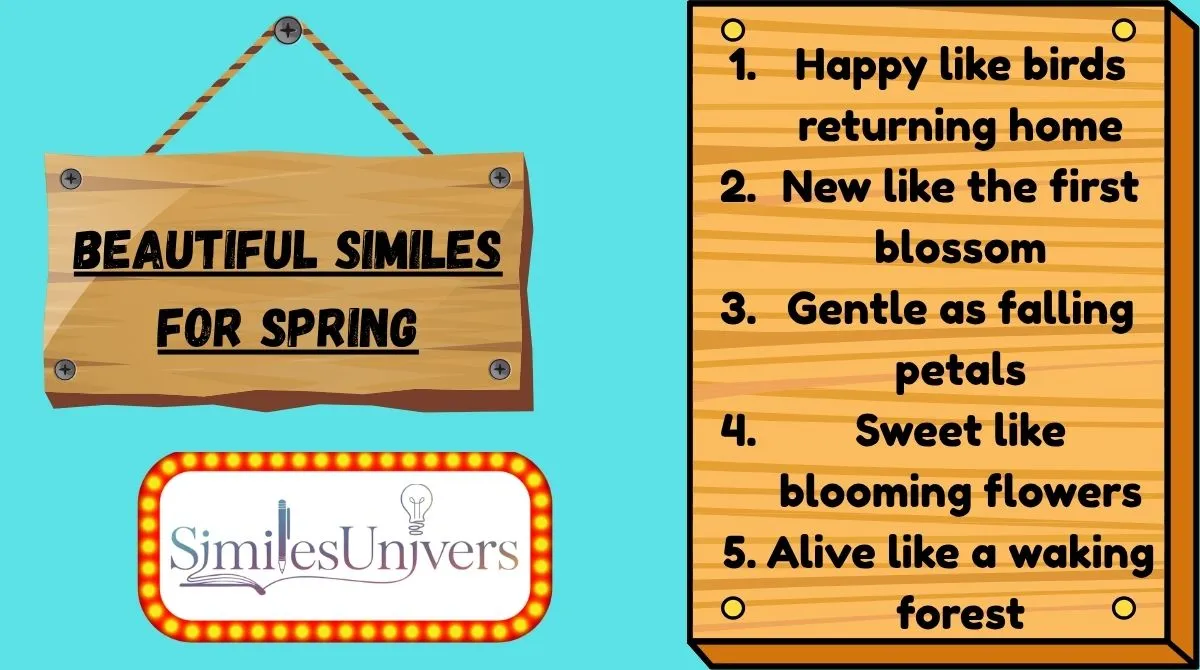
- Happy like birds returning home
- New like the first blossom
- Gentle as falling petals
- Sweet like blooming flowers
- Alive like a waking forest
Complete List of Similes for “Spring” (Grouped by Meaning)
Funny & Lighthearted Similes for Spring
Fresh Like a Garden After Rain
Meaning: Spring feels clean and refreshed.
Explanation: After rain, gardens smell earthy and new—just like the start of spring.
Examples
The air felt fresh like a garden after rain.
Her mood was fresh like a garden after rain on the first warm day.
Tone: Casual
Busy Like Bees in a Flower Field
Meaning: Spring is active and full of life.
Explanation: Bees become busy during spring as flowers bloom everywhere.
Examples
The park was busy like bees in a flower field.
Children ran around like bees in a flower field.
Tone: Funny
Cheerful Like Ducks in a Pond
Meaning: Spring brings joy and playful energy.
Explanation: Ducks splashing in ponds are a lively spring image.
Examples
The children were cheerful like ducks in a pond.
The park felt cheerful like ducks in a pond on a sunny day.
Tone: Lighthearted
Bright Like a Basket of Easter Eggs
Meaning: Spring is colorful and joyful.
Explanation: Easter eggs represent bright colors and celebration.
Examples
The garden looked bright like a basket of Easter eggs.
Her dress was bright like a basket of Easter eggs.
Tone: Fun
Emotional & Deep Similes for Spring
Hopeful Like the First Flower of the Year
Meaning: Spring represents new hope.
Explanation: The first flower after winter symbolizes new beginnings.
Examples
Her smile felt hopeful like the first flower of the year.
The town looked hopeful like the first flower of the year.
Tone: Serious
Calm Like a Quiet Meadow
Meaning: Spring can bring peace.
Explanation: Meadows in spring often feel still and relaxing.
Examples
The morning was calm like a quiet meadow.
He breathed slowly, calm like a quiet meadow in spring.
Tone: Peaceful
Gentle Like Petals Falling
Meaning: Spring is soft and delicate.
Explanation: Flower petals drifting down create a soft image.
Examples
Her voice was gentle like petals falling.
The wind moved gentle like petals falling.
Tone: Poetic
Warm Like Sunshine on New Leaves
Meaning: Spring warmth feels comforting.
Explanation: Sunlight touching new leaves shows warmth and growth.
Examples
His kindness felt warm like sunshine on new leaves.
The afternoon felt warm like sunshine on new leaves.
Tone: Emotional
Dramatic & Intense Similes for Spring
Exploding Like Fireworks of Flowers
Meaning: Spring arrives with sudden beauty.
Explanation: Flowers blooming everywhere can feel dramatic.
Examples
The hills turned pink like fireworks of flowers.
The garden bloomed like fireworks of flowers overnight.
Tone: Dramatic
Alive Like a Forest Waking Up
Meaning: Spring brings life back to nature.
Explanation: Forests become full of birds, plants, and movement.
Examples
The valley looked alive like a forest waking up.
The city park felt alive like a forest waking up.
Tone: Serious
Growing Like Wildflowers After Rain
Meaning: Spring growth happens quickly.
Explanation: Wildflowers spread fast in warm weather.
Examples
Ideas grew like wildflowers after rain.
Hope spread like wildflowers after rain.
Tone: Poetic
Loud Like Birds at Sunrise
Meaning: Spring mornings are lively.
Explanation: Birds sing loudly during spring mornings.
Examples
The trees sounded loud like birds at sunrise.
The forest was loud like birds at sunrise.
Tone: Casual
Creative & Unique Similes for Spring
Soft Like a Blanket of Blossoms
Meaning: Spring feels comforting.
Explanation: Blossoms covering trees look soft and warm.
Examples
The orchard looked soft like a blanket of blossoms.
The scene felt soft like a blanket of blossoms.
Tone: Poetic
Bright Like Sunlight on Butterflies
Meaning: Spring shines with color and movement.
Explanation: Butterflies in sunlight sparkle with beauty.
Examples
The garden was bright like sunlight on butterflies.
Her laugh felt bright like sunlight on butterflies.
Tone: Cheerful
Sweet Like Honey in Warm Air
Meaning: Spring smells and feels sweet.
Explanation: Flowers and warm air create sweet scents.
Examples
The breeze was sweet like honey in warm air.
The park smelled sweet like honey in warm air.
Tone: Casual
Playful Like a Puppy in Tall Grass
Meaning: Spring has playful energy.
Explanation: Puppies running in grass represent joy.
Examples
The wind was playful like a puppy in tall grass.
The kids were playful like puppies in tall grass.
Tone: Funny
Poetic & Literary Similes for Spring
Soft As a Whispering Breeze
Meaning: Spring winds feel light.
Explanation: A whisper suggests gentle motion.
Examples
The wind was soft as a whispering breeze.
The morning air moved soft as a whispering breeze.
Tone: Poetic
Bright As a Meadow of Tulips
Meaning: Spring is colorful and lively.
Explanation: Tulip fields show strong color.
Examples
The field looked bright as a meadow of tulips.
Her dress was bright as a meadow of tulips.
Tone: Poetic
Light As Floating Petals
Meaning: Spring scenes feel delicate.
Explanation: Petals drifting in air feel light.
Examples
The breeze was light as floating petals.
Her laugh felt light as floating petals.
Tone: Literary
New As the First Green Leaf
Meaning: Spring brings renewal.
Explanation: The first leaf marks new life.
Examples
The season felt new as the first green leaf.
Their friendship felt new as the first green leaf.
Tone: Serious
Bright As a Rainbow After Rain
Meaning: Spring beauty often follows storms.
Explanation: Rain and sun together create rainbows.
Examples
The sky looked bright as a rainbow after rain.
Hope felt bright as a rainbow after rain.
Tone: Poetic
Fresh and Unique Similes You Won’t Hear Every Day
Here are five original similes that feel fresh and creative.
1. Fresh like a page in nature’s notebook
Imagery: Spring feels like the start of a new chapter.
2. Bright like laughter in a flower garden
Imagery: Joy mixed with blooming color.
3. Busy like sunlight dancing through leaves
Imagery: Light moving quickly across trees.
4. Alive like paint spreading across a canvas
Imagery: Spring colors filling the world.
5. Gentle like morning light on petals
Imagery: Soft light touching delicate flowers.
These unusual comparisons make writing feel more original.
How to Use These Similes in Writing
In Essays
Similes help describe nature and seasons clearly.
Example
Spring arrived like sunshine after a long winter.
This adds emotion and imagery.
In Stories
Similes help readers imagine scenes.
Example
The town woke like a forest waking after snow.
This makes the setting vivid.
How to Create Your Own Similes (Mini Writing Guide)
Follow this easy method.
Step 1: Choose the feeling
Example
Spring feels fresh.
Step 2: Think of something similar
Example
Morning dew.
Step 3: Connect with “like” or “as”
Example
Spring felt fresh like morning dew.
5 Practical Tips
- Use nature images.
- Keep comparisons simple.
- Avoid very long similes.
- Match the tone of your writing.
- Try unusual comparisons.
3 Transformation Examples
Plain sentence
Spring arrived.
With simile
Spring arrived like a garden waking from sleep.
Plain sentence
The park looked beautiful.
With simile
The park looked bright like a field of tulips.
Plain sentence
The air smelled nice.
With simile
The air smelled sweet like honey in warm sunshine.
Common Mistakes When Using Similes
1. Overusing Them
Too many similes can slow writing.
Use them where they add strong imagery.
2. Using Clichés Too Often
Examples like “fresh as a daisy” feel overused.
Try more creative comparisons.
3. Tone Mismatch
A funny simile may not fit serious writing.
Choose one that matches your mood.
Practice Exercise
Fill in the blanks with a simile.
- The garden looked bright like ______
- The wind felt soft as ______
- Spring smelled sweet like ______
- The meadow looked colorful like ______
- The trees were alive like ______
- The air felt fresh like ______
- The morning sounded loud like ______
- The field looked soft like ______
- The flowers grew like ______
- The breeze moved gentle like ______
- The day felt hopeful like ______
- The sky looked bright like ______
Answers
- a field of tulips
- a whispering breeze
- honey in warm air
- a painter’s palette
- a forest waking up
- morning dew
- birds at sunrise
- a blanket of blossoms
- wildflowers after rain
- petals falling
- the first flower of the year
- a rainbow after rain
FAQs
What is a simile for spring?
A simile for spring compares the season to something else using like or as, such as “fresh like morning dew.”
Why are similes useful in writing?
Similes help readers picture ideas clearly and make writing more vivid and interesting.
What is a poetic simile for spring?
Example: “Spring is gentle like petals falling in the breeze.”
Can similes improve storytelling?
Yes. They create strong images and emotions that help readers imagine scenes.
How many similes should I use in writing?
Use them sparingly. A few well-placed similes work better than too many.
Are similes good for student writing?
Yes. Similes help students describe ideas more creatively and clearly.
Final Thoughts
Spring is one of the most beautiful seasons to describe. Flowers bloom, birds sing, and the world feels alive again.
Using the right similes can turn simple sentences into vivid images. Whether you are writing a story, essay, or poem, these 27+ similes for spring can help your words feel brighter, warmer, and more alive.
Try mixing classic comparisons with fresh, creative ones. When used well, similes make writing bloom—just like spring itself.

Daniel Harper
I am simplifies complex literary concepts into clear, practical lessons for students and learners worldwide.
Through SimilesUnivers, he aims to make mastering similes engaging, structured, and academically enriching.