Exploitation means using a person, group, situation, or resource unfairly for your own benefit. It often involves taking advantage of someone who is weak, poor, young, or unable to protect their rights.
For example, paying workers very little while making them work long hours can be exploitation. The word can also describe the harmful use of natural resources, such as taking too much water from a river.
In simple terms, exploitation happens when someone gains from another person or thing in an unfair or harmful way. This guide explains the meaning, types, examples, and common uses of exploitation.
What Does Exploitation Mean?
Exploitation is the act of taking unfair advantage of someone or something.
The word usually has a negative meaning. It suggests that one person gets a benefit while another person suffers, loses, or receives much less than they deserve.
For example:
- A company pays workers unfairly low wages while making large profits.
- An adult takes advantage of a child’s trust.
- A person uses a friend’s kindness again and again without giving anything back.
- A business takes too many natural resources without caring about the damage.
In each case, there is an unfair use of power, trust, work, or resources.
The exact meaning can change with the situation, but the basic idea stays the same: someone or something is being used unfairly for another person’s benefit.
Simple Definition of Exploitation
A simple exploitation definition is:
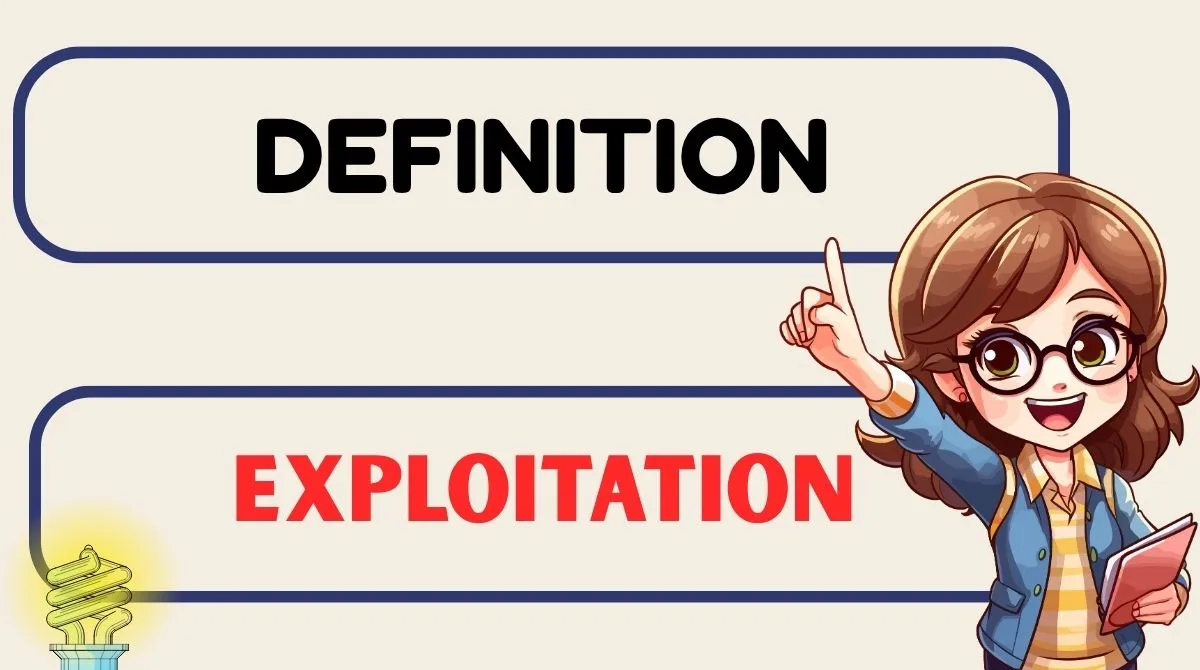
Exploitation is the unfair use of a person, group, situation, or resource for personal or financial gain.
The word comes from the idea of making use of something. However, in everyday English, exploitation usually suggests unfair or harmful use.
Consider these two examples:
Fair use:
A farmer uses land to grow food and takes care of the soil.
Exploitation:
A company removes valuable materials from land without proper care, leaving pollution and damage behind.
The difference is important. Use is not always exploitation. Exploitation involves unfairness, harm, abuse, or taking more than is reasonable.
Common Types of Exploitation
Exploitation can happen in many parts of life. It may involve money, work, relationships, children, natural resources, or personal information.
| Type | Meaning | Example |
|---|---|---|
| Labor exploitation | Unfair treatment of workers | Very low pay for long hours |
| Child exploitation | Using children for unfair benefit | Making children work in harmful conditions |
| Financial exploitation | Taking someone’s money unfairly | Stealing money from a vulnerable person |
| Sexual exploitation | Using someone for sexual benefit through abuse or pressure | Taking advantage of a person’s vulnerability |
| Emotional exploitation | Using someone’s feelings for personal gain | Using guilt to control a friend |
| Resource exploitation | Using natural resources in a harmful or excessive way | Cutting forests without restoring them |
| Digital exploitation | Misusing personal data or online access | Using private information without permission |
These forms can overlap. For example, a person may face labor and financial exploitation at the same time.
What Is Labor Exploitation?
Labor exploitation happens when workers are treated unfairly or abused for another person’s financial benefit.
It can take many forms. A worker may be forced to work excessive hours, paid very little, denied basic rights, or threatened if they complain.
Common examples include:
- Unfairly low wages
- Unsafe working conditions
- Excessive working hours
- Withholding wages
- Threats or intimidation
- Forced labor
- Taking advantage of migrant or vulnerable workers
Not every difficult job is exploitation. A job may be demanding but still be fair if the worker receives proper pay, safe conditions, and legal protections.
The key issue is whether the worker is being unfairly used or denied basic rights.
What Is Child Exploitation?
Child exploitation means using a child for another person’s benefit in a way that harms the child or violates the child’s rights.
Children are especially vulnerable because they may not have the power or knowledge to protect themselves.
Child exploitation can include harmful labor, sexual exploitation, forced criminal activity, or other forms of abuse.
For example, making a child perform dangerous work instead of allowing the child to receive education and proper care may be exploitation.
The important point is that children need special protection. Adults have a responsibility to protect children from situations where someone may take unfair advantage of them.
What Is Financial Exploitation?
Financial exploitation occurs when someone unfairly takes or controls another person’s money, property, or financial resources.
It often targets people who may have difficulty protecting their finances, such as older adults or people who depend on others for care.
Examples include:
- Taking someone’s money without permission
- Pressuring someone to give away property
- Misusing another person’s bank account
- Deceiving someone into making a payment
- Using someone’s trust to gain financial control
For example, if a trusted person convinces an explicitly relative to hand over savings through lies or pressure, that may be financial exploitation.
Financial exploitation can happen between strangers, businesses, friends, relatives, caregivers, or other trusted people.
Exploitation in Relationships
Exploitation can also happen in personal relationships.
A person may take advantage of another person’s love, kindness, trust, money, or emotional support.
For example, imagine someone who constantly asks a friend for money. The friend feels afraid to say no because they do not want to lose the friendship. If the person knowingly uses that fear to keep receiving money, the relationship may involve exploitation.
Emotional exploitation can include:
- Using guilt to get what you want
- Taking advantage of someone’s kindness
- Using someone’s fear against them
- Repeatedly demanding favors without giving support
- Using trust for personal gain
Healthy relationships should have respect, choice, trust, and balance. When one person repeatedly benefits by taking advantage of another, exploitation may be present.
Exploitation of Natural Resources
The word exploitation does not only apply to people. It can also describe the use of natural resources.
Natural resource exploitation means taking resources from the environment for human use, often on a large scale.
Resources may include:
- Forests
- Water
- Oil
- Gas
- Coal
- Minerals
- Fish
- Land
For example, cutting down forests faster than they can recover may be described as forest exploitation.
Resource use is not automatically harmful. People need natural resources for food, energy, homes, and industry. The concern begins when resources are used excessively or irresponsibly, causing serious environmental damage.
This is why phrases such as “natural resource exploitation” often appear in discussions about environmental protection and sustainability.
Exploitation vs. Use: What Is the Difference?
The words use and exploitation are related, but they do not mean the same thing.
Use can be neutral or positive. It simply means making use of something.
Exploitation usually means using something or someone in an unfair, harmful, or abusive way.
For example:
Use:
A company hires workers and pays them fairly.
Exploitation:
A company takes advantage of workers by paying them unfairly and ignoring unsafe conditions.
Another example:
Use:
A community uses water for homes and farms.
Exploitation:
A company takes huge amounts of water while leaving too little for local communities.
The difference often depends on fairness, harm, power, consent, and benefit.
Examples of Exploitation in Everyday Life
The word exploitation can sound complex, but everyday examples make its meaning easier to understand.
Example: Workplace
A manager knows an employee is afraid of losing their job. The manager keeps demanding unpaid work because they know the employee feels unable to refuse.
This may be workplace exploitation.
Example: Friendship
A person only contacts a friend when they need money, favors, or help. They repeatedly use the friend’s kindness but never offer support in return.
This may be emotional or financial exploitation.
Example: Business
A business knowingly sells a product to people by hiding important information and takes advantage of their lack of knowledge.
This may involve consumer exploitation.
Example: Environment
A company removes large amounts of natural resources while ignoring serious damage to the surrounding environment.
This can be called resource exploitation.
Example: Online privacy
A website collects personal information and uses it in ways that users did not expect or agree to.
Depending on the circumstances, this may be described as digital or data exploitation.
These examples show why context matters. Exploitation is not limited to one industry or one type of person.
Why Is Exploitation Harmful?
Exploitation is harmful because it often creates an unfair balance of power.
The person with more power, money, information, or control may gain benefits while the weaker person carries the cost.
The effects can include:
- Financial loss
- Emotional harm
- Physical harm
- Loss of freedom
- Unsafe working conditions
- Loss of trust
- Environmental damage
Exploitation can also make inequality worse. When people are repeatedly denied fair treatment, they may have fewer chances to improve their lives.
This is why laws, workplace rules, child protection systems, consumer protections, and environmental regulations often aim to reduce different forms of exploitation.
Understanding the meaning of exploitation helps people recognize when power or trust is being used unfairly.
How to Use “Exploitation” in a Sentence
The noun exploitation is commonly used in formal writing, news reports, academic discussions, and everyday speech.
Here are some clear examples:
- The law was created to prevent the exploitation of workers.
- The organization works to protect children from exploitation.
- The report discussed the exploitation of natural resources.
- Financial exploitation can be difficult to recognize.
- The workers spoke about unfair treatment and exploitation.
- The company was criticized for the exploitation of local resources.
- Education can help people recognize and avoid exploitation.
You may also see related words such as exploit, exploited, and exploitative.
Exploit is usually the verb:
They exploited the workers’ lack of knowledge.
Exploited describes someone or something that has been used unfairly:
The workers felt exploited.
Exploitative is an adjective:
The company was accused of using exploitative practices.
People Also Ask About Exploitation Definition
What is the simple definition of exploitation?
Exploitation means unfairly using someone or something for your own benefit. It often involves taking advantage of weakness, trust, power, or limited choices.
Is exploitation always harmful?
In normal use, exploitation usually has a negative meaning because it suggests unfair or harmful treatment. However, the exact meaning depends on the context in which the word is used.
What is an example of exploitation?
An example is an employer who makes workers work very long hours while paying them unfairly low wages and ignoring their basic rights.
What is the difference between exploitation and abuse?
Abuse generally means harmful or cruel treatment. Exploitation focuses more on unfairly using someone or something for personal benefit. The two can happen together.
What is financial exploitation?
Financial exploitation means unfairly taking, controlling, or misusing another person’s money, property, or financial resources.
What is labor exploitation?
Labor exploitation occurs when workers are unfairly used for financial gain. It may involve very low pay, unsafe conditions, excessive hours, withheld wages, or other abusive practices.
Can natural resources be exploited?
Yes. Natural resource exploitation means using resources such as forests, water, minerals, oil, or fish, especially when the use is excessive or causes serious environmental harm.
Conclusion
The simplest exploitation definition is the unfair or harmful use of a person, group, situation, or resource for someone else’s benefit.
It can happen at work, in relationships, online, in business, or through the use of natural resources. The key ideas are unfairness, power, harm, and taking advantage.
Knowing what exploitation means makes it easier to understand news, laws, social issues, and everyday situations. When you recognize the signs of exploitation, you can better understand why fairness, consent, safety, and respect matter.

Daniel Harper
I am simplifies complex literary concepts into clear, practical lessons for students and learners worldwide.
Through SimilesUnivers, he aims to make mastering similes engaging, structured, and academically enriching.