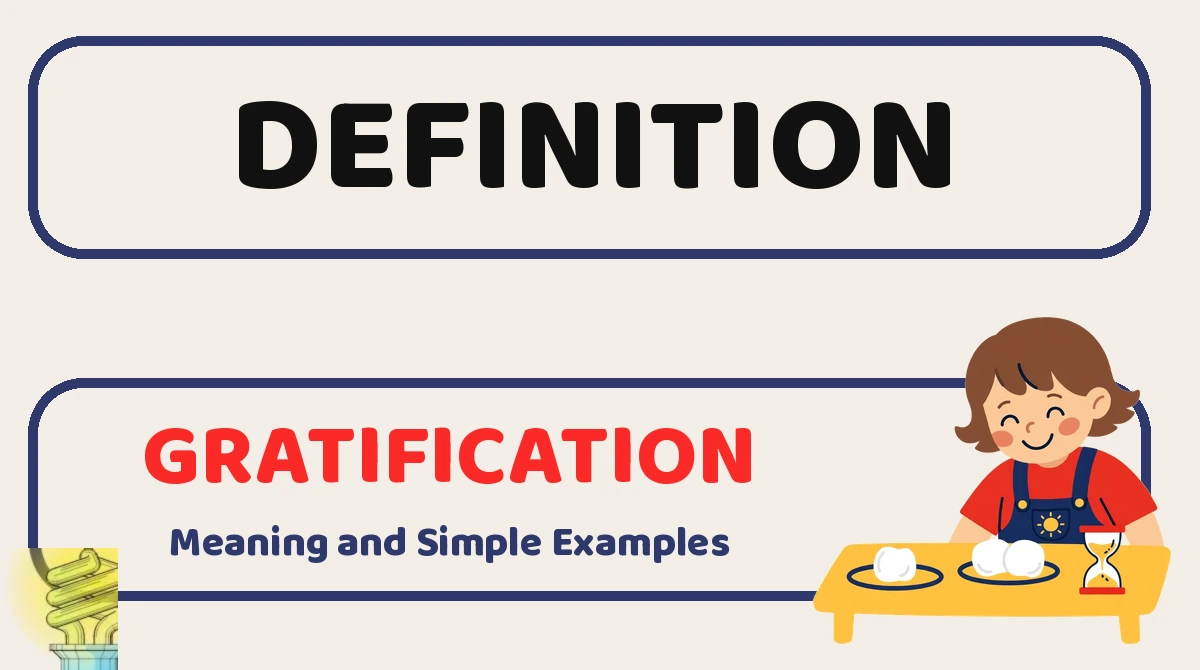
A child stares at a sweet, torn between eating it now and waiting for two sweets later. That pull toward a reward is gratification at work. Gratification is the feeling of pleasure or relief we get when a wish or need is met.
It can arrive at once, like the first sip of water on a hot day, or it can grow slowly, like the pride of finishing a long course. The word shapes how we eat, spend, study, and use our phones.
This article explains the gratification definition, its types, and the signs of each kind in daily life.
What Is the Gratification Definition?
The gratification definition is this: gratification is the pleasure, relief, or satisfaction a person feels when a desire, need, or wish is fulfilled.
The desire can be of the body, like hunger or rest. It can be of the mind, like praise, success, or a puzzle solved. In each case, something was wanted, the want was met, and a good feeling followed. That good feeling is gratification.
Note the two halves of the idea: a want comes first, then its fulfilment. No want, no gratification — a gift you never wished for may please you, but a longed-for goal reached gives the deep, full feeling this word names best.
Where the Word Comes From
The word gratification comes from the Latin word gratificari, meaning “to do a kindness” or “to give freely,” built on gratus, which means “pleasing” or “thankful.”
That root still shows in the word today. Gratification is tied to gifts and thanks: something given — by life, by others, or by our own effort — that pleases us. The same root gives English the words grateful, grace, and congratulate.
Over time, the word moved from the giver to the feeling itself. By the 1500s, English speakers used gratification for the pleasure of a fulfilled wish, and that is the sense we use now, in both daily talk and the science of the mind.
Instant Gratification: The Pleasure of Now
Instant gratification is the urge to take a reward at once, without waiting. It is strong, natural, and everywhere in modern life.
One tap orders food to the door. One click plays the next episode. A phone buzzes, and the hand reaches out before the mind has even decided. Each small reward trains the brain to want the next one fast.
Instant gratification is not always bad. A cold drink when you are thirsty, or rest when you are worn out, is a true need met at the right time. The trouble starts when the wish for “now” beats every better, later gain — when the snack ruins the diet, the splurge empties the savings, or the scroll eats the study hour.
Delayed Gratification: The Power of Waiting
Delayed gratification is the skill of putting off a small reward now to gain a bigger or better one later. It is one of the most useful skills a person can learn.
The student who studies tonight passes the exam next month. The worker who saves a little each week buys a home in ten years. The athlete who trains in the rain lifts the cup in the sun. In each case, the present want is refused so a greater want can be met in full.
This skill is linked, in study after study, to better grades, better health, and steadier money habits. The good news: like a muscle, it grows with practice. Small acts of waiting — one page more, one day more — train the mind for bigger ones.
The Famous Marshmallow Test
In the late 1960s and early 1970s, psychologist Walter Mischel ran a simple test at Stanford. A child sat alone with one marshmallow. The rule: eat it now, or wait a short while and get two.
Some children ate it at once. Others sang, hid their eyes, or sat on their hands — anything to wait and win the second treat. Years later, the team found that the children who waited tended, on average, to do better at school and cope better with stress.
Later studies added a fair warning: waiting also depends on trust and home life. A child who doubts the second treat will come is wise to take the first. Still, the test remains the most famous picture of delayed gratification ever made — one sweet, one child, one choice.
The Main Types of Gratification
Gratification comes in several forms, based on what is wanted and when it is met.
| Type | What is fulfilled | Example |
|---|---|---|
| Physical | A need of the body | Eating when hungry, sleeping when tired |
| Emotional | A need for love, praise, or comfort | A hug after a hard day; kind words from a friend |
| Social | A need to belong or be accepted | Being welcomed into a group; likes on a post |
| Mental | A need to know or achieve | Solving a hard puzzle; passing an exam |
| Instant | Any want met at once | A snack eaten the moment it is seen |
| Delayed | A want met after waiting | Saving for a year to buy a bike |
Most real moments mix the types. A family meal is physical (food), emotional (love), and social (togetherness) all at once — which is why such simple things can feel so rich.
Gratification and the Brain
The brain has a reward system that pushes us to repeat what feels good. When a want is met, the brain releases a chemical called dopamine, which gives a sense of pleasure and marks the act as worth doing again.
This system kept our ancestors alive: eat, drink, rest, repeat. But it cannot tell a true need from a trick. Games, sweets, and social apps are built to fire the system again and again with tiny, fast rewards.
That is why instant gratification can form loops: buzz, tap, pleasure, buzz, tap, pleasure. Knowing the loop exists is the first step to stepping out of it. The brain learns from what we repeat — and waiting, repeated, becomes a reward the brain can enjoy too.
Gratification vs Pleasure and Happiness
Three close words are often mixed up. Pleasure is a good feeling in the moment — the taste of cake, the warmth of the sun. It is short and tied to the senses.
Gratification is pleasure tied to a fulfilled want. It has a story: I wished, I waited or worked, I received. Finishing a race brings gratification, not just pleasure, because effort came first.
Happiness is wider and longer — a general state of contentment with life, built from health, love, purpose, and many small gratifications over time. A simple picture: pleasure is a spark, gratification is a fire you built, and happiness is a warm house.
Neither pleasure nor gratification is “bad.” The mix matters. A life of only instant pleasure feels empty; a life with earned gratification feels full.
Signs: Healthy and Unhealthy Patterns
How can you tell whether your habits of gratification are healthy? Look for these signs.
Healthy signs:
- You can wait for bigger goals without constant distress
- Treats feel like treats — enjoyed, then done
- You finish tasks before rewards, most of the time
- Your spending, eating, and screen time match your plans
Unhealthy signs:
- You cannot leave a phone buzz unanswered
- “Just one more” happens many times a day
- You buy, eat, or scroll to escape boredom or stress
- Long-term goals keep slipping for small, fast rewards
No one is perfect at this. The signs are a mirror, not a judgement. Spotting a pattern is the first step to shifting it, one small wait at a time.
Simple Steps to Build Delayed Gratification
Waiting is a skill, and skills grow with small, steady steps:
- Start tiny — wait ten minutes before a snack or a purchase
- Make the reward visible — a photo of your goal where you see it daily
- Remove the trigger — keep sweets out of sight; move apps off the home screen
- Use “if–then” plans — “If I finish this page, then I check my phone”
- Track your wins — mark each day you wait on a calendar
- Grow the gap slowly — ten minutes becomes an hour, then a day
For example, a student who checks her phone every few minutes might set it in another room for one study block. The block feels hard at first, then normal — and the good grade at the end is gratification of the deepest kind.
People Also Ask About Gratification Definition
What is the gratification definition in simple words?
In simple words, gratification is the good feeling you get when a wish or need is met. Eat when you are hungry, pass a test you studied for, hear praise you hoped for — the pleasure that follows each is gratification.
What is the difference between instant and delayed gratification?
Instant gratification is taking a reward at once, like eating a sweet the moment you see it. Delayed gratification is waiting for a bigger or better reward later, like saving money for months to buy something you truly want.
What is the marshmallow test?
The marshmallow test was a study by Walter Mischel in which a child could eat one marshmallow at once or wait and get two. Children who waited tended to do better later in school and life, though trust and home conditions also matter.
Is instant gratification always bad?
No. Meeting a true need at once — drinking when thirsty, resting when ill — is healthy. Instant gratification becomes a problem only when the hunger for “now” keeps defeating bigger, better rewards that need a little waiting.
How does gratification affect the brain?
When a want is met, the brain releases dopamine, a chemical linked to pleasure and learning. This reward system makes us repeat what felt good, which is why fast rewards like notifications and sweets can form strong habits.
Can delayed gratification be learned?
Yes. Delayed gratification is a skill, not a fixed trait. Start with tiny waits, remove triggers, set clear goals, and track small wins. Like a muscle, the ability to wait grows stronger the more it is used.
What is an example of gratification?
Saving part of your pay each month and finally buying a bike is delayed gratification. Eating a ripe mango on a hot day is instant physical gratification. Both are the same basic feeling: a want fulfilled, followed by pleasure.
Conclusion
The gratification definition comes down to one simple event: a want is met, and pleasure follows. The want may be of the body, the heart, or the mind, and the reward may come at once or after long, patient waiting.
Learn to spot the two great kinds — instant and delayed — and you hold a key to better study, spending, health, and work. The sweetest rewards are often the ones we wait for.

Daniel Harper
I am simplifies complex literary concepts into clear, practical lessons for students and learners worldwide.
Through SimilesUnivers, he aims to make mastering similes engaging, structured, and academically enriching.