Anger is a powerful emotion—it can simmer quietly or explode without warning. But how do you make that fury come alive on the page? One of the best tools is the simile.
Similes allow readers to see, feel, and even smell the emotion you’re trying to convey. Instead of saying someone is angry, you can show it in ways that are vivid, relatable, and memorable.
Whether you’re a writer, student, or just love creative expression, this guide will equip you with over 35 similes for anger that bring emotion to life.
You’ll discover classic phrases, modern twists, and some rare gems that will make your writing sizzle. By the end, you’ll be ready to turn simple anger into a scene your readers can practically feel.
What Is a Simile?
A simile is a figure of speech that compares two different things using “like” or “as.” It’s a way to describe emotions, actions, or objects in a vivid, relatable way.
Example: “Her anger was like a storm brewing over the mountains.”
Quick List – Most Popular Similes for Anger
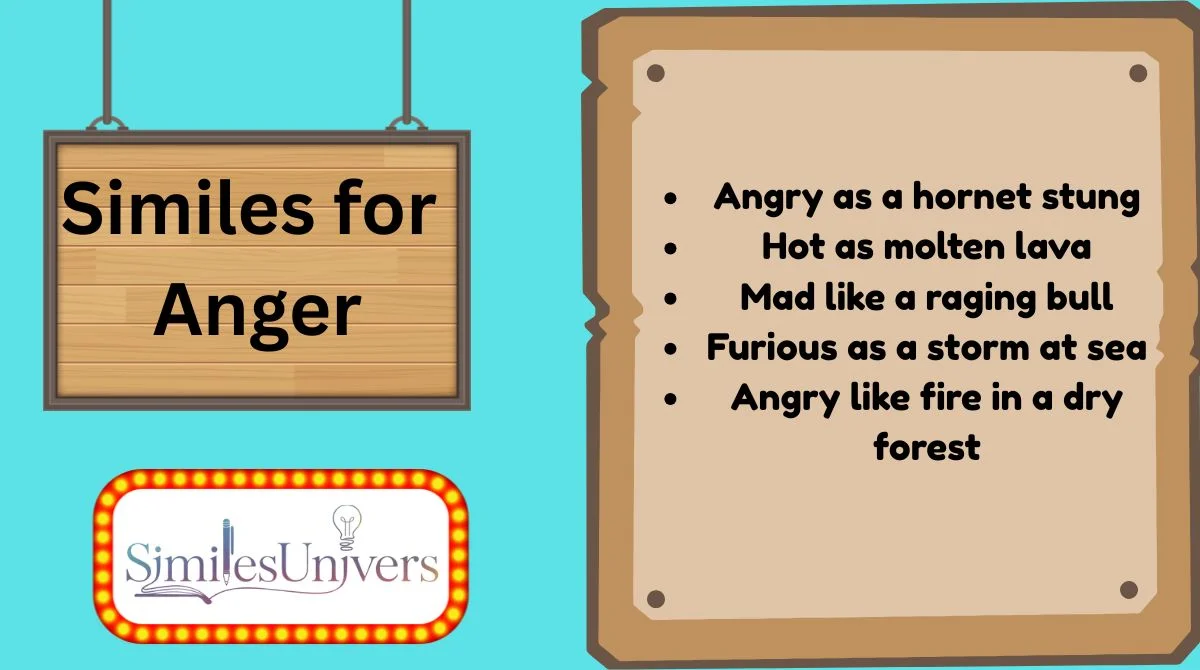
- Angry as a hornet stung
- Hot as molten lava
- Mad like a raging bull
- Furious as a storm at sea
- Angry like fire in a dry forest
- Steaming like a boiling kettle
- Red as a ripe tomato
- Snapping like a whip
- Fuming like a volcano
- Roaring like thunder
Complete List of Similes for Anger (Grouped by Meaning)
Funny & Lighthearted
Angry as a cat with wet fur
Meaning: Annoyed and uncomfortable
Explanation: Captures a mix of irritation and small chaos
Examples:
- “He was angry as a cat with wet fur when his phone died.”
- “She looked angry as a cat with wet fur after the coffee spill.”
Tone: Funny
Hot as a jalapeño pepper
Meaning: Fiery and spiky in mood
Explanation: Evokes spicy, sharp anger in a playful way
Examples:
- “I was hot as a jalapeño pepper when he borrowed my notebook.”
- “His temper was hot as a jalapeño pepper after the prank.”
Tone: Funny
Snapping like a rubber band
Meaning: Quick to anger
Explanation: Shows sudden bursts of irritation
Examples:
- “She snapped like a rubber band when asked the same question again.”
- “He snapped like a rubber band after a long, stressful day.”
Tone: Funny
Angry as a toddler denied candy
Meaning: Petty but intense frustration
Explanation: Shows childish, exaggerated fury
Examples:
- “He pouted, angry as a toddler denied candy, after losing the game.”
- “She crossed her arms, angry as a toddler denied candy, when interrupted.”
Tone: Funny
Fuming like a shaken soda can
Meaning: Ready to explode
Explanation: Builds visual tension of imminent outburst
Examples:
- “He was fuming like a shaken soda can after the argument.”
- “She fumed like a shaken soda can when her proposal was rejected.”
Tone: Funny
Emotional & Deep
Boiling like a cauldron
Meaning: Deep, simmering anger
Explanation: Suggests anger building steadily under the surface
Examples:
- “His emotions were boiling like a cauldron he couldn’t lift.”
- “Her rage boiled like a cauldron in the quiet of the night.”
Tone: Serious
Burning like embers in the hearth
Meaning: Quiet but persistent anger
Explanation: Conveys anger that smolders but can flare
Examples:
- “The insult left her burning like embers in the hearth.”
- “His bitterness burned like embers in the quiet office.”
Tone: Serious
Sharp as a knife edge
Meaning: Painful and cutting anger
Explanation: Anger that harms or stings
Examples:
- “His words were sharp as a knife edge, leaving everyone silent.”
- “She gave him a look sharp as a knife edge after the betrayal.”
Tone: Serious
Cold as ice
Meaning: Detached, controlled anger
Explanation: Shows a reserved, but deadly, fury
Examples:
- “He stared back, cold as ice, after hearing the accusation.”
- “Her cold-as-ice glare silenced the room instantly.”
Tone: Serious
Storming like a winter gale
Meaning: Intense, overwhelming emotion
Explanation: Evokes unstoppable, natural force of anger
Examples:
- “He stormed through the hall like a winter gale.”
- “She entered, storming like a winter gale, leaving chaos behind.”
Tone: Serious
Dramatic & Intense
Raging like wildfire
Meaning: Uncontrollable fury
Explanation: Suggests anger spreading fast and destructively
Examples:
- “His temper raged like wildfire across the office.”
- “She raged like wildfire when her trust was broken.”
Tone: Dramatic
Exploding like a volcano
Meaning: Sudden and violent anger
Explanation: Shows a moment of peak fury
Examples:
- “He exploded like a volcano when he saw the mess.”
- “Her patience finally broke, exploding like a volcano.”
Tone: Dramatic
Roaring like thunder
Meaning: Loud and intimidating anger
Explanation: Anger that cannot be ignored
Examples:
- “He roared like thunder in the courtroom.”
- “Her voice roared like thunder across the hallway.”
Tone: Dramatic
Boiling over like a kettle
Meaning: Anger reaching its limit
Explanation: Captures the final tipping point
Examples:
- “He boiled over like a kettle after hours of teasing.”
- “She finally boiled over like a kettle, shouting at the team.”
Tone: Dramatic
Mad as a hornet
Meaning: Irritable and easily provoked
Explanation: Shows sharp, aggressive anger
Examples:
- “He was mad as a hornet after the criticism.”
- “She buzzed, mad as a hornet, when interrupted.”
Tone: Dramatic
Creative & Unique
Anger like shattered glass
Meaning: Fragile but dangerous rage
Explanation: Evokes sharpness and unpredictability
Examples:
- “His words flew, anger like shattered glass.”
- “She faced him, anger like shattered glass, cutting every sentence.”
Tone: Creative
Like steam from a cracked engine
Meaning: Pressure finally released
Explanation: Suggests built-up stress and irritation
Examples:
- “He hissed, like steam from a cracked engine, after hours of waiting.”
- “Her temper vented like steam from a cracked engine.”
Tone: Creative
Angry as a desert sun
Meaning: Harsh, relentless anger
Explanation: Suggests heat and intensity
Examples:
- “He glared, angry as a desert sun.”
- “Her fury shone, angry as a desert sun, over every mistake.”
Tone: Creative
Like ink spilled on a canvas
Meaning: Messy, uncontrolled anger
Explanation: Suggests chaos and permanence
Examples:
- “His temper was like ink spilled on a canvas.”
- “She raged, leaving words like ink spilled on a canvas.”
Tone: Creative
As prickly as cactus needles
Meaning: Sharp, defensive anger
Explanation: Shows irritation that warns others
Examples:
- “He answered, as prickly as cactus needles.”
- “Her mood was as prickly as cactus needles after the insult.”
Tone: Creative
Poetic & Literary
Like a tempest in a teapot
Meaning: Small issue, big anger
Explanation: Overblown emotion for literary effect
Examples:
- “She seethed, like a tempest in a teapot, over the missing book.”
- “His annoyance grew, like a tempest in a teapot, unnoticed by others.”
Tone: Poetic
Burning like a winter hearth
Meaning: Hidden but intense
Explanation: Contrasts cold surroundings with inner heat
Examples:
- “Her anger burned like a winter hearth in silence.”
- “He was calm outside, burning like a winter hearth inside.”
Tone: Poetic
As dark as storm clouds
Meaning: Ominous anger
Explanation: Suggests looming tension or threat
Examples:
- “He entered, as dark as storm clouds, warning everyone.”
- “Her mood was as dark as storm clouds over the festival.”
Tone: Poetic
Shaking like autumn leaves
Meaning: Trembling anger or nervous fury
Explanation: Shows internal and visible effect of anger
Examples:
- “He shook, like autumn leaves, when provoked.”
- “Her voice trembled, shaking like autumn leaves, in fury.”
Tone: Poetic
Like a cannon ready to fire
Meaning: Anger loaded and explosive
Explanation: Suggests imminent outburst
Examples:
- “He glared, like a cannon ready to fire.”
- “Her words, like a cannon ready to fire, silenced the room.”
Tone: Poetic
Fresh and Unique Similes You Won’t Hear Every Day
- Angry like shadows at noon – Evokes confusion and sharp contrast
- Fuming like coffee on a winter morning – Warm, bitter intensity
- Hot as a forge under the sun – Industrious, burning energy
- Snapping like twigs underfoot – Sudden, sharp, unpredictable
- Boiling like sugar syrup – Sticky, concentrated, hard to ignore
Explanation: Each simile paints a visual or sensory image that stands out from typical phrases, making your writing vivid and memorable.
How to Use These Similes in Writing
- Essays: Use similes to make emotions relatable in narrative or descriptive essays.
- Stories: Inject tension, humor, or depth into characters’ reactions and dialogue.
How to Create Your Own Similes (Mini Writing Guide)
Step-by-step method:
- Identify the emotion or object.
- Brainstorm sensory images.
- Find a comparison using “like” or “as.”
- Test for clarity and relatability.
- Refine for rhythm and tone.
Tips:
- Use fresh, unusual images.
- Avoid clichés.
- Keep comparisons simple.
- Match tone to context.
- Limit to one per sentence.
Transformation Examples:
- “He was angry” → “He was angry like a storm trapped in a teacup.”
- “She frowned” → “She frowned, sharp as icicles on a winter night.”
- “He shouted” → “He shouted like a kettle boiling over.”
Common Mistakes When Using Similes
- Overuse: Too many similes can overwhelm.
- Clichés: Avoid overused comparisons.
- Tone mismatch: Ensure the simile matches your writing style.
Practice Exercise
Fill in the blanks with an appropriate simile for anger:
- He was _______ when his keys disappeared.
- She glared, _______ after the insult.
- His temper erupted, _______.
- Her frustration simmered, _______.
- He snapped, _______ at the argument.
- Her fury burned, _______.
- He roared, _______ in the hallway.
- She fumed, _______ after waiting.
- His words cut, _______.
- She pouted, _______ over the prank.
- He stared, _______ at the mistake.
- Her voice trembled, _______ in anger.
Answers:
- like a hornet stung
- sharp as a knife edge
- exploding like a volcano
- boiling like a cauldron
- snapping like a rubber band
- like embers in a hearth
- roaring like thunder
- like steam from a cracked engine
- like shattered glass
- angry as a toddler denied candy
- cold as ice
- shaking like autumn leaves
FAQs
What is a good simile for extreme anger?
“Exploding like a volcano” or “raging like wildfire” captures extreme fury vividly.
How do similes improve writing?
They make abstract emotions tangible and relatable, helping readers visualize feelings.
Can I mix funny and serious similes?
Yes, but maintain consistent tone within a sentence or paragraph to avoid confusion.
Are there fresh alternatives to classic anger similes?
Yes—similes like “fuming like coffee on a winter morning” offer unique imagery.
How many similes should I use per paragraph?
One or two are usually enough; overuse can feel forced.
Can similes be used in essays?
Absolutely! They enhance descriptive and narrative sections for emotional impact.
Final Thoughts
Similes are powerful tools to convey anger in writing. By using these 35+ examples—ranging from classic to unique—you can paint emotions vividly and captivate readers. Experiment with fresh images, match tone to context, and soon your writing will not just tell but show the heat of human emotion.

Daniel Harper
I am simplifies complex literary concepts into clear, practical lessons for students and learners worldwide.
Through SimilesUnivers, he aims to make mastering similes engaging, structured, and academically enriching.