Sleep is one of life’s most universal experiences. Yet, describing it in writing can feel tricky. How do you capture the serenity of drifting off, the heaviness of exhaustion, or the sudden jolts of restless nights? That’s where similes come in.
By comparing sleep to familiar images, similes bring your writing to life, adding color, humor, and emotion.
Whether you’re a storyteller, essayist, or poet, the right simile can make readers feel sleep rather than just read about it. In this guide, you’ll discover over 27 similes for sleep—classic, creative, and completely fresh.
You’ll learn how to use them effectively, create your own, and avoid common pitfalls. By the end, you’ll have a rich arsenal of comparisons that will make your descriptions of sleep unforgettable.
What Is a Simile? (Quick Clear Definition)
A simile is a figure of speech that compares two different things using words like “like” or “as.” It makes descriptions more vivid and relatable.
Example:
- “She slept like a log.” This immediately gives the reader an image of someone sleeping very soundly.
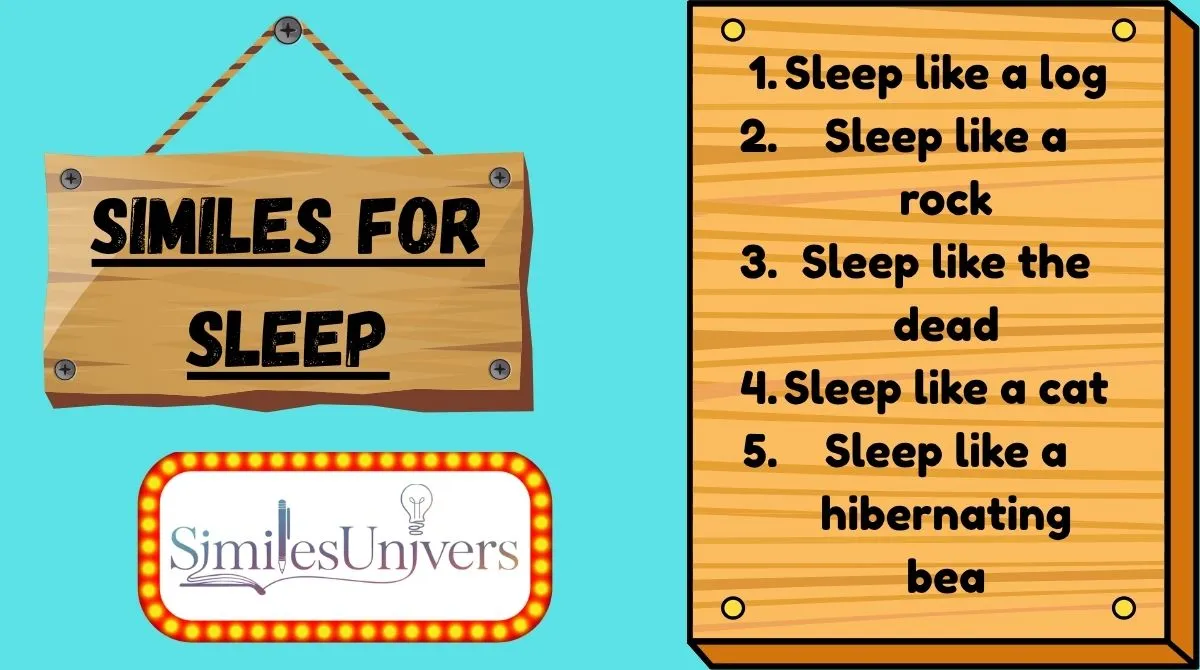
Quick List – Most Popular Similes for Sleep
- Sleep like a baby
- Sleep like a log
- Sleep like a rock
- Sleep like the dead
- Sleep like a cat
- Sleep like a hibernating bear
- Sleep like a cloud drifting
- Sleep like a king
- Sleep like a flower closing at night
- Sleep like a wave on the shore
Complete List of Similes for Sleep (Grouped by Meaning)
Funny & Lighthearted
Sleep like a sack of potatoes
Meaning: Deep, heavy, unbothered sleep
Explanation: Implies total relaxation and weighty immobility.
Examples:
- After the 12-hour road trip, he slept like a sack of potatoes.
- Kids crashed on the couch and slept like sacks of potatoes.
Tone: Funny
Sleep like a hibernating hamster
Meaning: Long, cozy sleep
Explanation: Suggests curling up in a tiny, safe space, oblivious to the world.
Examples:
- On snowy days, she sleeps like a hibernating hamster.
- He disappeared under the blanket and slept like a hibernating hamster.
Tone: Lighthearted
Sleep like a sloth on a sunny branch
Meaning: Slow, deep, peaceful sleep
Explanation: Evokes lazy, unhurried, relaxed rest.
Examples:
- Weekends make me sleep like a sloth on a sunny branch.
- The cat sleeps like a sloth on a sunny branch every afternoon.
Tone: Funny
Emotional & Deep
Sleep like the ocean at midnight
Meaning: Calm, soothing sleep
Explanation: Suggests serenity and gentle waves of rest.
Examples:
- After the storm of exams, she slept like the ocean at midnight.
- He finally slept like the ocean at midnight, with worries drifting away.
Tone: Poetic
Sleep like a leaf falling from a tree
Meaning: Natural, effortless sleep
Explanation: Emphasizes a graceful, unforced transition into rest.
Examples:
- The child slept like a leaf falling from a tree.
- After the long hike, I slept like a leaf falling from a tree.
Tone: Serious
Sleep like stars disappearing at dawn
Meaning: Quiet, fading into rest
Explanation: Conveys a gentle, almost magical withdrawal from wakefulness.
Examples:
- He drifted off, sleeping like stars disappearing at dawn.
- The room was silent as she slept like stars disappearing at dawn.
Tone: Poetic
Dramatic & Intense
Sleep like the dead in a crypt
Meaning: Unconscious, total stillness
Explanation: Indicates sleep so deep it’s almost lifeless.
Examples:
- After the surgery, he slept like the dead in a crypt.
- She finally slept like the dead in a crypt, exhausted beyond words.
Tone: Serious
Sleep like a warrior after battle
Meaning: Hard-earned, heavy sleep
Explanation: Reflects complete exhaustion from effort or struggle.
Examples:
- He slept like a warrior after battle following the marathon.
- She collapsed onto the bed and slept like a warrior after battle.
Tone: Dramatic
Sleep like fire extinguished
Meaning: Sudden, total rest
Explanation: Suggests an abrupt transition from alertness to inactivity.
Examples:
- He fell asleep like fire extinguished, mid-conversation.
- After the long night, she slept like fire extinguished.
Tone: Dramatic
Slow & Monotonous
Sleep like a clock ticking slowly
Meaning: Uneventful, steady sleep
Explanation: Evokes a rhythmic, almost boring, unbroken rest.
Examples:
- In the quiet cabin, I slept like a clock ticking slowly.
- He snoozed through the lecture, sleeping like a clock ticking slowly.
Tone: Casual
Sleep like a melting candle
Meaning: Gradual drift into sleep
Explanation: Implies slow fading of consciousness.
Examples:
- She slept like a melting candle, eyelids drooping gradually.
- By midnight, he slept like a melting candle, fading softly.
Tone: Poetic
Sleep like a river trickling
Meaning: Calm, slow, steady
Explanation: Suggests a peaceful, continuous sleep without disturbance.
Examples:
- He slept like a river trickling under moonlight.
- She finally slept like a river trickling after a hectic day.
Tone: Poetic
Creative & Unique
Sleep like a feather on a breeze
Meaning: Light, effortless sleep
Explanation: Suggests floating into rest gently, without tension.
Examples:
- I drifted off, sleeping like a feather on a breeze.
- The baby slept like a feather on a breeze, barely moving.
Tone: Creative
Sleep like a book closed at midnight
Meaning: Quiet, paused sleep
Explanation: Evokes a story that has paused, mirroring the mind resting.
Examples:
- He slept like a book closed at midnight, unfinished and waiting.
- She rested, sleeping like a book closed at midnight.
Tone: Unique
Sleep like a shadow at dusk
Meaning: Gentle, unobtrusive sleep
Explanation: Suggests fading quietly into darkness, unnoticed.
Examples:
- After work, he slept like a shadow at dusk.
- The child slept like a shadow at dusk, calm and soft.
Tone: Poetic
Poetic & Literary
Sleep like dew on morning grass
Meaning: Soft, refreshing sleep
Explanation: Suggests a delicate, restorative rest.
Examples:
- She slept like dew on morning grass, untouched by worry.
- He slept like dew on morning grass, ready for the day ahead.
Tone: Poetic
Sleep like a moonlit lake
Meaning: Calm, reflective sleep
Explanation: Evokes serenity and smooth stillness.
Examples:
- He slept like a moonlit lake, serene and undisturbed.
- The baby slept like a moonlit lake, calm and pure.
Tone: Poetic
Sleep like petals closing at dusk
Meaning: Natural, gentle sleep
Explanation: Mirrors nature’s cycle, evoking tranquility.
Examples:
- She slept like petals closing at dusk.
- He fell asleep like petals closing at dusk, peaceful and soft.
Tone: Poetic
Fresh and Unique Similes You Won’t Hear Every Day
- Sleep like a library with whispering books
- Imagery: Quiet, almost sacred sleep surrounded by calm.
- Sleep like a fox in autumn leaves
- Imagery: Cozy, tucked in, blending into comfort.
- Sleep like ink drying on parchment
- Imagery: Gradual, unhurried, with permanence.
- Sleep like a star blinking out
- Imagery: Abrupt, fleeting, yet peaceful.
- Sleep like a compass needle at rest
- Imagery: Perfect stillness after movement or chaos.
How to Use These Similes in Writing
Essays: Add flavor to personal narratives or reflective writing.
- Example: “After a long day of volunteering, I slept like a leaf falling from a tree.”
Stories: Bring characters’ sleep to life with emotion or humor.
- Example: “The soldier collapsed into his bunk, sleeping like a warrior after battle.”
How to Create Your Own Similes (Mini Writing Guide)
Step-by-Step Method:
- Identify the feeling or quality of sleep.
- Think of objects, animals, or natural phenomena that share that quality.
- Connect them using like or as.
- Test the imagery for clarity and originality.
5 Practical Tips:
- Avoid clichés like “sleep like a baby.”
- Match tone: serious vs funny vs poetic.
- Keep it short and vivid.
- Use sensory details.
- Revise for rhythm and readability.
3 Transformation Examples:
- “Sleep heavy” → “Sleep like a stone sinking in water”
- “Sleep restless” → “Sleep like leaves tossed in wind”
- “Sleep peaceful” → “Sleep like sunlight on still water”
Common Mistakes When Using Similes
- Overuse: Too many comparisons can confuse readers.
- Clichés: Overused similes feel lazy and unoriginal.
- Tone mismatch: Funny similes in serious scenes can feel jarring.
Practice Exercise
Fill in the blanks with appropriate similes for sleep:
- After the long hike, he slept ________.
- The baby finally dozed off, sleeping ________.
- She slept ________, her worries fading away.
- He crashed onto the bed, sleeping ________.
- On quiet nights, I sleep ________.
- Exhausted from work, she slept ________.
- The cat curled up, sleeping ________.
- After the storm, the village slept ________.
- He napped in the sun, sleeping ________.
- Children after the party slept ________.
- The soldier slept ________.
- On rainy evenings, she slept ________.
Answers:
- like a sack of potatoes
- like a feather on a breeze
- like dew on morning grass
- like a warrior after battle
- like a clock ticking slowly
- like a leaf falling from a tree
- like a sloth on a sunny branch
- like the ocean at midnight
- like sunlight on still water
- like stars disappearing at dawn
- like the dead in a crypt
- like petals closing at dusk
FAQs (Optimized for People Also Ask)
What is a simile for deep sleep?
- Common examples include “sleep like a log” or “sleep like the dead.”
How can I make my writing about sleep more vivid?
- Use similes that compare sleep to familiar objects or natural phenomena.
Are there creative alternatives to “sleep like a baby”?
- Yes, try “sleep like a feather on a breeze” or “sleep like a fox in autumn leaves.”
Can similes for sleep be funny?
- Absolutely! Examples include “sleep like a sack of potatoes” or “sleep like a sloth on a sunny branch.”
How many similes should I use in a story?
- One or two strong, clear similes per scene is ideal; avoid overloading.
How do I create unique similes?
- Observe nature, objects, or animals and connect their qualities to sleep using like or as.
Final Thoughts
Similes are powerful tools that turn ordinary descriptions of sleep into vivid, engaging imagery. From funny and lighthearted to poetic and dramatic, the right comparison can make your readers feel the sleep rather than just imagine it.
Use this guide as a reference, experiment with your own similes, and bring your writing to life—one dreamy comparison at a time.
Daniel Harper
I am simplifies complex literary concepts into clear, practical lessons for students and learners worldwide.
Through SimilesUnivers, he aims to make mastering similes engaging, structured, and academically enriching.