The wind is never just wind. It can whisper, howl, tease, or roar. It can feel gentle as a hug or sharp as a slap.
That’s why writers love using similes for wind. A good simile helps readers feel the breeze on their skin or hear the storm in their ears.
Similes make writing clearer, brighter, and more emotional. Instead of saying “the wind was strong,” you can say “the wind was like a wild horse breaking free.” That paints a picture.
In this guide, you’ll find 21+ high-quality similes for wind—funny ones, deep ones, dramatic ones, and rare creative ones. You’ll also learn how to use them and how to create your own.
Let’s get started.
What Is a Simile? (Quick Clear Definition)
A simile compares two different things using the words “like” or “as.”
It helps readers imagine something clearly.
Example:
The wind was as cold as ice.
Quick List – Most Popular Similes for “Wind”
- As cold as ice
- Like a whisper in the dark
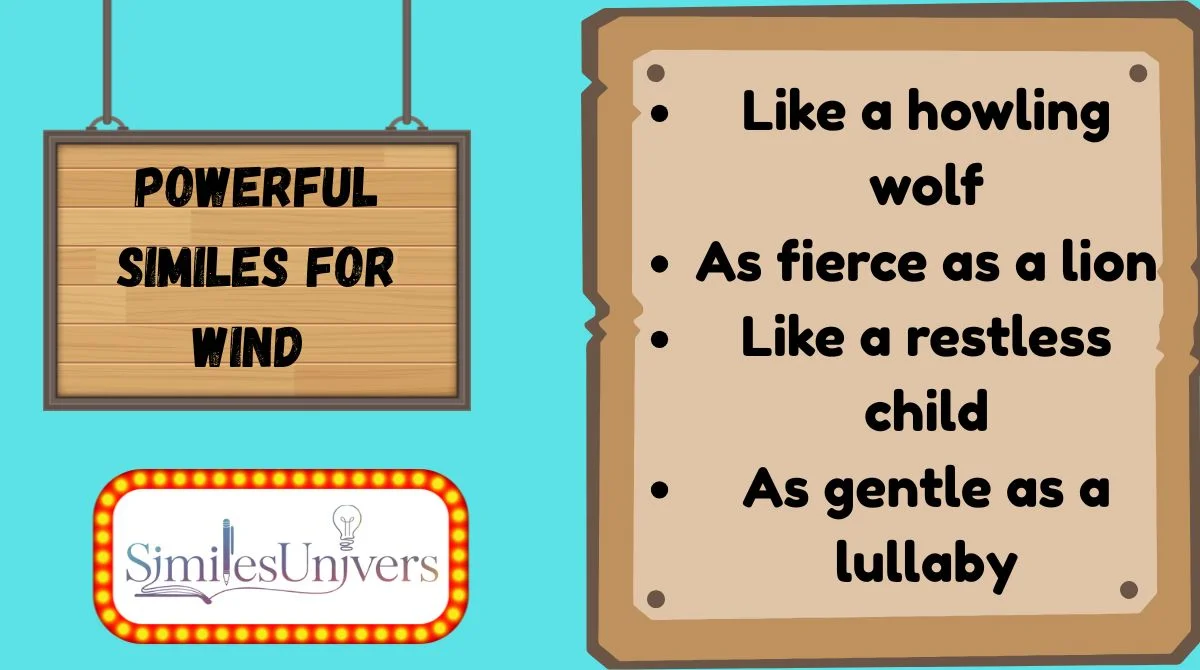
- Like a howling wolf
- As fierce as a lion
- Like a restless child
- As gentle as a lullaby
- Like a freight train
- As sharp as a knife
- Like a thief in the night
- As soft as feathers
Complete List of Similes for “Wind” (Grouped by Meaning)
Funny & Lighthearted
Like a dog sticking its head out of a car window
Meaning: Wild and playful wind.
Explanation: The wind feels excited and energetic, just like a happy dog enjoying the ride.
Examples:
The wind rushed past us like a dog sticking its head out of a car window.
Her hair flew everywhere like a dog on a joyride.
Tone: Funny
As nosy as a neighbor peeking over the fence
Meaning: Wind that sneaks into everything.
Explanation: The breeze finds every tiny crack and gap.
Examples:
The wind slipped through the door as nosy as a neighbor peeking over the fence.
It crept into my sleeves like it wanted to hear secrets.
Tone: Casual
Like a messy child cleaning their room
Meaning: Wind that makes more mess.
Explanation: Instead of helping, it scatters things around.
Examples:
The wind tossed leaves around like a messy child cleaning their room.
Papers flew everywhere as if the air had lost control.
Tone: Funny
Emotional & Deep
Like a whisper from the past
Meaning: Soft, memory-filled wind.
Explanation: The wind feels gentle and full of emotion.
Examples:
The evening breeze brushed my face like a whisper from the past.
It carried old memories through the trees.
Tone: Poetic
As lonely as a forgotten song
Meaning: Quiet, empty wind.
Explanation: The wind sounds sad and distant.
Examples:
The wind hummed as lonely as a forgotten song.
It drifted across the empty field without a friend.
Tone: Serious
Like a sigh from the earth
Meaning: Soft and tired wind.
Explanation: The wind feels calm, almost emotional.
Examples:
The breeze moved through the grass like a sigh from the earth.
It sounded like the world taking a slow breath.
Tone: Poetic
Dramatic & Intense
Like a howling wolf
Meaning: Loud, wild wind.
Explanation: The wind makes sharp, echoing sounds.
Examples:
The wind cried like a howling wolf outside the cabin.
It echoed through the valley with fierce power.
Tone: Serious
As fierce as a lion
Meaning: Strong and powerful wind.
Explanation: The wind feels bold and unstoppable.
Examples:
The storm wind was as fierce as a lion protecting its pride.
Trees bent low under its roar.
Tone: Serious
Like a freight train racing by
Meaning: Extremely loud and forceful wind.
Explanation: The sound and speed feel overwhelming.
Examples:
The tornado sounded like a freight train racing by.
We covered our ears as the roar grew louder.
Tone: Dramatic
As sharp as a knife
Meaning: Very cold wind.
Explanation: The air feels like it cuts your skin.
Examples:
The winter wind was as sharp as a knife.
It sliced through my jacket easily.
Tone: Serious
Slow & Monotonous
Like an old fan turning slowly
Meaning: Steady, soft wind.
Explanation: The breeze moves calmly and evenly.
Examples:
The wind hummed like an old fan turning slowly.
It made the curtains sway back and forth.
Tone: Casual
As steady as a ticking clock
Meaning: Constant wind.
Explanation: The breeze does not change speed.
Examples:
The wind blew as steady as a ticking clock.
It never rushed or paused.
Tone: Neutral
Like pages turning in a quiet library
Meaning: Soft and gentle sound.
Explanation: The wind makes light rustling noises.
Examples:
Leaves rustled like pages turning in a quiet library.
The sound was soft and calming.
Tone: Poetic
Creative & Unique (Less Common)
Like invisible fingers combing the grass
Meaning: Wind moving gently across fields.
Explanation: The wind brushes through plants smoothly.
Examples:
The wind moved like invisible fingers combing the grass.
Waves of green rolled across the meadow.
Tone: Poetic
As restless as a thought that won’t sleep
Meaning: Wind that keeps moving.
Explanation: The breeze feels unsettled and constant.
Examples:
The night wind was as restless as a thought that won’t sleep.
It tapped against the window again and again.
Tone: Serious
Like a silver ribbon unrolling across the sky
Meaning: High, sweeping wind.
Explanation: The wind moves smoothly and beautifully.
Examples:
Clouds drifted like a silver ribbon unrolling across the sky.
The wind carried them gently west.
Tone: Poetic
As sudden as a door slammed in anger
Meaning: Quick and forceful wind gust.
Explanation: The wind appears without warning.
Examples:
A gust hit us as sudden as a door slammed in anger.
Dust flew into our eyes.
Tone: Dramatic
Like a secret passing between trees
Meaning: Soft whispering wind.
Explanation: The breeze moves quietly among branches.
Examples:
The wind slipped like a secret passing between trees.
The forest seemed alive with whispers.
Tone: Poetic
Poetic & Literary
As gentle as a lullaby
Meaning: Calm and soothing wind.
Explanation: The breeze feels comforting.
Examples:
The spring wind was as gentle as a lullaby.
It rocked the flowers softly.
Tone: Poetic
Like a painter’s brush across the sky
Meaning: Wind shaping clouds.
Explanation: The breeze seems to design the sky.
Examples:
Clouds shifted like a painter’s brush across the sky.
The sunset changed every second.
Tone: Poetic
As wild as an untamed horse
Meaning: Free and uncontrollable wind.
Explanation: The wind feels powerful and alive.
Examples:
The desert wind was as wild as an untamed horse.
Sand swirled everywhere.
Tone: Dramatic
Like a ghost wandering at night
Meaning: Cold and eerie wind.
Explanation: The breeze feels spooky and silent.
Examples:
The wind drifted through the graveyard like a ghost wandering at night.
It sent chills down my spine.
Tone: Serious
Fresh and Unique Similes You Won’t Hear Every Day
Here are five original ones with vivid imagery:
- Like a silver fish slipping through the air – Suggests fast, smooth movement.
- As light as a promise whispered at dawn – Soft and hopeful breeze.
- Like a drumroll before a storm’s speech – Wind building tension.
- As playful as sunlight chasing shadows – Bright, cheerful wind.
- Like a thread stitching clouds together – Wind connecting sky patterns.
These stand out because they use unexpected images. That makes your writing fresh and memorable.
How to Use These Similes in Writing
In Essays
- Use them in descriptive paragraphs.
- Add them when describing weather or mood.
- Keep them short and clear.
Example:
The wind was as sharp as a knife, making the hike harder than expected.
In Stories
- Use similes to show emotion.
- Match the wind to the character’s feelings.
- Use stronger similes in action scenes.
Example:
The wind howled like a wolf as she ran into the storm.
How to Create Your Own Similes (Mini Writing Guide)
Step-by-Step Method
- Think about the wind’s speed or feeling.
- Ask: What else feels like that?
- Use “like” or “as.”
- Keep it simple.
- Read it out loud.
5 Practical Tips
- Use everyday objects.
- Avoid clichés.
- Match tone to mood.
- Be clear, not confusing.
- Test it in a full sentence.
3 Transformation Examples
Plain: The wind was strong.
Better: The wind was as fierce as a lion.
Plain: The wind was soft.
Better: The wind moved like a lullaby through the trees.
Plain: The wind was scary.
Better: The wind howled like a wolf in the dark.
Common Mistakes When Using Similes
Overuse
Too many similes make writing messy. Use them wisely.
Clichés
“As cold as ice” is common. Try something new when possible.
Tone Mismatch
Don’t use funny similes in sad scenes. Match mood carefully.
Practice Exercise
Fill in the blanks:
- The wind roared like a ________.
- The breeze felt as soft as ________.
- The gust hit as sudden as ________.
- The wind whispered like ________.
- The storm sounded like ________.
- The air cut as sharp as ________.
- The leaves danced like ________.
- The wind moved as steady as ________.
- The breeze slipped like ________.
- The night wind felt like ________.
- The desert wind ran like ________.
- The cool air brushed like ________.
Answers
- howling wolf
- feathers
- a slammed door
- a secret
- a freight train
- a knife
- invisible fingers
- a ticking clock
- a silver fish
- a wandering ghost
- an untamed horse
- a lullaby
FAQs
What are good similes for strong wind?
Try: like a freight train, as fierce as a lion, or like a howling wolf.
What is a poetic simile for wind?
Like a sigh from the earth or like invisible fingers combing the grass.
What simile describes cold wind?
As sharp as a knife works well.
Can similes improve descriptive writing?
Yes. They make writing vivid and emotional.
Are similes good for kids’ writing?
Yes. They are simple and fun to use.
What is the difference between a simile and a metaphor?
A simile uses “like” or “as.” A metaphor does not.
Final Thoughts
Wind is invisible, but with the right simile, readers can see it, hear it, and feel it. Whether the breeze is soft as a lullaby or fierce as a lion, similes turn plain weather into powerful storytelling.
Use them wisely. Create your own. And let your words move like the wind itself.

Daniel Harper
I am simplifies complex literary concepts into clear, practical lessons for students and learners worldwide.
Through SimilesUnivers, he aims to make mastering similes engaging, structured, and academically enriching.