Autumn feels special. The air turns crisp. Leaves turn gold. The world slows down. It is a season full of color, change, and quiet beauty.
But how do you describe that feeling in words?
That’s where similes help. A good simile paints a picture fast. It makes readers see and feel what you mean.
Instead of saying “It was a nice fall day,” you can say, “The air felt like a cool sip of apple cider.” Now the moment feels real.
In this guide, you’ll discover over 35 powerful similes for autumn. Some are classic. Many are fresh and creative.
You’ll also learn how to use them in essays and stories—and how to create your own. Let’s bring your writing to life.
What Is a Simile? (Quick Clear Definition)
A simile compares two different things using “like” or “as.”
It helps readers imagine something clearly.
Example:
The leaves fell like golden rain.
Quick List – Most Popular Similes for “Autumn”
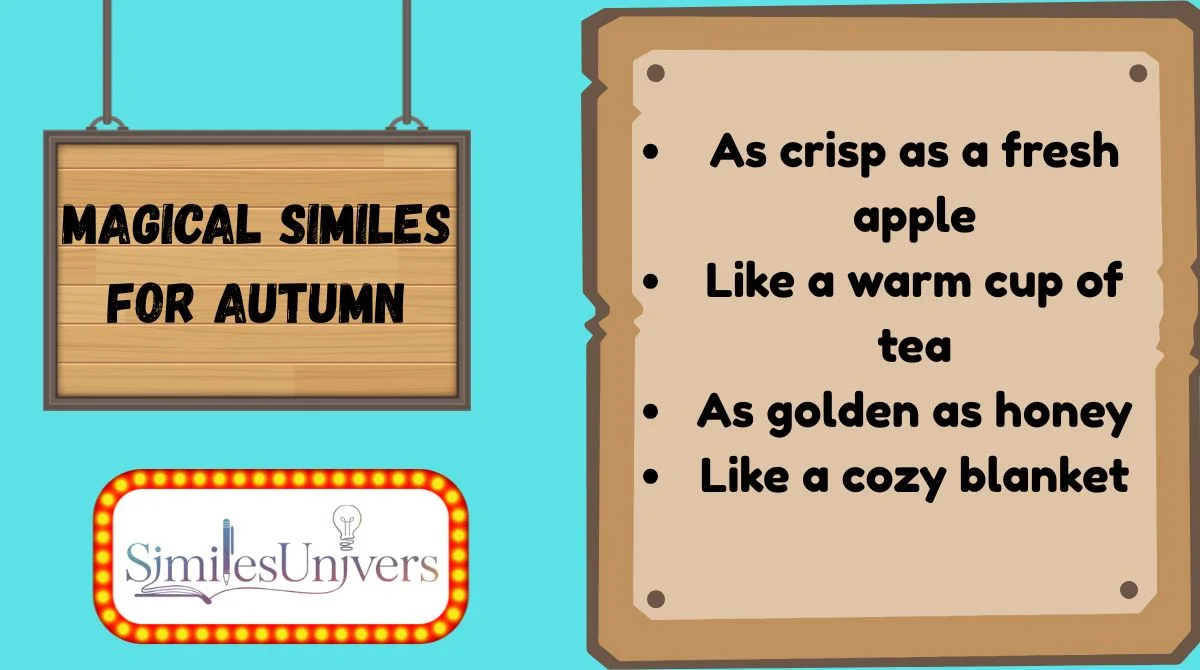
- As colorful as a painter’s palette
- Like leaves dancing in the wind
- As crisp as a fresh apple
- Like a warm cup of tea
- As golden as honey
- Like a cozy blanket
- As quiet as a sleeping forest
- Like fire spreading across the trees
- As gentle as falling feathers
- Like a sunset that never ends
Complete List of Similes for “Autumn” (Grouped by Meaning)
Funny & Lighthearted
Autumn is like a pumpkin spice parade.
Meaning: Everything feels festive and themed.
Autumn brings pumpkins, sweaters, and treats everywhere.
Examples:
The town felt like a pumpkin spice parade after the first cool day.
Her outfit was like a pumpkin spice parade—orange, brown, and cheerful.
Tone: Funny
Leaves scatter like confetti after a party.
Meaning: Leaves fall in playful bursts.
The ground fills with color just like a celebration.
Examples:
Leaves scattered like confetti after a party when the wind blew.
The yard looked like confetti after a party by noon.
Tone: Casual
The wind moves like a playful puppy.
Meaning: The wind feels lively and silly.
It jumps around and surprises you.
Examples:
The wind raced like a playful puppy through the park.
My scarf flew like a toy in a puppy’s mouth.
Tone: Funny
Autumn mornings are like cold toast.
Meaning: Cool and a little sharp.
The air feels dry and crisp.
Examples:
The air felt like cold toast against my face.
Autumn mornings greeted us like cold toast—crisp and plain.
Tone: Casual
Trees stand like shy dancers in bright costumes.
Meaning: Trees show off bold colors quietly.
They look fancy but still.
Examples:
The trees stood like shy dancers in bright costumes.
Maples looked like dancers waiting for music.
Tone: Lighthearted
Emotional & Deep
Autumn feels like a goodbye hug.
Meaning: Warm but sad.
The season reminds us of endings.
Examples:
The sunset felt like a goodbye hug.
October wrapped around us like a soft farewell.
Tone: Serious
The falling leaves are like forgotten letters.
Meaning: Each leaf feels like a memory.
They drift away quietly.
Examples:
Leaves floated like forgotten letters in the wind.
The ground filled with memories like unopened mail.
Tone: Poetic
The sky is like a fading dream.
Meaning: Soft and distant.
The colors fade gently.
Examples:
The sky looked like a fading dream at dusk.
Clouds drifted like pieces of a dream.
Tone: Poetic
Autumn days pass like turning pages in a quiet book.
Meaning: Calm and thoughtful.
Time feels peaceful.
Examples:
The weeks slipped by like turning pages in a quiet book.
Each day felt like a new chapter in fall.
Tone: Serious
The chill in the air is like a whispered secret.
Meaning: Soft but noticeable.
It sneaks up on you.
Examples:
The breeze touched my skin like a whispered secret.
The cold crept in like news you didn’t expect.
Tone: Poetic
Dramatic & Intense
The forest burns like a silent fire.
Meaning: Leaves glow red and orange.
The trees look aflame without real fire.
Examples:
The hills burned like a silent fire at sunset.
Maples blazed like torches.
Tone: Dramatic
The wind howls like a restless wolf.
Meaning: Loud and wild.
Stormy autumn nights feel fierce.
Examples:
The wind howled like a restless wolf outside.
Branches shook like prey in the dark.
Tone: Serious
Leaves fall like sparks from a bonfire.
Meaning: Quick and bright.
They drop in glowing bursts.
Examples:
Leaves fell like sparks from a bonfire.
The trees shimmered like live embers.
Tone: Dramatic
The sunset spreads like spilled paint.
Meaning: Colors stretch across the sky.
The sky looks messy and bold.
Examples:
The sky looked like spilled paint at dusk.
Orange clouds spread like brush strokes.
Tone: Poetic
Autumn storms roll in like marching drums.
Meaning: Strong and powerful.
Storms feel loud and heavy.
Examples:
The thunder came like marching drums.
Rain hit the roof like a drumbeat.
Tone: Intense
Slow & Monotonous
The days shrink like melting ice.
Meaning: Daylight gets shorter.
Time fades slowly.
Examples:
The sunlight shrank like melting ice.
Evenings grew longer like shadows.
Tone: Serious
The air cools like soup left on the table.
Meaning: Gradual cooling.
It happens little by little.
Examples:
The air cooled like soup left too long.
Summer warmth faded like steam.
Tone: Casual
Leaves drift like sleepy feathers.
Meaning: Slow and gentle falling.
They float softly down.
Examples:
Leaves drifted like sleepy feathers.
The yard filled slowly like a pillow.
Tone: Soft
Autumn evenings stretch like long shadows.
Meaning: Nights come early.
Darkness spreads wide.
Examples:
Evenings stretched like long shadows across town.
The day ended like a slow sigh.
Tone: Poetic
The season changes like a clock ticking softly.
Meaning: Change feels steady.
It happens quietly.
Examples:
The weather changed like a clock ticking softly.
Each day moved like steady hands.
Tone: Serious
Creative & Unique
Autumn is like a treasure chest tipped over.
Meaning: Colors spill everywhere.
The ground shines with gold and red.
Examples:
The park looked like a treasure chest tipped over.
Leaves glittered like scattered coins.
Tone: Creative
The trees glow like lanterns in a storybook.
Meaning: Warm and magical.
The forest looks enchanted.
Examples:
The trees glowed like lanterns in a storybook.
The path shimmered like a fairy tale road.
Tone: Poetic
The breeze feels like cool silk on your skin.
Meaning: Smooth and gentle.
The wind brushes lightly.
Examples:
The breeze felt like cool silk.
It wrapped around me like soft cloth.
Tone: Poetic
Autumn arrives like a painter with a bold brush.
Meaning: The season adds color quickly.
Change feels artistic.
Examples:
Autumn arrived like a painter with a bold brush.
Fields turned red like fresh paint.
Tone: Creative
The harvest moon hangs like a glowing coin.
Meaning: Round and bright.
It shines golden in the sky.
Examples:
The moon hung like a glowing coin above us.
It shimmered like treasure in the dark.
Tone: Poetic
Poetic & Literary
Autumn is like a poem written in leaves.
Meaning: Beautiful and meaningful.
Nature tells a story.
Examples:
The forest felt like a poem written in leaves.
Every step read like a new line.
Tone: Poetic
The wind sighs like an old storyteller.
Meaning: The breeze feels wise.
It carries history.
Examples:
The wind sighed like an old storyteller.
It whispered through branches like tales of the past.
Tone: Literary
The fields rest like tired giants.
Meaning: Farms are done growing.
They wait quietly.
Examples:
The fields rested like tired giants after harvest.
The land lay still like a sleeping hero.
Tone: Serious
The fog rolls in like a soft curtain.
Meaning: Mist covers everything gently.
It hides the world.
Examples:
Fog rolled in like a soft curtain.
The hills vanished like a stage in darkness.
Tone: Poetic
Autumn settles like dust on an old piano.
Meaning: Calm and quiet.
It brings stillness.
Examples:
Autumn settled like dust on an old piano.
Silence spread like a slow hush.
Tone: Literary
Fresh and Unique Similes You Won’t Hear Every Day
- Autumn is like a campfire memory you can walk through.
Imagery: The season feels warm but also past-tense, like remembering something sweet. - Leaves spin like coins tossed by the sky.
Imagery: The wind flips them as if the sky is making a wish. - The air tastes like a window left open overnight.
Imagery: Fresh, clean, and slightly sharp. - Pumpkin fields glow like quiet sunsets on the ground.
Imagery: Bright orange spreads across earth like evening light. - Autumn light falls like honey poured through trees.
Imagery: Golden sunlight drips slowly between branches.
How to Use These Similes in Writing
In Essays
Use similes to:
- Make descriptions vivid
- Show emotion clearly
- Replace plain words like “nice” or “cold”
Example:
Instead of “The park was beautiful,” write:
The park shimmered like a treasure chest tipped over.
In Stories
Similes:
- Build mood
- Show character feelings
- Add rhythm to sentences
Example:
She walked through the forest as the leaves fell like forgotten letters around her.
How to Create Your Own Similes (Mini Writing Guide)
Step-by-Step Method
- Pick what you want to describe (autumn wind).
- Choose one strong feature (cold, playful, loud).
- Think of something with that same feature (a puppy, ice water, drums).
- Connect using “like” or “as.”
- Read it aloud. Does it sound natural?
5 Practical Tips
- Use simple objects readers know.
- Avoid clichés unless you twist them.
- Match tone (funny vs serious).
- Keep it short.
- Use one strong image, not three.
3 Transformation Examples
Plain: The leaves were red.
Better: The leaves were red like fresh paint.
Plain: The night was quiet.
Better: The night was quiet like a library at closing time.
Plain: The air was cold.
Better: The air was cold like a metal swing at dawn.
Common Mistakes When Using Similes
Overuse
Too many similes slow your writing. Use them where they matter.
Clichés
“As cool as a cucumber” feels old. Try something fresh.
Tone Mismatch
Don’t use a silly simile in a sad scene.
Example: A funeral scene shouldn’t say, “The wind bounced like popcorn.”
Practice Exercise
Fill in the blanks:
- Leaves fell like __________.
- The sky looked as red as __________.
- The wind sounded like __________.
- The air felt as crisp as __________.
- The forest burned like __________.
- Evening stretched like __________.
- Fog rolled in like __________.
- The harvest moon shone like __________.
- The trees stood like __________.
- Autumn arrived like __________.
- The chill crept in like __________.
- The sunset spread like __________.
Sample Answers
- sparks from a bonfire
- spilled paint
- a restless wolf
- a fresh apple
- a silent fire
- long shadows
- a soft curtain
- a glowing coin
- shy dancers
- a painter with a bold brush
- a whispered secret
- honey poured through trees
FAQs
What are some good similes for autumn?
Good similes include:
As crisp as a fresh apple and Leaves fell like golden rain. They help show color and feeling.
Why use similes when writing about autumn?
Similes make your writing more vivid. They help readers picture the season clearly.
Are similes good for school essays?
Yes. Teachers like clear images. A simple simile can make your essay stand out.
What is the difference between a simile and a metaphor?
A simile uses “like” or “as.”
A metaphor says something is something else.
Can similes be funny?
Yes. For example: Leaves scattered like confetti after a party.
How many similes should I use in one paragraph?
Usually one or two is enough. Too many can feel heavy.
Final Thoughts
Autumn is more than a season. It is color, memory, change, and warmth wrapped together.
With the right simile, you can turn a simple sentence into something readers feel. Whether you want funny, deep, dramatic, or poetic, the similes in this guide give you powerful tools.
Now it’s your turn. Step outside. Notice the air. Watch the leaves. Then write your own comparison—and make autumn glow on the page.

Daniel Harper
I am simplifies complex literary concepts into clear, practical lessons for students and learners worldwide.
Through SimilesUnivers, he aims to make mastering similes engaging, structured, and academically enriching.