Pain is one of the strongest feelings humans experience. It can be sharp, slow, emotional, or overwhelming. But describing pain in writing is not always easy. Simply saying “it hurt” rarely captures the real feeling.
This is where similes become powerful tools. A good simile compares one thing to another using words like “as” or “like.” This simple trick helps readers see, feel, and understand pain more clearly.
For example, saying “the pain was like a knife stabbing my arm” instantly paints a vivid picture in the reader’s mind.
Writers, students, storytellers, and bloggers often use similes to make their words stronger and more memorable. The right comparison can turn plain writing into something emotional, dramatic, or even poetic.
In this guide, you will discover 29+ powerful similes for pain, organized by meaning and tone. You will also learn how to use them, create your own, and avoid common mistakes so your writing becomes more vivid and engaging.
What Is a Simile? (Quick Clear Definition)
A simile is a comparison between two different things using the words “like” or “as.”
It helps explain a feeling or idea by comparing it to something familiar.
Example:
The pain felt like fire burning under my skin.
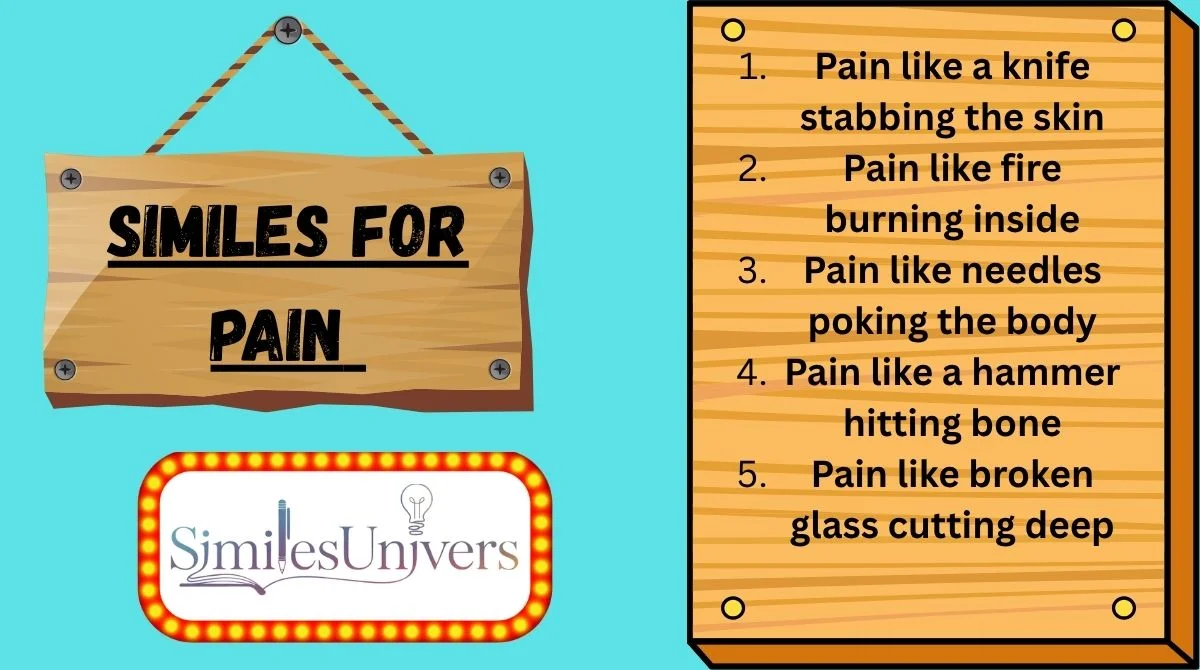
Quick List – Most Popular Similes for Pain
- Pain like a knife stabbing the skin
- Pain like fire burning inside
- Pain like needles poking the body
- Pain like a hammer hitting bone
- Pain like broken glass cutting deep
- Pain like lightning shooting through nerves
- Pain like a heavy stone pressing on the chest
- Pain like thorns digging into flesh
- Pain like a tight rope squeezing the muscles
- Pain like ice freezing the bones
Complete List of Similes for Pain (Grouped by Meaning)
Dramatic & Intense Similes
Like a Knife Twisting in the Wound
Meaning: Extremely sharp and worsening pain.
This simile describes pain that grows stronger every moment, just like a knife being twisted deeper.
Example sentences:
The pain in his stomach felt like a knife twisting in the wound.
Every step was like a knife twisting in her ankle.
Tone: Serious
Like Fire Burning Under the Skin
Meaning: Strong burning pain.
It suggests heat and irritation spreading through the body.
Example sentences:
The rash burned like fire under his skin.
Her shoulder ached like fire burning beneath the surface.
Tone: Dramatic
Like Lightning Shooting Through Nerves
Meaning: Sudden, electric pain.
Lightning moves fast and violently, making this simile perfect for sharp nerve pain.
Example sentences:
A jolt of pain shot through his leg like lightning.
The toothache struck like lightning through her jaw.
Tone: Dramatic
Like Broken Glass Cutting Deep
Meaning: Very sharp and painful sensation.
Broken glass represents dangerous and painful cuts.
Example sentences:
Each breath felt like broken glass in his chest.
The wound stung like broken glass slicing skin.
Tone: Serious
Like a Hammer Hitting Bone
Meaning: Heavy, crushing pain.
This simile highlights strong impact and pressure.
Example sentences:
The headache hit like a hammer on his skull.
The fall felt like a hammer striking his back.
Tone: Dramatic
Emotional & Deep Similes
Like a Heavy Stone on the Heart
Meaning: Emotional pain or sadness.
A heavy stone symbolizes weight and pressure.
Example sentences:
The loss sat on her heart like a heavy stone.
His regret felt like a rock pressing on his chest.
Tone: Emotional
Like a Storm Inside the Chest
Meaning: Turbulent emotional pain.
Storms represent chaos and powerful emotions.
Example sentences:
Grief raged inside him like a storm.
Her heart felt like a storm crashing inside her chest.
Tone: Poetic
Like Ice Freezing the Soul
Meaning: Cold emotional pain or shock.
Ice represents numbness and emotional distance.
Example sentences:
The news froze him like ice in the soul.
Her words felt like ice spreading through his heart.
Tone: Poetic
Like a Shadow That Never Leaves
Meaning: Constant emotional pain.
A shadow always follows, symbolizing lingering hurt.
Example sentences:
The memory followed him like a shadow.
Her sadness stayed like a shadow behind every smile.
Tone: Serious
Like a Crack Running Through the Heart
Meaning: Deep emotional damage.
Cracks represent something broken but still existing.
Example sentences:
The betrayal felt like a crack in his heart.
Her goodbye split him like a crack through stone.
Tone: Poetic
Funny & Lighthearted Similes
Like a Cat Scratching Your Skin
Meaning: Small but annoying pain.
Cats scratch quickly and sharply.
Example sentences:
The cut stung like a cat scratching skin.
The thorn pricked him like a tiny cat claw.
Tone: Funny
Like Bumping Your Toe on the Table
Meaning: Sudden silly pain everyone understands.
Example sentences:
The shock felt like stubbing his toe on the table.
The jab hit like a toe smashing into furniture.
Tone: Casual
Like a Bee Stinging Your Finger
Meaning: Small but sharp pain.
Example sentences:
The needle felt like a bee sting.
The bite burned like a bee on his finger.
Tone: Casual
Like Stepping on a Lego
Meaning: Unexpected sharp pain.
This is a modern and relatable comparison.
Example sentences:
The sharp jab felt like stepping on Lego.
The rock under his foot hurt like a Lego brick.
Tone: Funny
Creative & Unique Similes
Like Rust Slowly Eating Metal
Meaning: Pain that grows slowly.
Rust spreads slowly and damages over time.
Example sentences:
The ache spread like rust through his joints.
The pain crept like rust eating iron.
Tone: Creative
Like a Thorn Stuck in the Mind
Meaning: Persistent emotional pain.
Thorns represent something small but painful.
Example sentences:
The memory stayed like a thorn in her mind.
His regret felt like a thorn he couldn’t remove.
Tone: Poetic
Like a Tight Rope Pulling Muscles
Meaning: Muscle tension pain.
Example sentences:
The cramp felt like ropes pulling his leg.
Her neck tightened like ropes pulling tight.
Tone: Casual
Like Waves Crashing Against Rocks
Meaning: Pain that comes repeatedly.
Example sentences:
The headache returned like waves hitting rocks.
Each pulse felt like waves pounding the shore.
Tone: Poetic
Like Sparks Flying from a Wire
Meaning: Sudden nerve pain.
Example sentences:
The nerve pain jumped like sparks.
The shock ran through him like electric sparks.
Tone: Dramatic
Poetic & Literary Similes
Like Winter Wind Cutting the Skin
Meaning: Cold sharp pain.
Example sentences:
The cold wind cut like knives.
The pain sliced like winter wind on bare skin.
Tone: Poetic
Like Echoes in an Empty Room
Meaning: Lingering emotional pain.
Example sentences:
Her sadness echoed like sound in an empty room.
The pain lingered like echoes in silence.
Tone: Literary
Like Ink Spreading Through Water
Meaning: Pain spreading slowly.
Example sentences:
The ache spread like ink in water.
The feeling grew like dark ink drifting outward.
Tone: Poetic
Like a Candle Burning to the End
Meaning: Slow exhausting pain.
Example sentences:
His strength faded like a candle burning out.
The pain drained her like a dying flame.
Tone: Literary
Like Sand Grinding Between Bones
Meaning: Rough grinding pain.
Example sentences:
The joint pain felt like sand grinding in gears.
His knees creaked like sand between bones.
Tone: Serious
Fresh and Unique Similes You Won’t Hear Every Day
Here are five original creative comparisons:
Pain like a cracked bell ringing inside the skull
The idea suggests loud, repeated throbbing pain.
Pain like hot wires tangled in the nerves
This paints a picture of chaotic electric pain.
Pain like a trapped animal clawing to escape
Shows wild, desperate internal suffering.
Pain like frost creeping over a window
Represents slow spreading numb pain.
Pain like thunder rolling through the bones
Suggests deep, vibrating body pain.
These unusual comparisons help writers sound fresh, creative, and memorable.
How to Use These Similes in Writing
In Essays
Similes can make explanations clearer and more engaging.
Example:
The patient described the headache as pain like a hammer striking the skull.
In Stories
Similes create vivid imagery and emotional depth.
Example:
The wound burned like fire under his skin as he tried to stand.
Writers often use similes in:
- storytelling
- blogs
- poetry
- descriptive essays
How to Create Your Own Similes (Mini Writing Guide)
Step-by-Step Method
- Identify the feeling (pain type).
- Think of a physical object with similar qualities.
- Use like or as to connect them.
- Keep the image simple.
- Test if readers instantly understand it.
5 Practical Tips
- Use everyday objects readers know.
- Avoid overly complex comparisons.
- Match the tone to the situation.
- Use fresh imagery.
- Don’t repeat the same simile often.
Transformation Examples
Plain sentence:
My head hurt.
Improved versions:
- My head hurt like a hammer striking metal.
- My head throbbed like drums beating in my skull.
- My head pounded like thunder in the distance.
Common Mistakes When Using Similes
Overuse
Too many similes make writing confusing. Use them only when needed.
Clichés
Common comparisons like “sharp as a knife” can feel dull if overused.
Tone Mismatch
Funny similes should not appear in serious emotional scenes.
Practice Exercise
Fill in the blanks with the best simile.
- The headache hit like ______
- The burn felt like ______
- His sadness stayed like ______
- The shock ran through her like ______
- The pain pressed on his chest like ______
- The nerve pain jumped like ______
- The memory stuck like ______
- The ache spread like ______
- The cut felt like ______
- The grief grew like ______
- The sting felt like ______
- The cold pain felt like ______
Answers
- a hammer striking bone
- fire under the skin
- a shadow that never leaves
- lightning through nerves
- a heavy stone
- electric sparks
- a thorn in the mind
- ink in water
- broken glass
- a storm inside the chest
- a bee sting
- winter wind cutting skin
FAQs
What is a simile for pain?
A simile for pain compares pain to another object or experience using “like” or “as.” Example: The pain felt like fire burning under the skin.
Why do writers use similes for pain?
Similes make descriptions clearer and more vivid. They help readers imagine the feeling.
What is a strong simile for intense pain?
Examples include pain like a knife twisting, pain like lightning through nerves, or pain like a hammer striking bone.
Can similes describe emotional pain?
Yes. Writers often use comparisons like a heavy stone on the heart or a shadow that never leaves.
Are similes useful in storytelling?
Yes. Similes help readers visualize scenes and understand characters’ emotions.
How many similes should be used in writing?
It is best to use similes sparingly so they remain powerful and memorable.
Final Thoughts
Pain is a powerful human experience, and describing it clearly can make writing far more emotional and vivid. Similes allow writers to turn invisible feelings into strong mental images that readers immediately understand.
Whether you are writing a story, essay, blog post, or poem, the right comparison can bring your words to life. From dramatic comparisons like lightning through nerves to creative ones like rust eating metal, similes help capture both physical and emotional pain.
Use them carefully, keep them fresh, and your writing will become far more expressive and memorable.

Daniel Harper
I am simplifies complex literary concepts into clear, practical lessons for students and learners worldwide.
Through SimilesUnivers, he aims to make mastering similes engaging, structured, and academically enriching.