Rain has a way of touching our hearts and painting the world in shades of gray and silver. It can be soothing, dramatic, joyful, or melancholy.
For writers, using similes to describe rain elevates your prose, giving readers a vivid sensory experience. Instead of simply saying, “It was raining,” a simile can make the scene sparkle, evoke emotion, or inject humor.
Whether you’re crafting a story, poem, or essay, this guide is your one-stop resource for 28+ fresh, creative, and memorable similes for rain.
By the end, you’ll have the tools to make your writing sing like raindrops dancing on a windowpane.
What Is a Simile?
A simile is a figure of speech that compares two different things using “like” or “as.” It helps readers visualize, feel, or understand something in a new way.
Example:
- “The rain fell like tiny silver needles piercing the earth.”
Quick List – Most Popular Similes for Rain
- Like tears streaming from the sky
- As soft as a lullaby in the drizzle
- Like silver ribbons from heaven
- As relentless as a drumbeat
- Like diamonds on the pavement
- As gentle as a mother’s touch
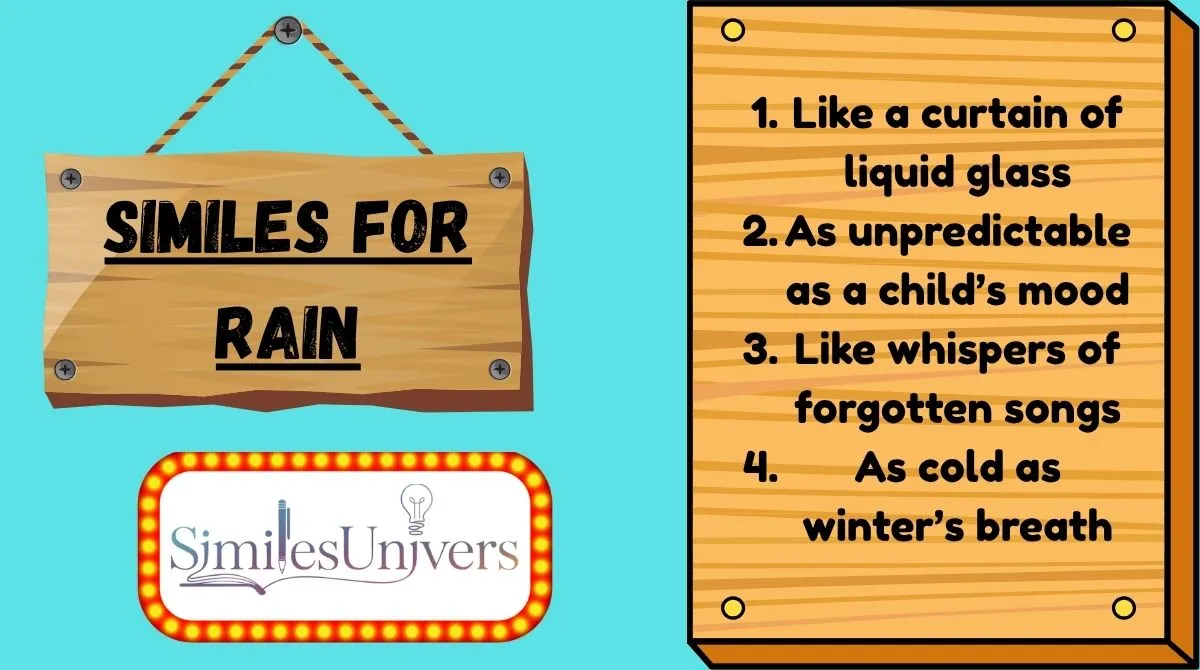
- Like a curtain of liquid glass
- As unpredictable as a child’s mood
- Like whispers of forgotten songs
- As cold as winter’s breath
Complete List of Similes for Rain (Grouped by Meaning)
Funny & Lighthearted
Like a cat sneezing on the world
Meaning: Sudden, playful, chaotic rain
Explanation: Shows rain as quirky and unexpected
Examples:
- The storm began like a cat sneezing on the world, splattering everyone in its path.
- I ran for cover as the sky sneezed, raining droplets everywhere.
Tone: Funny
Like soda fizz spilling everywhere
Meaning: Light, bubbly rain
Explanation: Makes rain feel effervescent and lively
Examples:
- Rain poured like soda fizz spilling everywhere, making kids laugh in puddles.
- The drizzle danced on the roof like fizzy bubbles from a soda can.
Tone: Funny
Like ducks doing the cha-cha
Meaning: Playful, irregular raindrops
Explanation: Evokes a whimsical rhythm
Examples:
- Raindrops tapped the windows like ducks doing the cha-cha.
- The puddles rippled like tiny dancers wiggling in the rain.
Tone: Lighthearted
Emotional & Deep
Like tears from the clouds
Meaning: Melancholy, reflective rain
Explanation: Suggests sadness or emotional weight
Examples:
- Rain fell like tears from the clouds, echoing my sorrow.
- She watched the streets glisten as the sky cried gentle tears.
Tone: Serious
As quiet as a forgotten prayer
Meaning: Soft, reflective rain
Explanation: Captures peaceful, almost spiritual rain
Examples:
- The drizzle whispered like a forgotten prayer, calming my thoughts.
- Rain draped the garden as quietly as a prayer left unspoken.
Tone: Poetic
Like memories slipping through fingers
Meaning: Evocative, nostalgic rain
Explanation: Suggests impermanence and wistfulness
Examples:
- Rain dripped from the rooftops like memories slipping through fingers.
- Each drop felt like a moment of the past washing away.
Tone: Poetic
Dramatic & Intense
Like arrows from an angry sky
Meaning: Heavy, sharp rain
Explanation: Conveys intensity and danger
Examples:
- Sheets of rain struck like arrows from an angry sky.
- I ran to shelter as raindrops pelted like merciless arrows.
Tone: Dramatic
As fierce as a warrior’s charge
Meaning: Violent, unstoppable rain
Explanation: Depicts raw power
Examples:
- The storm hit the city as fierce as a warrior’s charge.
- Rain lashed the streets as if battling the pavement itself.
Tone: Intense
Like a waterfall in reverse
Meaning: Sudden torrential downpour
Explanation: Imagery of overwhelming rainfall
Examples:
- The sky opened like a waterfall in reverse, flooding the alleyways.
- Water streamed from above like a colossal waterfall on the city.
Tone: Dramatic
Slow & Monotonous
Like soft sighs of the earth
Meaning: Calm, gentle rain
Explanation: Suggests rhythm and patience
Examples:
- Rain fell like soft sighs of the earth, steady and hypnotic.
- The garden glistened under raindrops like the earth itself exhaling.
Tone: Poetic
As steady as a heartbeat
Meaning: Monotone, persistent rain
Explanation: Reflects rhythm and constancy
Examples:
- Rain tapped the roof as steady as a heartbeat, lulling me to sleep.
- The drizzle kept falling as steady as a metronome, unchanging.
Tone: Calm
Like a slow piano melody
Meaning: Gentle, unhurried rain
Explanation: Evokes musicality
Examples:
- Rain played the windows like a slow piano melody.
- Each drop fell in time, like notes from an invisible composer.
Tone: Poetic
Creative & Unique
Like ink spilled across a gray canvas
Meaning: Artistic, moody rain
Explanation: Evokes imagery of a painted landscape
Examples:
- Raindrops spread like ink across a gray canvas.
- The alley looked like ink spilled over cobblestones.
Tone: Creative
Like whispers from the ocean’s heart
Meaning: Mystical, imaginative rain
Explanation: Suggests secretive or magical rain
Examples:
- The rain whispered like the ocean’s heart, full of stories.
- I felt each drop like messages from a watery realm.
Tone: Poetic
Like a thousand tiny lanterns falling
Meaning: Gentle yet striking
Explanation: Evokes luminous, magical rain
Examples:
- Rain fell like a thousand tiny lanterns lighting up the night.
- The festival felt alive under rain like miniature glowing lanterns.
Tone: Poetic
Poetic & Literary
Like silver threads stitching the sky
Meaning: Elegant, artistic rainfall
Explanation: Shows rain as delicate and beautiful
Examples:
- Rain stitched the horizon like silver threads through a quilt.
- Each drop shimmered like threads weaving sunlight into water.
Tone: Poetic
As ephemeral as a dream
Meaning: Fleeting, gentle rain
Explanation: Evokes a delicate, transitory quality
Examples:
- Drizzle fell as ephemeral as a dream on the morning streets.
- The rain vanished as softly as a dream forgotten upon waking.
Tone: Poetic
Like glass beads rolling off rooftops
Meaning: Tactile, musical rain
Explanation: Emphasizes the texture and sound
Examples:
- The rain clattered like glass beads rolling off rooftops.
- Each drop jingled on the tin roof like scattered marbles.
Tone: Poetic
Fresh and Unique Similes You Won’t Hear Every Day
- Like teardrops from a celestial weeping willow – evokes mystical sorrow
- Like silver needles stitching the clouds to the earth – imaginative, tactile imagery
- Like tiny drummers practicing on rooftops – playful sound-focused simile
- Like spilled mercury on cobblestones – fluid, dangerous, reflective imagery
- Like whispers of forgotten lullabies – nostalgic and poetic
How to Use These Similes in Writing
- Essays: Use similes to illustrate abstract ideas or enhance descriptive passages.
- Stories: Bring scenes to life by showing the mood, intensity, or rhythm of rain.
Example: Instead of “It rained a lot,” write: “Rain drummed the rooftops like tiny drummers practicing on rooftops, echoing through the quiet streets.”
How to Create Your Own Similes (Mini Writing Guide)
Step-by-step method:
- Observe your subject (rain) carefully.
- Identify a feeling or effect it evokes.
- Find an object or phenomenon with a similar effect.
- Connect with “like” or “as.”
- Test for clarity and tone.
Practical tips:
- Be visual, not abstract.
- Avoid clichés.
- Mix senses: sight, sound, touch.
- Use humor or surprise.
- Keep tone consistent with the piece.
Transformation examples:
- “It rained hard” → “Rain pounded like warriors on ancient drums.”
- “The drizzle was soft” → “Drizzle fell like whispers of forgotten lullabies.”
- “Rain was everywhere” → “Rain spread like spilled mercury on cobblestones.”
Common Mistakes When Using Similes
- Overuse: Too many similes can overwhelm the reader.
- Clichés: Avoid “raining cats and dogs” unless intentionally humorous.
- Tone mismatch: Ensure your simile matches the mood of your writing.
Practice Exercise
Fill in the blanks with suitable similes:
- Rain fell ________, making the streets shine.
- The drizzle was soft ________.
- Raindrops tapped the roof ________.
- Rain splashed the windows ________.
- The storm struck ________.
- Puddles formed ________.
- The garden glistened ________.
- The rain whispered ________.
- Rain fell on the rooftops ________.
- The drizzle felt ________.
- Rain streaked the windowpanes ________.
- The storm ended ________.
Answers (examples):
- like spilled mercury on cobblestones
- as quiet as a forgotten prayer
- like tiny drummers practicing on rooftops
- like silver threads stitching the sky
- like arrows from an angry sky
- like diamonds on the pavement
- like soft sighs of the earth
- like whispers of forgotten lullabies
- like glass beads rolling off rooftops
- as ephemeral as a dream
- like teardrops from a celestial weeping willow
- like whispers fading into silence
FAQs
What is the best way to describe rain in writing?
Use similes to connect the rain with vivid imagery, emotions, or sound.
Can I use funny similes for serious rain scenes?
Humor can work if the tone of the scene supports a lighthearted break, but usually match tone.
How many similes are too many?
1–3 similes per paragraph is usually effective. Overuse can confuse readers.
Are original similes better than common ones?
Yes, fresh similes make writing memorable and engaging.
Can I mix different types of similes in one scene?
Yes, but ensure they complement each other and maintain tone consistency.
How do I practice creating similes?
Observe nature, read poetry, and experiment by comparing emotions, sounds, or visuals to everyday objects.
Final Thoughts
Rain is more than water falling from the sky—it’s emotion, rhythm, and texture waiting to be captured in words. Using similes allows writers to transform ordinary weather into extraordinary experiences.
By experimenting with the 28+ similes above and creating your own, your descriptions will sparkle, engage, and resonate.

Daniel Harper
I am simplifies complex literary concepts into clear, practical lessons for students and learners worldwide.
Through SimilesUnivers, he aims to make mastering similes engaging, structured, and academically enriching.