Snow has a way of turning the world into a quiet, sparkling canvas. From gentle flurries to blinding blizzards, snow evokes feelings of wonder, nostalgia, and even mystery.
Using similes to describe snow can bring your writing to life, making readers feel the chill on their cheeks, hear the crunch beneath their boots, and marvel at the fleeting beauty of winter landscapes.
Whether you’re writing a poem, a story, or a descriptive essay, the right simile can make your imagery unforgettable.
In this guide, you’ll discover over 27 vivid similes for snow—both popular and unique—that will help your writing sparkle like freshly fallen snow.
You’ll also learn how to craft your own similes, avoid common mistakes, and use these comparisons effectively to elevate your storytelling.
What Is a Simile? (Quick Clear Definition)
A simile is a figure of speech that compares two different things using the words like or as. It helps readers understand and visualize a concept by connecting it to something familiar.
Example: The snow fell like tiny feathers drifting from the sky.
Quick List – Most Popular Similes for Snow
- Soft as a pillow of snow
- White as freshly fallen snow
- Cold as ice
- Gentle as a whispering snowfall
- Silent like a frozen forest
- Light as a snowflake
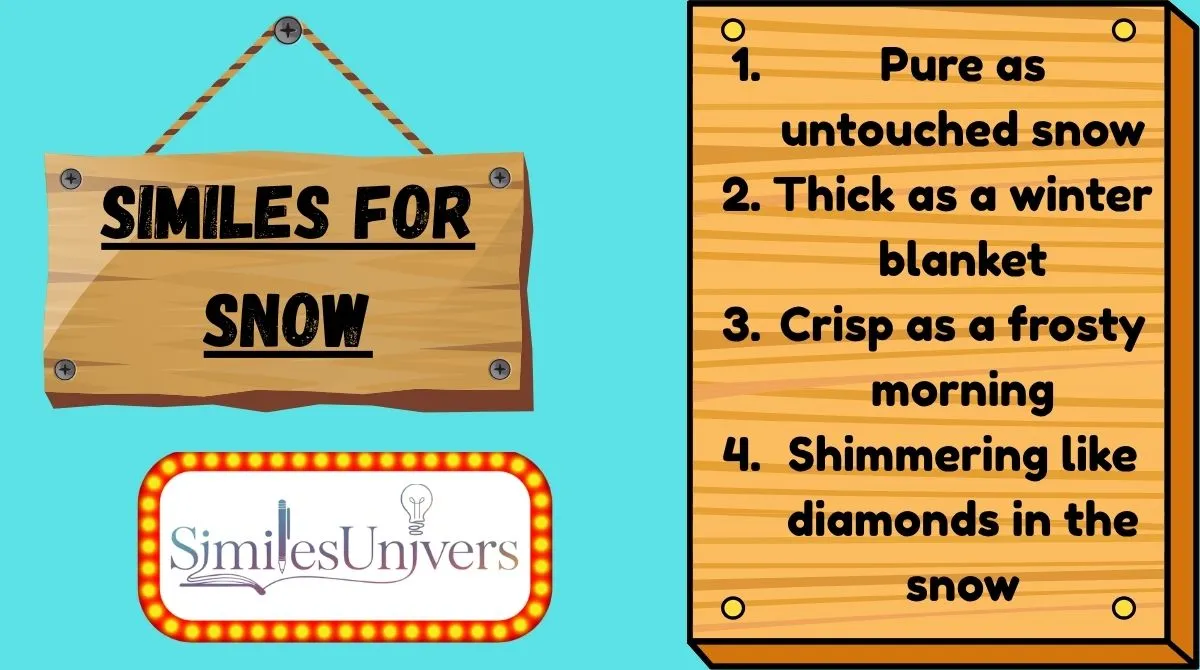
- Pure as untouched snow
- Thick as a winter blanket
- Crisp as a frosty morning
- Shimmering like diamonds in the snow
Complete List of Similes for Snow (Grouped by Meaning)
Funny & Lighthearted
Snow as clumsy as a toddler
- Meaning: Snow falling awkwardly and heavily.
- Snow sometimes lands in messy patches, almost like it can’t decide where to rest.
- Example 1: The snow tumbled down the roof as clumsy as a toddler learning to walk.
- Example 2: Snowflakes bounced off the car like clumsy toddlers playing tag.
- Tone: Funny
Snow like sprinkles on a cupcake
- Meaning: Light and decorative snow.
- Highlights the playful and whimsical aspect of snowfall.
- Example 1: The first snow dusted the garden like sprinkles on a cupcake.
- Example 2: Children laughed as snow fell like sprinkles on cupcakes.
- Tone: Playful
Snow as sticky as marshmallow fluff
- Meaning: Snow that clumps and sticks easily.
- Perfect for describing snow fun like building snowmen.
- Example 1: The snow clung to her gloves as sticky as marshmallow fluff.
- Example 2: Snowballs formed quickly, as sticky as marshmallow fluff.
- Tone: Lighthearted
Emotional & Deep
Snow like a veil of silence
- Meaning: Snow creates a peaceful, quiet atmosphere.
- Conveys the emotional stillness and serenity of winter.
- Example 1: The town lay under a veil of snow, as silent as a forgotten memory.
- Example 2: Her thoughts drifted like a veil of silence falling with the snow.
- Tone: Poetic
Snow as fleeting as a dream
- Meaning: Snow that melts quickly or is transient.
- Highlights the ephemeral beauty of snowfall.
- Example 1: The morning frost was as fleeting as a dream.
- Example 2: Snow on the rooftops looked as fleeting as a dream under the morning sun.
- Tone: Reflective
Snow like soft tears of the sky
- Meaning: Gentle, emotional snowfall.
- Suggests melancholy or emotional depth in the scene.
- Example 1: Snow fell from the clouds like soft tears of the sky.
- Example 2: The landscape wept, snow like soft tears of the sky blanketing everything.
- Tone: Emotional
Dramatic & Intense
Snow as blinding as a desert sun
- Meaning: Heavy snow reflecting light intensely.
- Emphasizes the harshness or overwhelming brightness of snow.
- Example 1: The sun glared on the fresh snow, as blinding as a desert sun.
- Example 2: She squinted against the snow, as blinding as a desert sun.
- Tone: Dramatic
Snow like shattered glass
- Meaning: Sharp, sparkling, or jagged snow.
- Perfect for intense visual imagery.
- Example 1: The ice crystals glinted like shattered glass under the streetlights.
- Example 2: Snow glittered like shattered glass across the frozen lake.
- Tone: Dramatic
Snow as fierce as a warrior’s blade
- Meaning: Violent, heavy snowfall.
- Conveys the power and danger of a blizzard.
- Example 1: The blizzard struck the village as fierce as a warrior’s blade.
- Example 2: Snow whipped around her, as fierce as a warrior’s blade.
- Tone: Intense
Slow & Monotonous
Snow like gray ashes
- Meaning: Dull, lifeless snowfall.
- Represents monotony or depression in a scene.
- Example 1: The snow fell like gray ashes, heavy and relentless.
- Example 2: Her mood matched the sky, snow like gray ashes drifting slowly.
- Tone: Serious
Snow as endless as a white desert
- Meaning: Continuous, unbroken snow.
- Perfect for describing a barren winter landscape.
- Example 1: The field stretched as endless as a white desert under the snow.
- Example 2: He trudged through snow as endless as a white desert.
- Tone: Poetic
Creative & Unique
Snow like powdered sugar spilled by giants
- Meaning: Imaginative description of light snow.
- Adds a whimsical, creative touch to writing.
- Example 1: The mountains were dusted with snow like powdered sugar spilled by giants.
- Example 2: Frosted trees looked like powdered sugar spilled by giants.
- Tone: Creative
Snow as delicate as spun glass
- Meaning: Fragile, intricate snowflakes.
- Highlights intricate beauty of snowfall.
- Example 1: Each snowflake was as delicate as spun glass.
- Example 2: The frost shimmered on the windows as delicate as spun glass.
- Tone: Poetic
Snow like feathers from an angel’s wings
- Meaning: Heavenly, light, graceful snowfall.
- Creates a soft, magical imagery.
- Example 1: The snow floated down like feathers from an angel’s wings.
- Example 2: Children caught snowflakes that fell like feathers from an angel’s wings.
- Tone: Poetic
Poetic & Literary
Snow like a blanket of stars
- Meaning: Sparkling, magical snow at night.
- Evokes awe and wonder.
- Example 1: The fields glowed under snow like a blanket of stars.
- Example 2: Her breath formed patterns like a blanket of stars on the icy air.
- Tone: Poetic
Snow as soft as a lullaby
- Meaning: Gentle, calming snow.
- Conveys peace and comfort.
- Example 1: The night fell with snow as soft as a lullaby.
- Example 2: He watched the flakes drift down, as soft as a lullaby.
- Tone: Poetic
Snow like porcelain petals
- Meaning: Fragile, elegant snow.
- Suggests beauty and delicacy.
- Example 1: The frost-coated branches looked like porcelain petals.
- Example 2: Snowflakes settled gently, like porcelain petals on a black canvas.
- Tone: Poetic
Fresh and Unique Similes You Won’t Hear Every Day
- Snow like whispers of forgotten secrets – Evokes mystery and nostalgia.
- Snow as mischievous as a fox in the night – Suggests unpredictable snowfall patterns.
- Snow like spilled milk across the sky – Light-hearted, playful imagery.
- Snow as patient as an ancient clock – Slow, gradual snowfall.
- Snow like silk unraveling from the clouds – Graceful, flowing movement.
These similes give your writing originality and memorable imagery readers won’t easily forget.
How to Use These Similes in Writing
- Essays: Use similes to make descriptions vivid and emotionally engaging.
- Stories: Snow similes can set mood, tone, and environment, making scenes immersive.
- Blend them naturally; avoid forcing comparisons.
How to Create Your Own Similes (Mini Writing Guide)
- Step 1: Identify the object/feeling you want to describe (e.g., snow).
- Step 2: Think of something familiar that shares a characteristic.
- Step 3: Connect with like or as.
- Step 4: Refine for clarity and imagery.
- Step 5: Test in a sentence to ensure it flows naturally.
Practical Tips:
- Observe nature and everyday objects.
- Use emotions as a bridge for comparisons.
- Experiment with humor and drama.
- Avoid clichés.
- Keep it concise.
Transformation Examples:
- “Snow is white” → Snow is as white as freshly fallen sugar.
- “Snow is heavy” → Snow lay heavy like a wool blanket over the hills.
- “Snow is cold” → Snow bites the skin like tiny crystal daggers.
Common Mistakes When Using Similes
- Overuse: Too many comparisons can overwhelm readers.
- Clichés: Avoid overused similes like “white as snow” repeatedly.
- Tone mismatch: A funny simile in a tragic scene can confuse the reader.
Practice Exercise
Fill in the blanks with appropriate similes for snow:
- The snow fell __________ the petals of a rose.
- The blizzard was __________ a warrior’s sword.
- Snow clung to the branches __________ marshmallow fluff.
- The night sky glittered __________ a blanket of stars.
- Snow drifted down __________ whispers of forgotten secrets.
- Her steps were cautious on snow __________ powdered sugar.
- The morning frost was __________ a fleeting dream.
- Snowflakes danced __________ feathers from an angel’s wings.
- The icy path was slippery __________ broken glass.
- Snow blanketed the town __________ a soft lullaby.
- The field stretched __________ a white desert.
- Snow shimmered __________ spilled milk across the sky.
Answers: 1. like, 2. as fierce as, 3. as sticky as, 4. like, 5. like, 6. like, 7. as fleeting as, 8. like, 9. as, 10. like, 11. as endless as, 12. like
FAQs
What is a simile for snow?
A simile for snow is a comparison using like or as to describe snow’s appearance, texture, or effect.
Why use similes in writing?
Similes make descriptions vivid, help readers visualize scenes, and add emotional depth.
Can similes be funny?
Yes, humorous similes can make imagery playful and entertaining.
How do I make my snow similes unique?
Use unusual comparisons, observe nature, and evoke emotions or unexpected imagery.
Are all snow similes poetic?
Not necessarily. Some can be casual, funny, or dramatic depending on tone.
How many similes should I use in a story?
Use enough to enrich descriptions but avoid overloading the text—usually 2–4 per paragraph works well.
Final Thoughts
Similes are powerful tools for transforming simple snow descriptions into vivid, memorable imagery. With over 27 options here—from popular to original—you have the resources to bring winter landscapes to life, evoke emotions, and captivate readers.
Experiment, create your own, and watch your writing sparkle like freshly fallen snow.
Daniel Harper
I am simplifies complex literary concepts into clear, practical lessons for students and learners worldwide.
Through SimilesUnivers, he aims to make mastering similes engaging, structured, and academically enriching.