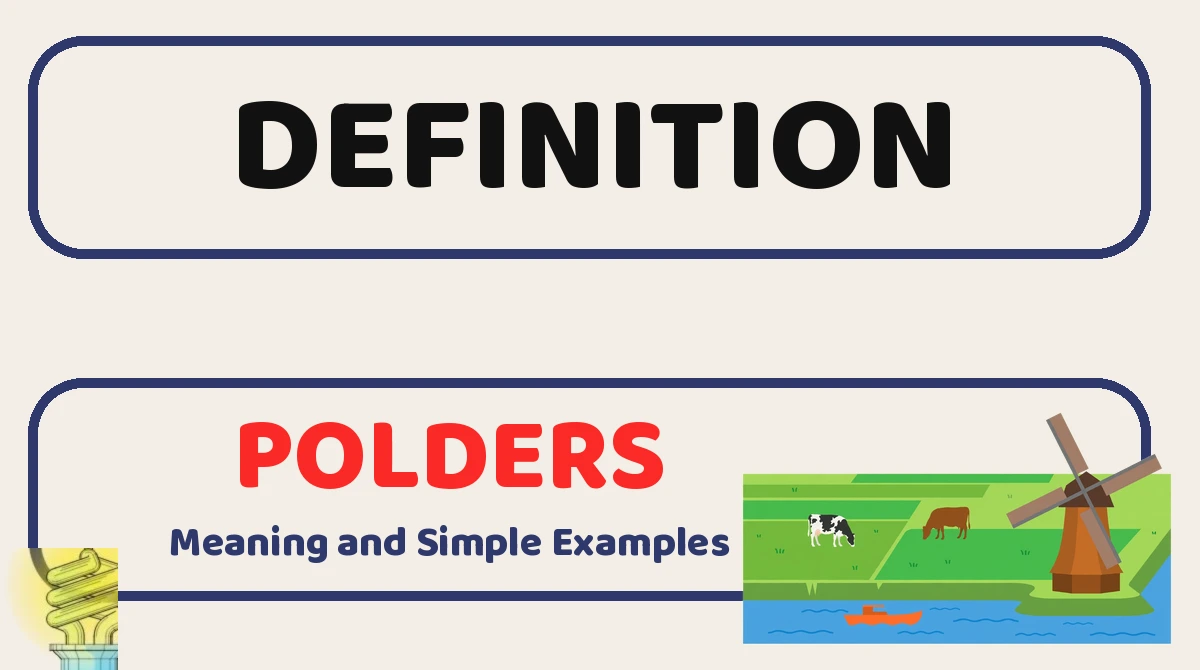
Below the level of the sea, green fields stretch to the horizon, cows graze, and towns stand dry. This land was once water. A polder is land that people have taken back from the sea, a lake, or a marsh, and keep dry with dikes and pumps. The polders definition is simple: a polder is a low area of land, closed in by walls called dikes, where the water level is held down by pumping. The Netherlands is famous for its polders, and about one third of that country lies on land reclaimed from water over many centuries of work.
What Is the Polders Definition?
The polders definition is this: a polder is a low-lying area of land that was once covered by water, or that sits below the level of the sea or a nearby river, and is now kept dry by human work.
Three things make a polder a polder. First, the land is low — often below sea level. Second, it is ringed by dikes, strong walls of earth and clay that hold the outside water back. Third, the water inside is controlled: rain and seeping water are gathered in canals and pumped out, so the ground stays dry enough for farms, homes, and roads.
A polder is not natural dry land. Left alone, it would flood again. It stays dry only because people keep watching, pumping, and repairing, day after day, year after year.
How a Polder Is Made: Dikes, Canals, and Pumps
Making a polder follows a clear order of steps, and Dutch engineers have used the same basic plan for hundreds of years:
- Build a dike around the area — a ring wall of clay, sand, and stone that shuts the water out
- Dig canals and ditches inside the ring to gather the water into a few main channels
- Pump the water out over the dike, first with windmills, later with steam, diesel, and electric pumps
- Keep pumping forever, because rain falls and water seeps in under the dike
In the old days, rows of windmills did the pumping, lifting water step by step from the low canals up over the dike. Those windmills are now a famous sight, but in their day they were hard-working machines. Today, electric pumping stations do the same job, quietly and around the clock.
Why Polders Need Pumping All the Time
A polder is like a bowl set into water. The land inside the bowl sits lower than the sea, lake, or river outside it. Water always tries to flow downhill and to seep through soil, so water is always trying to get in.
Rain adds more water from above. Rivers nearby press against the dikes. Even the soil itself causes trouble: drained peat soil slowly sinks as it dries, so many polders drop a little lower each year and need even more pumping than before.
This is why a polder can never be finished and forgotten. Stop the pumps, and within months or years the land fills with water again and returns to lake or marsh. A polder is not just a place — it is a promise that people keep, without pause, to hold the water back.
The Netherlands: The Land of Polders
No country is linked to polders like the Netherlands. The name itself means “low lands,” and the link is earned. About one third of the country is reclaimed land, and about a quarter of it lies below sea level. The lowest point is nearly seven metres under the sea.
Whole cities stand on polders. Much of Amsterdam, including its airport, Schiphol, sits on drained lake beds. The large province of Flevoland was built in the last century on land taken from a shallow sea — an entire new province, with towns, farms, and roads, where ships once sailed.
The Dutch have a saying: “God made the world, but the Dutch made the Netherlands.” It is a joke, but a proud one. Their long fight with water made them the world’s experts in dikes, pumps, and flood control, and Dutch engineers now help other low lands around the globe.
A Short History of Polders
Dutch farmers began draining marshes about a thousand years ago. They dug ditches, built low walls, and let wind and tide do part of the work. By the 1400s and 1500s, improved windmills let them drain deeper lakes, not just shallow marshes.
In the 1600s, rich merchants paid to drain whole lakes north of Amsterdam, such as the Beemster. The new land was rich and grew fine crops, and the Beemster polder is now a World Heritage site, still farmed in its neat old pattern of fields and canals.
The 1900s brought the boldest works of all. A great dam, the Afsluitdijk, shut off a sea inlet and turned it into a lake. Then huge polders were built in that lake, creating Flevoland. Steam and electric pumps made the work faster and surer than windmills ever could. The story of the polders is a story of tools improving — hands, wind, steam, and at last electric power — while the basic idea never changed.
What Polders Are Used For
Polders are precious land, flat and fertile, and people put them to many uses:
- Farming — rich soil for wheat, potatoes, tulips, and dairy pasture
- Towns and cities — much Dutch housing stands on drained land
- Airports and industry — flat land suits runways, ports, and factories
- Nature reserves — some new polders are left wet for birds and wildlife
- Water storage — in floods, certain polders can be flooded on purpose to save cities
Because polders are planned from the start, their fields are often neat rectangles, cut by straight canals and roads. From the air, a polder looks tidy and patterned, quite unlike the wandering shapes of natural land.
Polder, Dike, Levee, and Marsh: What Is the Difference?
People mix up the words for wet land and water works. The table sets the main ones side by side.
| Word | What It Is | Key Point |
|---|---|---|
| Polder | Low land kept dry by dikes and pumps | The land itself; needs constant pumping |
| Dike (dyke) | A wall of earth that holds water back | The barrier around a polder |
| Levee | A raised bank along a river | Stops river floods; much like a dike |
| Reclaimed land | Any land taken from water | A wider word; polders are one kind |
| Marsh | Natural wet land with grass and reeds | Not drained; home to water wildlife |
The easy way to remember: the dike is the wall, the pumps do the work, and the polder is the dry land they protect together.
Life on a Polder: Farms, Towns, and Nature
Life on a polder looks calm on the surface — green fields, grazing cows, straight canals with boats and bikes beside them. Below the surface story, though, everything depends on the pumps. Farm work, house building, and road repair all assume the water level will be held exactly where the water board sets it.
Water is managed by special local boards, called water boards, some of which are among the oldest governing bodies in the Netherlands. Farmers, towns, and nature all need different water levels, so the boards balance their claims and set the pumps to match.
Polders are also rich for nature. The ditches and wet field edges shelter frogs, fish, and wading birds. Some of the newest Dutch land was given back to water and reeds on purpose, as a reserve where birds can feed and breed in peace.
Risks and Problems of Polder Land
Living below the sea has risks, and the Dutch never forget them. In 1953, a great storm drove the sea over the dikes in the south-west of the country. The floods killed more than 1,800 people and drowned whole villages. That disaster led to the famous Delta Works, a system of dams and barriers that now guard the coast.
Other problems are slower. Drained peat soil sinks as it dries and rots, so the land falls while the sea level rises with climate change. The gap between the sea and the polder grows, and pumping gets harder and costlier.
Salt is a further worry: salty groundwater can seep upward into fields near the coast and harm crops. Modern polder management is a constant balance — safer dikes, smarter pumps, and sometimes the hard choice to let a little low land return to water.
Famous Polders Around the World
The Netherlands has the most polders, but the idea has travelled far:
- Beemster, Netherlands — a lake drained in 1612, now a World Heritage farming landscape
- Flevoland, Netherlands — a whole province built on the bed of a former sea in the 1900s
- The Fens, England — low drained farmland, pumped much like Dutch polders
- New Orleans, USA — parts of the city sit in drained, dike-ringed bowls below sea level
- Bangladesh — coastal polders protect rice land and villages from the sea
- Po Valley, Italy — drained plains along the river Po, farmed for centuries
For example, when engineers visit from other low countries, the Dutch polders are their classroom — proof that with dikes, pumps, and steady care, people can live and farm safely below the level of the sea.
People Also Ask About Polders Definition
What is the polders definition in simple words?
In simple words, a polder is a piece of low land that people have drained of water and keep dry with dikes and pumps. The land often lies below sea level. Stop the pumping, and the water would come back, so a polder needs care without pause.
Why is the Netherlands famous for polders?
The Netherlands is very low and flat, and much of it lies below the sea. For about a thousand years the Dutch have drained lakes and seasides to gain farm land and room for towns. About a third of the country is reclaimed land, so polders shape the whole nation.
How do polders stay dry below sea level?
Dikes ring the land and hold the sea or river back. Inside, canals gather rain and seepage water, and pumps lift that water up and out over the dike. The system runs day and night. Windmills once did the pumping; today electric pumping stations do it.
What is the difference between a polder and a dike?
A dike is the wall — a raised bank of earth that blocks water. A polder is the land behind the wall: the drained area that the dike, canals, and pumps keep dry. The dike is one part of the system; the polder is the whole protected place.
What would happen if the pumps in a polder stopped?
The land would slowly fill with water. Rain and seepage would gather in the canals, fields would turn to marsh, and in time the polder would become a lake again, much as it was before people drained it. That is why pumping never truly stops.
Are polders only found in the Netherlands?
No. The Netherlands has the most and the most famous, but polders exist wherever people drain low land: the Fens in England, coastal Bangladesh, parts of Italy, Japan, and the United States. The Dutch word and Dutch methods spread with their engineers.
Is polder land good for farming?
Yes, very good. Lake-bed and sea-bed soils are rich and the land is flat and well watered, so polders grow fine crops of grain, potatoes, and vegetables, and make rich pasture for dairy cows. Dutch polders are among the most productive farm lands in the world.
Conclusion
The polders definition names one of the boldest ideas in land use: low land, once under water, kept dry for good by dikes, canals, and pumps that never rest.
From windmill days to electric pumping stations, polders show what steady, shared work can do — whole farms, towns, and even a province raised from the sea, and held, day by day, by care.

Daniel Harper
I am simplifies complex literary concepts into clear, practical lessons for students and learners worldwide.
Through SimilesUnivers, he aims to make mastering similes engaging, structured, and academically enriching.