Cute is everywhere—from adorable puppies to charming smiles—but how do you capture that sweetness in words?
Similes are your secret weapon. By comparing one thing to another using “like” or “as,” similes make writing vivid, playful, and relatable.
They help your reader see and feel the cuteness, whether in a story, essay, or social post. This guide isn’t just a list—it’s your toolkit for turning ordinary descriptions into sparkling, memorable imagery.
You’ll discover over 33 similes, learn how to craft your own, avoid common mistakes, and even practice using them. By the end, your writing will feel brighter, lighter, and irresistibly charming.
What Is a Simile?
A simile is a figure of speech that compares two different things using the words “like” or “as.” It helps readers imagine one thing by relating it to another.
Example: “Her smile was as bright as the morning sun.”
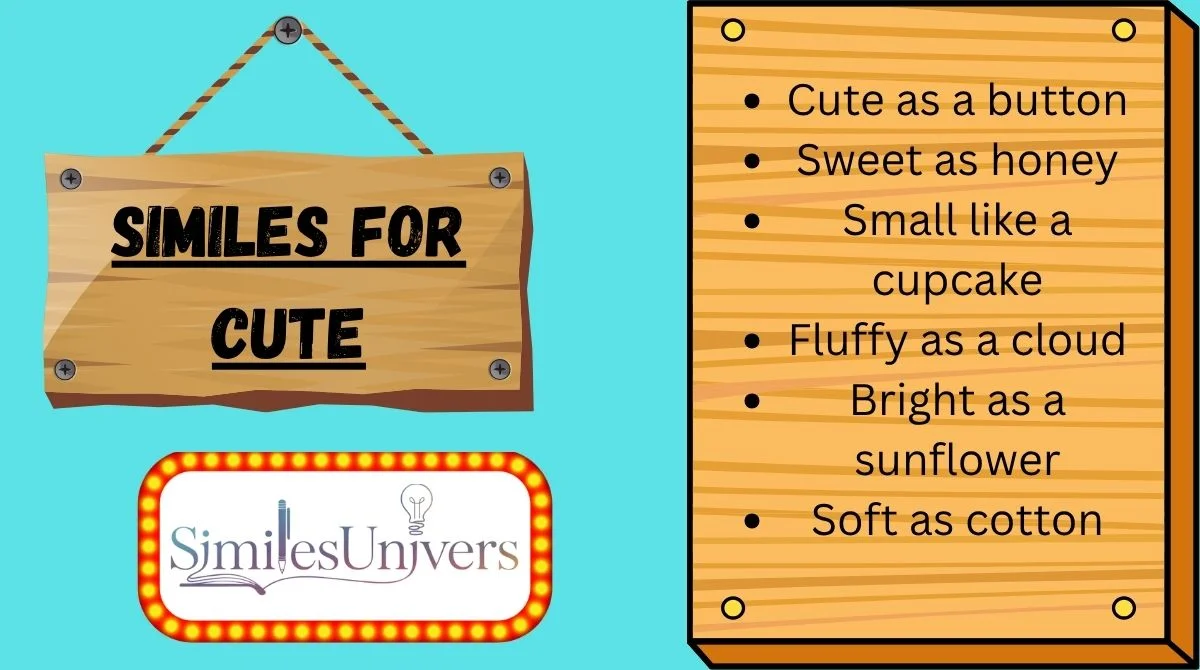
Quick List – Most Popular Similes for Cute
- Cute as a button
- Sweet as honey
- Small like a cupcake
- Fluffy as a cloud
- Bright as a sunflower
- Soft as cotton
- Tiny like a kitten
- Gentle as a lamb
- Playful as a puppy
- Pretty as a picture
Complete List of Similes for Cute
Funny & Lighthearted
Cute as a Button
Meaning: Tiny and charming
Explanation: Often used for small, adorable things like children or pets.
Examples:
- The baby giggled, cute as a button, in his little pajamas.
- That little robot is cute as a button with its blinking lights.
Tone: Funny
Playful as a Puppy
Meaning: Full of energy and charm
Explanation: Captures lively, fun cuteness.
Examples:
- She bounced into the room, playful as a puppy, making everyone smile.
- The puppy wagged its tail, playful as a puppy, eager for attention.
Tone: Funny
Sweet as Candy
Meaning: Delightful and appealing
Explanation: Perfect for charming gestures or personalities.
Examples:
- His handwritten note was sweet as candy, brightening her day.
- The kitten’s tiny paws were sweet as candy as they tapped at the door.
Tone: Funny
Tiny like a Teacup
Meaning: Small and delicate
Explanation: Evokes a sense of miniature charm.
Examples:
- The newborn hamster was tiny like a teacup, barely moving in its nest.
- Her earrings were tiny like a teacup but sparkling with color.
Tone: Funny
Round as a Dumpling
Meaning: Softly plump and endearing
Explanation: Emphasizes cute, gentle roundness.
Examples:
- His cheeks were round as a dumpling after he laughed.
- The dough balls looked round as a dumpling before baking.
Tone: Funny
Emotional & Deep
Gentle as a Lamb
Meaning: Sweet, soft, and innocent
Explanation: Often used for tender, caring expressions of cuteness.
Examples:
- The child approached the stray kitten, gentle as a lamb.
- Her voice, gentle as a lamb, calmed the frightened puppy.
Tone: Serious
Bright as a Sunflower
Meaning: Cheerful and radiant
Explanation: Represents happy, glowing cuteness.
Examples:
- Her smile was bright as a sunflower in summer.
- The painting’s colors were bright as a sunflower, lifting the mood of the room.
Tone: Serious
Soft as Cotton
Meaning: Tender and comforting
Explanation: Describes textures or personalities that are gentle to touch or spirit.
Examples:
- The blanket was soft as cotton, perfect for naptime.
- Her hands felt soft as cotton as she held the tiny bird.
Tone: Serious
Pure as Snow
Meaning: Innocent and flawless
Explanation: Evokes a sense of untouched, delicate beauty.
Examples:
- His baby sister’s laugh was pure as snow in the quiet morning.
- The newborn kitten’s fur looked pure as snow under the sun.
Tone: Serious
Warm as a Hug
Meaning: Comforting and lovable
Explanation: Describes a cuteness that is emotionally cozy.
Examples:
- Her little dog was warm as a hug, curling around her feet.
- The old teddy bear felt warm as a hug in her hands.
Tone: Serious
Dramatic & Intense
Bright as a Shooting Star
Meaning: Strikingly charming
Explanation: A rare and eye-catching cuteness.
Examples:
- The child’s laugh was bright as a shooting star across the quiet park.
- Her sparkling eyes were bright as a shooting star in the dark theater.
Tone: Poetic
Sweet like a First Blossom
Meaning: Fresh, delicate, and appealing
Explanation: Emphasizes newness and fragile beauty.
Examples:
- The baby chick was sweet like a first blossom, full of hope.
- His first poem was sweet like a first blossom, tender and sincere.
Tone: Poetic
Precious as a Gem
Meaning: Highly valued and endearing
Explanation: Highlights rare and cherished cuteness.
Examples:
- Her smile was precious as a gem to everyone she met.
- The puppy’s tiny paws were precious as a gem, impossible to ignore.
Tone: Serious
Slow & Monotonous
Calm as a Morning Mist
Meaning: Quiet and soft
Explanation: Reflects a gentle, soothing kind of cuteness.
Examples:
- The kitten stretched, calm as a morning mist, on the windowsill.
- His voice was calm as a morning mist, lulling the baby to sleep.
Tone: Casual
Quiet like Falling Snow
Meaning: Subtle and soft
Explanation: Suggests understated charm.
Examples:
- Her movements were quiet like falling snow, almost magical.
- The puppy crept in, quiet like falling snow, to surprise its owner.
Tone: Poetic
Creative & Unique
Bubbly as Soda Pop
Meaning: Energetically cute and fun
Explanation: A modern, playful simile for lively personalities.
Examples:
- Her laugh was bubbly as soda pop, filling the room with joy.
- The kitten’s antics were bubbly as soda pop, impossible to resist.
Tone: Funny
Shiny like Morning Dew
Meaning: Fresh and sparkling
Explanation: Captures freshness and delicate beauty.
Examples:
- Her eyes were shiny like morning dew after a spring rain.
- The baby frog looked shiny like morning dew under the leaf.
Tone: Poetic
Whisked like Cotton Candy
Meaning: Light, fluffy, and fun
Explanation: Evokes whimsical, airy cuteness.
Examples:
- The bunny hopped, whisked like cotton candy across the meadow.
- Her scarf floated, whisked like cotton candy in the breeze.
Tone: Poetic
Poetic & Literary
Gentle as Moonlight
Meaning: Soft, serene beauty
Explanation: Creates romantic or poetic imagery for cuteness.
Examples:
- The kitten’s fur glowed, gentle as moonlight, in the dark room.
- Her soft voice was gentle as moonlight on a quiet night.
Tone: Poetic
Pure as a Lily
Meaning: Innocent and delicate
Explanation: Evokes refined and elegant cuteness.
Examples:
- The baby’s smile was pure as a lily, untouched by worry.
- Her hand-painted doll looked pure as a lily in its dress.
Tone: Poetic
Sparkling like Stars
Meaning: Bright and enchanting
Explanation: Perfect for expressive, magical imagery.
Examples:
- Her laughter was sparkling like stars in the night sky.
- The puppy’s eyes were sparkling like stars, impossible to ignore.
Tone: Poetic
Fresh and Unique Similes You Won’t Hear Every Day
- Soft as a cloud’s whisper – evokes gentle, airy cuteness.
- Bright as a firefly in the dusk – small, magical glow of charm.
- Tiny as a sugar crystal – highlights delicate, sweet size.
- Bouncy as a jellybean – playful and lively energy.
- Sweet like a page of fairy dust – whimsical, imaginative charm.
These similes paint mental pictures that are uncommon yet memorable, perfect for making your writing stand out.
How to Use These Similes in Writing
- Essays: Make descriptions of people, animals, or objects more vivid.
- Stories: Create engaging imagery for characters, pets, or whimsical settings.
Example: “The child’s laugh was bubbly as soda pop, making the gloomy park feel like a festival.”
How to Create Your Own Similes
- Pick the trait you want to describe.
- Think of objects or experiences with a similar quality.
- Use “like” or “as” to connect them.
- Make it relatable or sensory.
- Keep it concise.
Practical Tips:
- Focus on senses: sight, sound, touch.
- Use humor or exaggeration.
- Avoid clichés.
- Match tone to context.
- Try unusual comparisons for originality.
Examples of Transformation:
- “Cute” → “cute as a kitten chasing shadows”
- “Bright” → “bright as a lantern in fog”
- “Soft” → “soft as marshmallows melting in tea”
Common Mistakes When Using Similes
- Overuse: Too many similes can distract.
- Clichés: Avoid phrases like “as busy as a bee” unless stylistically needed.
- Tone mismatch: Funny similes in serious writing can confuse readers.
Practice Exercise
Fill in the blanks with an appropriate simile:
- The kitten’s fur was ________ (soft).
- Her laugh was ________ (joyful).
- The baby’s cheeks were ________ (round).
- The puppy ran ________ (playful).
- His voice was ________ (gentle).
- The child’s eyes sparkled ________ (bright).
- The cupcake looked ________ (tiny).
- The blanket felt ________ (warm).
- The flower was ________ (pure).
- The bunny hopped ________ (light).
- The toddler clapped ________ (bubbly).
- The kitten’s paws were ________ (delicate).
Answers:
- Soft as cotton
- Bubbly as soda pop
- Round as a dumpling
- Playful as a puppy
- Gentle as a lamb
- Sparkling like stars
- Tiny like a teacup
- Warm as a hug
- Pure as a lily
- Light as a feather
- Bubbly as soda pop
- Delicate as a sugar crystal
FAQs
What is the difference between a simile and a metaphor?
A simile uses “like” or “as” to compare, while a metaphor states the comparison directly.
Can I use similes for adults, not just kids or pets?
Yes! Similes can describe personalities, actions, or emotions for any age.
How many similes are enough in a paragraph?
1–2 per paragraph is usually enough; too many can overwhelm the reader.
Are there similes that are considered outdated?
Yes, clichés like “as busy as a bee” or “as cold as ice” can feel old-fashioned.
Can similes be humorous?
Absolutely. Funny similes often use unexpected comparisons to create humor.
How do I make my similes original?
Think of uncommon objects, use sensory detail, or combine two surprising ideas.
Final Thoughts
Similes transform ordinary writing into vivid, engaging storytelling. With over 33 fresh and classic options, plus tips for crafting your own, you now have the tools to make anything—people, pets, objects—cute in words. Experiment, play, and don’t be afraid to create your unique comparisons. Writing with charm is just a simile away!

Daniel Harper
I am simplifies complex literary concepts into clear, practical lessons for students and learners worldwide.
Through SimilesUnivers, he aims to make mastering similes engaging, structured, and academically enriching.