Food isn’t just fuel—it’s flavor, comfort, and memory on a plate. And when we write about it, comparing taste, texture, and aroma can make descriptions come alive.
That’s where similes shine. Using the right simile can turn a plain “The cake was sweet” into “The cake was as sweet as a first kiss on a sunny day.”
Whether you’re writing a story, a blog, or even a menu, similes can bring words to life.
This guide gives you over 32 similes for food, from classic favorites to fresh, creative ideas you won’t find anywhere else. By the end, you’ll know how to choose, create, and use similes that make your writing irresistible.
What Is a Simile?
A simile is a figure of speech that compares two different things using “like” or “as.” It makes writing vivid and easy to picture.
Example: “The soup was as warm as a cozy blanket.”
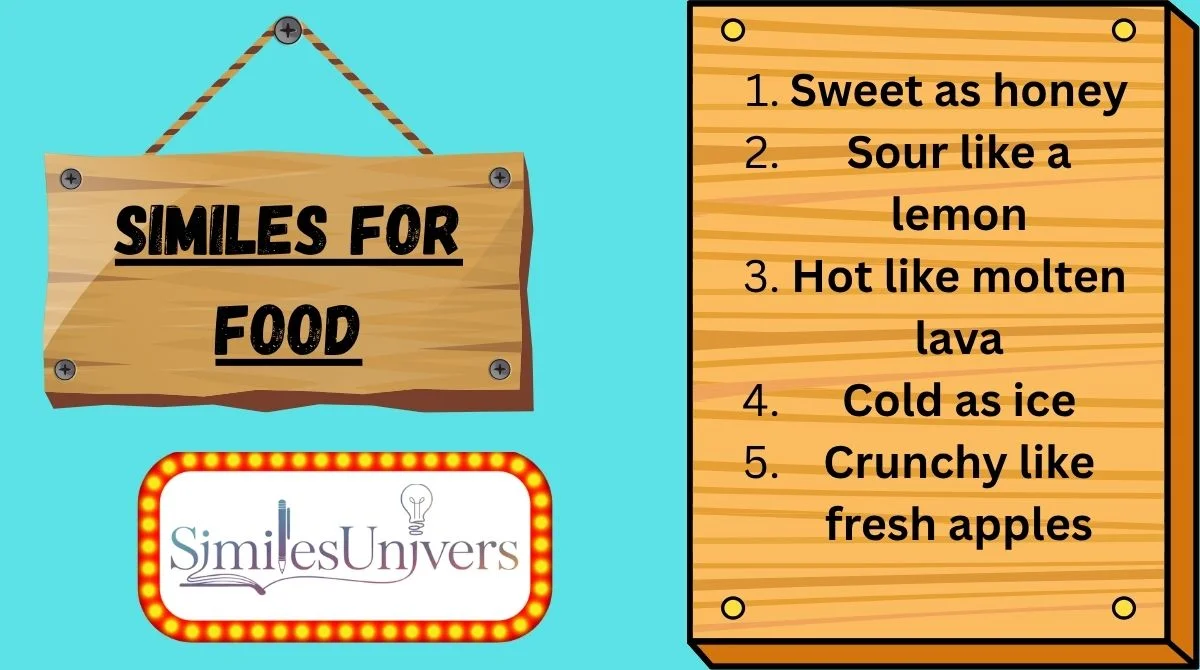
Quick List – Most Popular Similes for Food
- Sweet as honey
- Sour like a lemon
- Hot like molten lava
- Cold as ice
- Crunchy like fresh apples
- Smooth as butter
- Bitter like dark chocolate
- Soft as marshmallows
- Rich as cream
- Tangy like a ripe orange
Complete List of Similes for Food
Funny & Lighthearted
Juicy like a gossip session
- Meaning: Full of flavor and excitement
- Explanation: Compares the juiciness of food to the liveliness of chatting
- Examples:
- “The watermelon was juicy like a gossip session in the village square.”
- “Her orange slices were juicy like a gossip session, dripping with sweetness.”
- Tone: Funny
Chewy like old sneakers
- Meaning: Tough or resistant to chew
- Explanation: Humorously exaggerates tough textures
- Examples:
- “The bread was chewy like old sneakers, but surprisingly satisfying.”
- “These gummy candies are chewy like old sneakers—don’t bite too fast!”
- Tone: Funny
Slippery as a buttered eel
- Meaning: Hard to hold or eat
- Explanation: Conveys slippery texture with humor
- Examples:
- “The dumpling slipped from my chopsticks, slippery as a buttered eel.”
- “This jelly is slippery as a buttered eel; careful when serving!”
- Tone: Funny
Emotional & Deep
Sweet as a mother’s hug
- Meaning: Comforting and heartwarming
- Explanation: Evokes emotional warmth and sweetness
- Examples:
- “The chocolate cake was sweet as a mother’s hug on a rainy day.”
- “Her homemade cookies were sweet as a mother’s hug, full of love.”
- Tone: Serious
Sour like lost love
- Meaning: Bitterly disappointing
- Explanation: Connects taste to emotional experience
- Examples:
- “The lemonade was sour like lost love, making my lips pucker.”
- “This sauce is sour like lost love—pleasantly shocking but unforgettable.”
- Tone: Serious
Dramatic & Intense
Spicy as a desert fire
- Meaning: Extremely hot and fiery
- Explanation: Evokes intensity of flavor and experience
- Examples:
- “The curry was spicy as a desert fire, leaving my tongue tingling.”
- “Her chili recipe is spicy as a desert fire, daring any eater to try.”
- Tone: Dramatic
Bitter like a broken promise
- Meaning: Strongly unpleasant
- Explanation: Makes bitterness emotionally relatable
- Examples:
- “The coffee was bitter like a broken promise, sharp and unwelcome.”
- “His overcooked kale was bitter like a broken promise in every bite.”
- Tone: Dramatic
Slow & Monotonous
Dry as last year’s toast
- Meaning: Bland or lacking moisture
- Explanation: Conveys dryness with a relatable image
- Examples:
- “The cake was dry as last year’s toast, needing a lot of syrup.”
- “This chicken is dry as last year’s toast; add gravy for relief.”
- Tone: Casual
Plain as boiled rice
- Meaning: Unexciting or bland
- Explanation: Highlights simplicity or lack of flavor
- Examples:
- “The soup tasted plain as boiled rice, missing herbs and seasoning.”
- “His sandwich was plain as boiled rice, but filling nonetheless.”
- Tone: Casual
Creative & Unique
Fluffy like a cloud made of cream
- Meaning: Light and airy
- Explanation: Creates a whimsical, visual texture
- Examples:
- “The pancake was fluffy like a cloud made of cream.”
- “Her meringue was fluffy like a cloud made of cream, melting on my tongue.”
- Tone: Poetic
Tangy like a sunbeam in citrus
- Meaning: Bright and refreshing
- Explanation: Connects tanginess to a lively, sunny feeling
- Examples:
- “The lemonade tasted tangy like a sunbeam in citrus.”
- “This vinaigrette is tangy like a sunbeam in citrus—refreshing and bold.”
- Tone: Creative
Sweet as forbidden chocolate
- Meaning: Irresistibly tempting
- Explanation: Evokes indulgence and desire
- Examples:
- “The dessert was sweet as forbidden chocolate, impossible to resist.”
- “Her truffles were sweet as forbidden chocolate, hiding a decadent secret.”
- Tone: Poetic
Poetic & Literary
Melting like the last snow of spring
- Meaning: Soft and fleeting
- Explanation: Compares melting textures to seasonal change
- Examples:
- “The butter melted like the last snow of spring over warm bread.”
- “The chocolate slowly melted like the last snow of spring, leaving a gentle sweetness.”
- Tone: Poetic
Rich as a Shakespearean feast
- Meaning: Deeply flavorful and indulgent
- Explanation: Evokes luxury and historical imagery
- Examples:
- “The risotto was rich as a Shakespearean feast, leaving everyone satisfied.”
- “Her stew simmered long, rich as a Shakespearean feast in both taste and aroma.”
- Tone: Poetic
Fresh and Unique Similes You Won’t Hear Every Day
- Creamy like moonlight on velvet – Suggests smooth, luxurious texture.
- Nutty as a squirrel’s secret stash – Implies playful, earthy crunchiness.
- Zesty like a carnival trumpet – Bright, exciting, and full of life.
- Sticky as a toddler’s fingers after candy – Conveys clingy texture humorously.
- Velvety like a jazz saxophone – Soft, rich, and sensuous mouthfeel.
How to Use These Similes in Writing
- Essays: Spice up descriptive essays or food reviews. “The chocolate mousse was as smooth as moonlight on velvet.”
- Stories: Add realism and imagery to narratives. “Her pie was tangy like a sunbeam in citrus, making the morning unforgettable.”
How to Create Your Own Similes (Mini Writing Guide)
- Identify the core quality (taste, texture, color, smell)
- Think of a familiar comparison from nature, culture, or emotion
- Use “like” or “as” to connect them
- Refine to match tone and clarity
- Test in a sentence to ensure it resonates
Tips:
- Be specific and visual
- Avoid clichés
- Match simile to tone
- Use sensory language
- Experiment with humor or poetry
Examples of Transformation:
- Plain: The cake was sweet → Simile: The cake was sweet as a mother’s hug
- Plain: The soup was hot → Simile: The soup was hot like a desert sun at noon
- Plain: The bread was soft → Simile: The bread was soft as a cloud made of cream
Common Mistakes When Using Similes
- Overuse: Too many similes can distract
- Clichés: Phrases like “as sweet as sugar” feel tired
- Tone mismatch: Avoid funny similes in serious contexts
Practice Exercise
Fill in the blanks with suitable similes:
- The lemonade was ________ like a ________.
- Her chocolate truffle was ________ like ________.
- The bread was ________ like ________.
- The stew was ________ like ________.
- The soup was ________ like ________.
- The chili was ________ like ________.
- The salad was ________ like ________.
- The cake was ________ like ________.
- The coffee was ________ like ________.
- The cookies were ________ like ________.
- The ice cream was ________ like ________.
- The muffin was ________ like ________.
Answers (examples):
- Tangy, a sunbeam in citrus
- Sweet, forbidden chocolate
- Dry, last year’s toast
- Rich, a Shakespearean feast
- Warm, a cozy blanket
- Spicy, a desert fire
- Fresh, morning dew on leaves
- Fluffy, a cloud made of cream
- Bitter, a broken promise
- Chewy, old sneakers
- Cold, ice
- Soft, marshmallows
FAQs
What is the difference between a simile and a metaphor?
- A simile uses “like” or “as” to compare, while a metaphor states it directly.
Why use similes for food?
- They make descriptions vivid, memorable, and relatable.
Can I use funny similes in serious writing?
- Generally, no. Tone should match context.
How many similes are too many?
- Usually 2–3 per paragraph; more can overwhelm readers.
How do I make my similes unique?
- Avoid clichés and connect food to emotions, nature, or culture.
Can similes improve storytelling?
- Absolutely! They add sensory depth and emotional connection.
Final Thoughts
Similes are the secret spice in writing. Whether you want humor, drama, or poetry, the right comparison can make food leap off the page. Keep experimenting, and you’ll never describe another meal the same way again.

Daniel Harper
I am simplifies complex literary concepts into clear, practical lessons for students and learners worldwide.
Through SimilesUnivers, he aims to make mastering similes engaging, structured, and academically enriching.